Why Are My Succulent Leaves Falling Off? UK Fix
Following on from our Houseplant Troubleshooting: How to Save a Dying Plant overview, this guide digs into one specific symptom and what to do about it.
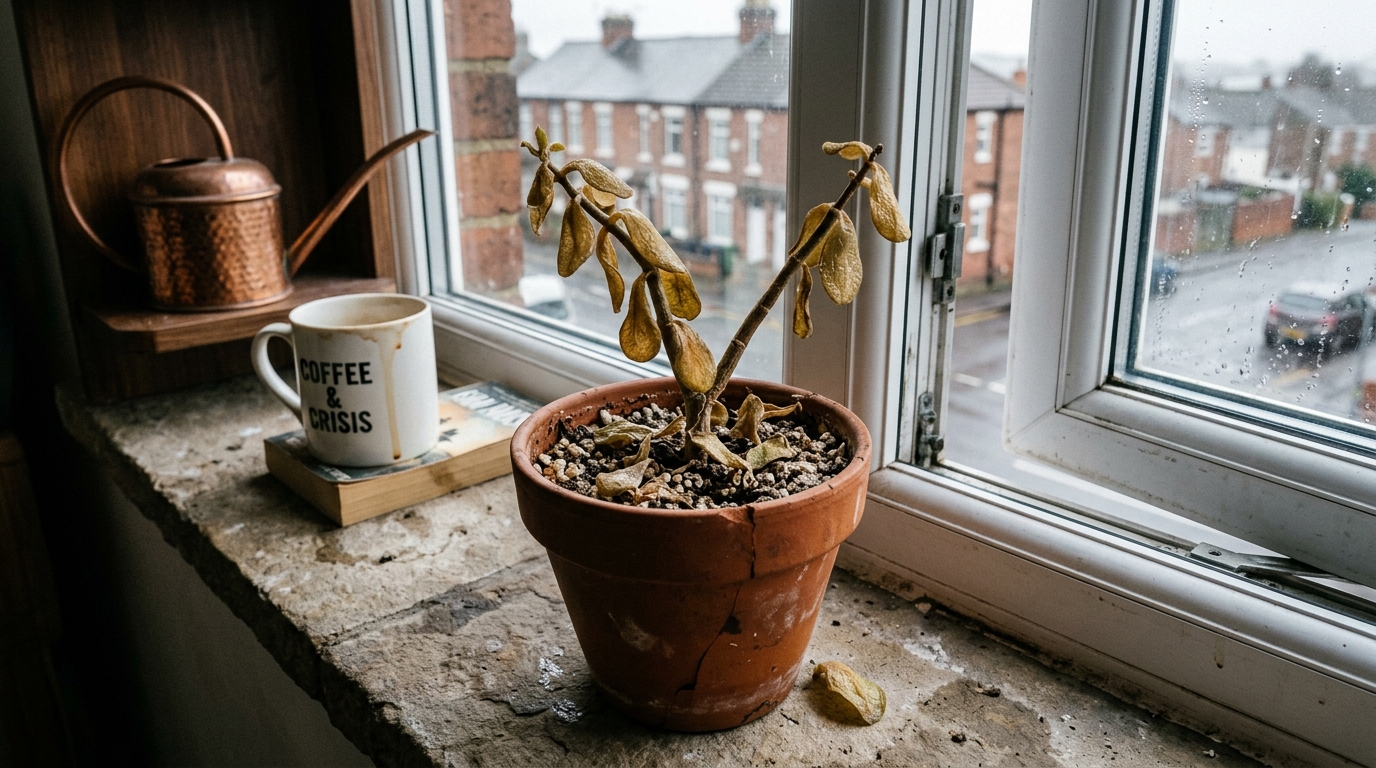
When a succulent starts dropping leaves in your flat, it’s almost always one of three things: you’ve been too kind with the watering can, the central heating has turned the air to dust, or the winter gloom has starved it of light. We’ve had a jade plant turn to mush on the kitchen windowsill, and a string of pearls crisp up overnight when a radiator was too close. The good part is, if you catch it quickly, you can usually bring them back. Let’s figure out what’s going on with yours and exactly how to fix it.
The “Save or Toss” Decision Matrix
First, give the plant a quick look and slot it into one of these three categories. It’ll tell you if you’re in rescue mode or starting from scratch.
| Symptom | What it feels like | Likely cause | What to do |
|---|---|---|---|
| Squishy, translucent stem – leaf falls off with barely a tug | Stem is soft, may look water-logged | Mushy rot – over-watering + poor drainage | Propagate healthy leaves, repot in gritty mix |
| Wrinkled, crisp leaves – edges dry, plant looks shrunken | Leaves feel papery, pull apart easily | Dry crisis – underwatering or extreme air-dryness | Water thoroughly, raise humidity, check watering schedule |
| Leggy, pale stretch – plant reaching for light | Stems are elongated, leaves spread apart | Etiolation – light starvation (common in winter) | Move to brighter spot, consider supplemental light |
If the whole stem feels like a damp sponge, it’s likely a goner. If just the base is soft but the top is still firm, you can cut away the rotten part and propagate. A dry, crispy plant just needs a good soak and a bit of humidity. This triage gives you a clear direction without any faff.
Why Is My Succulent Struggling In The UK?
Succulents often struggle here because our central heating drops indoor humidity to desert levels, our hard tap water leaves mineral deposits in the soil, and our gloomy winters deprive them of the sunlight they’re built for.
Central heating dries out the air
Once the radiators are on, most UK flats sit around 30% relative humidity. Succulents store water in their leaves, so they’ll shed them to conserve what little moisture they can pull from the dry air. We’ve watched a string of echeverias lose half their foliage in a week while the heating was blasting at 21°C.
Hard water leaves mineral build-up
According to UK water suppliers, much of the central and southern UK has hard or very hard water. Those calcium and magnesium ions settle in the soil, eventually leaching onto the leaves and causing a burnt look that encourages leaf drop. Switching to rainwater or distilled water is a cheap trick that makes a massive difference.
Low winter light
Data from the Met Office shows that during winter months, many parts of the UK average less than two hours of sunshine a day. Succulents go semi-dormant and will shed leaves to survive the shade. If you’ve got a north-facing window that only gets a sliver of sun, your plant is effectively living in a dim cellar.
Succulent Health Checklist for UK homes
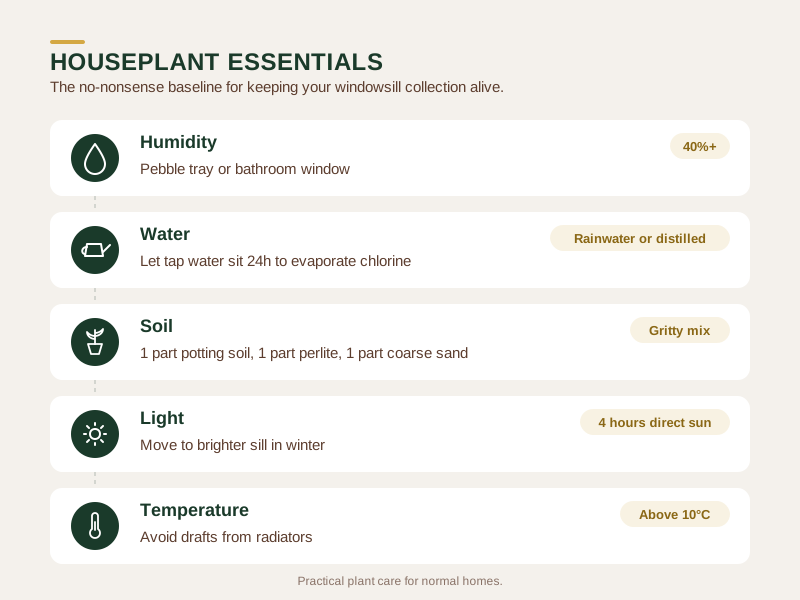
- Humidity: Aim for 40%+; a pebble tray or a bathroom window helps.
- Water: Use rainwater, distilled, or let tap water sit 24h to let chlorine evaporate.
- Soil: Gritty cactus mix (1 part potting soil, 1 part perlite, 1 part coarse sand).
- Light: Minimum 4 hours of direct sun; move to a brighter sill in winter.
- Temperature: Keep above 10°C but avoid drafts from radiators.
Now you know the culprits, you might want to keep track of your plant’s progress. Download the Free Houseplant Troubleshooting Checklist – it’s a simple sheet that reminds you what to look for each week.
The Fix: Step-by-Step Recovery Protocol
Stop watering immediately
The most common mistake is giving the plant a drink when the soil is still damp. Stick a finger about 2 cm deep; if it feels moist, hold off. Let the mix dry completely for at least 48 hours before you even think about reaching for the watering can.Assess the soil and roots
If it feels soggy, clumpy, or smells faintly of a stagnant pond, it’s time to repot. Dump the old mix, rinse the roots gently under lukewarm water, and shake off the excess. Healthy roots should feel firm, while rotten ones will be slimy and fall away easily.Repot into a gritty blend
A 1:1:1 ratio of cactus compost, perlite, and coarse sand. This drains quickly but still holds enough moisture for the plant’s shallow roots. Choose a pot with drainage holes—a simple terracotta one is cheap, breathable, and helps the soil dry out faster.Trim the rotten bits
Using sterilised scissors, cut any mushy stem back to firm, healthy tissue. If the majority of the plant is still firm, you can propagate the healthy leaves. Let the cut ends dry for a day, place them on a dry surface with good airflow, and wait for tiny pink roots to appear.Adjust your watering schedule
In summer, aim for a thorough soak every two weeks, allowing water to run through the pot and emptying the saucer. In winter, water once a month or only when the soil is bone-dry. The Royal Horticultural Society notes that succulents need significantly less water when indoor heating is on and light levels drop.Boost the local humidity
A pebble tray filled with rainwater works wonders for plants suffering from dry radiator heat. Just be sure the pot sits on the stones, not directly in the water, to avoid root rot. If you have a bright bathroom, the steam from the shower can also help.Give it proper light
Move the plant to the brightest sill you have, ideally a south-west facing window. If natural light is limited in your flat, a Garpsen clip-on grow light (paid link) can supplement for an hour or two in the evenings.
Buy Garpsen clip-on grow light on Amazon → (paid link)
- Monitor and record
Keep a small notebook or use a checklist to note when you water, any leaf loss, and visual changes. Spotting a pattern early prevents a repeat of the mushy crisis. Browse more troubleshooting guides on the blog.
Succulent Health Checklist for UK Homes
| Requirement | Target | Method |
|---|---|---|
| Humidity | 40%+ | Pebble tray or bathroom window |
| Water | Rainwater or distilled | Let tap water sit 24h to evaporate chlorine |
| Soil | Gritty mix | 1 part potting soil, 1 part perlite, 1 part coarse sand |
| Light | 4 hours direct sun | Move to brighter sill in winter |
| Temperature | Above 10°C | Avoid drafts from radiators |
What to Do Now
You’ve got a clear triage matrix, you know why UK homes can be tough on succulents, and you have a step-by-step rescue plan. Most problems come down to getting the balance of water, light, and humidity right. If you’ve trimmed the rot, repotted into a gritty mix, and adjusted your watering, give the plant a few weeks to bounce back.
For a tidy way to track each of those steps, download the Free Houseplant Troubleshooting Checklist – it’s a printable sheet that keeps you honest about watering dates, light levels, and any propagation attempts.
If you’re still unsure or hit another snag, drop us a line on the contact page – we’re always happy to have a quick chat and see if we can stop any more succulents from “melting” in your flat. Keep at it – the plant will thank you, and you’ll finally feel you’ve got this sorted.
Related Guides
For a complete overview, see our Houseplant Troubleshooting: How to Save a Dying Plant.
Further Reading
Note: Content here is general in nature. Prices, products, and guidance change — verify the details before acting.