Why Is My Spider Plant Going Brown? UK Fix
This guide is part of our Popular Houseplant Care: Troubleshooting the UK’s Favorite Plants series — practical advice for keeping houseplants alive in British homes.
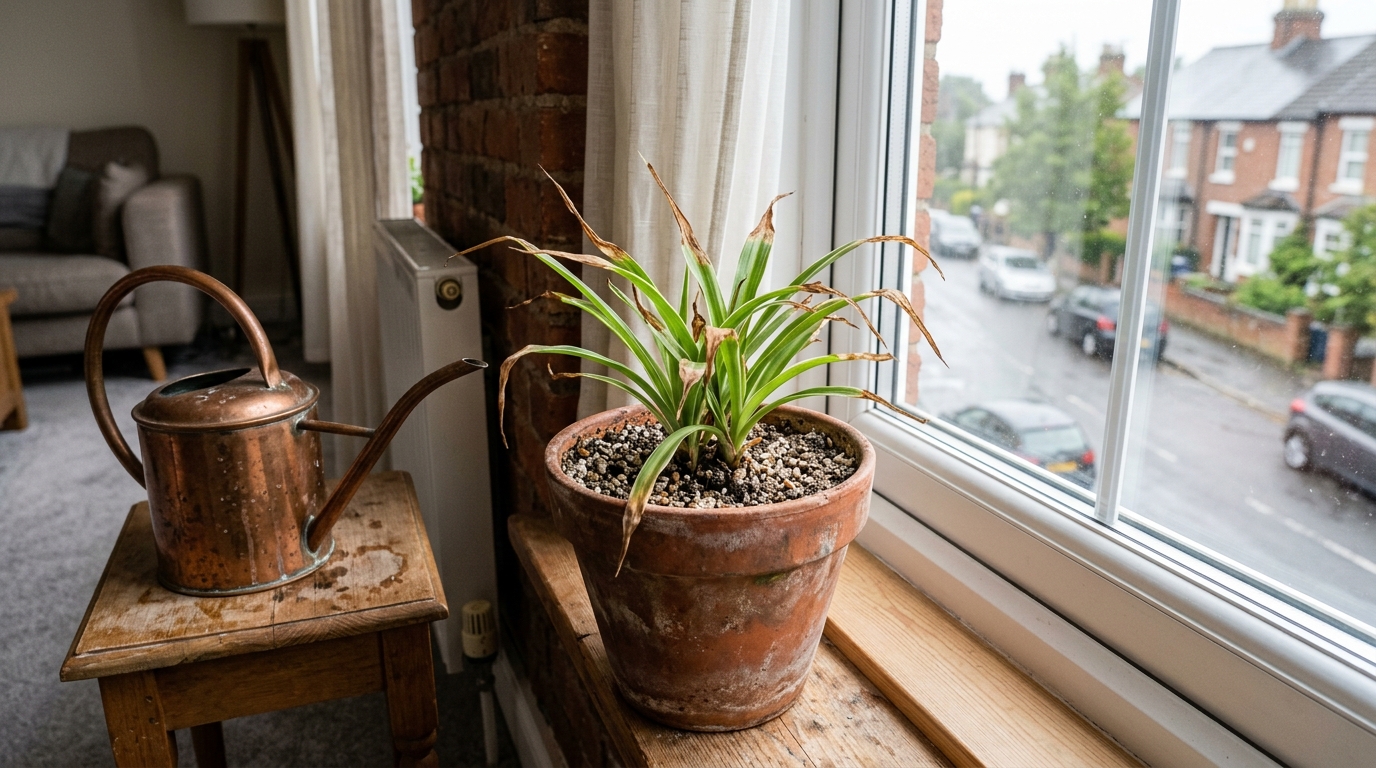
Brown tips on a spider plant are incredibly frustrating, especially when you bought it because it was supposed to be indestructible. You’ve probably tried giving it a splash of water, moved it to a brighter windowsill, and still ended up with those crispy, coffee-coloured ends. The good news is that it’s rarely a death sentence. It’s usually just a signal that something in your flat’s environment is off—most commonly our hard UK tap water or the dry air from central heating—and there is a straightforward fix.
Why Are My Spider Plant Tips Turning Brown?
Spider plant tips turn brown primarily due to fluoride and chlorine in tap water, mineral buildup in the potting soil, or a lack of humidity caused by central heating. In British homes, the combination of hard tap water and dry winter radiators pulls moisture from the leaf edges faster than the roots can replace it, leaving the tips scorched and crispy.
Water Quality – hard water, chlorine and fluoride
Tap water in many UK towns and cities contains high levels of calcium, magnesium, and often added fluoride. Spider plants are particularly sensitive to these minerals; they build up in the soil and scorch the leaf margins. The Royal Horticultural Society notes that excess salts from hard water are a primary cause of tip-burn on sensitive indoor foliage.
This shows up a lot in hard-water areas. Giving the plant a drink straight from the cold tap, and within two weeks the tips turn brown — easy to mistake for overwatering. A switch to filtered water stops the damage spreading to new leaves.
Light Levels – too much or too little
A spider plant in a north-facing window will stretch and look leggy, but the leaves usually stay green. Conversely, a south-facing spot with direct summer sun can scorch the tips, especially when the plant is only used to the gloomy lower light of a British winter.
Humidity – the central-heating curse
When the radiators kick on, the air in a typical flat can drop below 30% relative humidity. Spider plants prefer it sitting around 40–60%. Dry air speeds up transpiration, pulling moisture from the leaf edges and leaving them brown and crispy.
Nutrient Buildup – old soil can lock in salts
If you’ve been using the same potting mix for over a year, salts from liquid fertiliser and tap water can accumulate, further contributing to tip burn.
Fix 1: The Water Switch (UK Context)
The cheapest and most effective way to stop mineral-induced tip burn is to change the water you give your spider plant.
- Let tap water sit – Fill a clean jug with tap water and leave it uncovered for 24 hours. The chlorine will evaporate, and the water will reach room temperature, which is much less shocking for the roots.
- Use filtered water – A basic Brita-type filter removes a good chunk of the calcium, magnesium, and fluoride. It’s a modest upfront cost (roughly £15-£25 for a starter jug) but pays off in healthier foliage across your whole collection.
- Rainwater or distilled water – If you have a water butt in the garden, collect rainwater. Distilled water is another option, though the cost can really add up if you’re watering weekly.
You don’t need to buy bottled water. Letting your tap water sit out overnight is free and makes a noticeable difference. It’s the first thing to try whenever those tell-tale brown tips start to form.
Fix 2: Combat Central Heating Dryness
Radiators are lovely for keeping the flat warm in January, but they are absolutely ruthless on humidity. Here is how to give your spider plant the moisture it craves without turning your living room into a damp rainforest.
- Pebble tray – Fill a shallow tray with pebbles, add water until it just touches the tops of the stones, and set the pot on top. As the water evaporates, the local humidity around the leaves rises. It’s a brilliant, cheap approach that costs around £5-£10 for a decent tray.
- Misting (moderately) – A light mist once a morning, using room-temperature water, can boost humidity temporarily. Avoid misting in the evening to prevent fungal growth on the leaves overnight.
- Bathroom “plant room” – If you have a bathroom with a frosted window, move the spider plant there. The steam from your daily shower provides a natural humidity boost, and it doesn’t cost a penny.
You don’t need a pricey humidifier. A simple tray does the trick for most flats. Grouping plants or using pebble trays is one of the most practical ways to manage dry indoor air
Fix 3: Pruning and Recovery
Brown tips won’t magically turn green again, but trimming them off gives the plant a tidy look and lets new growth emerge unimpeded. Here is exactly how to do it safely.
1. Grab clean, sharp scissors Household kitchen scissors work absolutely fine for this job. Just make sure they are sterilised first with a quick wipe of rubbing alcohol or warm soapy water. Dirty blades can introduce bacteria straight into the fresh cut.
2. Cut at a 45-degree angle Trim just above the healthy green tissue, following the natural curve of the leaf if you can. Cutting at an angle prevents water from pooling on the flat cut edge, which can lead to rot. Leave a tiny sliver of brown if you want to avoid cutting into the live green tissue.
3. Don’t over-prune Remove only the dead, crispy portions at the ends. The plant still desperately needs the remaining green leaf area for photosynthesis. If you chop half the plant away in one go, it will go into shock.
After snipping, you’ll see fresh shoots in about 4–6 weeks if the water and humidity issues are sorted. It’s easy to be hesitant at first — cut a leaf too far back on one occasion and the plant can look worse. A gentle trim, however, gave the plant a refreshed appearance that lasted for months.
Prevention: Keeping It Green Long-Term
- Stick to filtered or settled water – Consistency is key. Once the mineral build-up stops, the plant usually recovers and pushes out healthy new growth within a month.
- Rotate the plant every 2–3 weeks – This ensures even light exposure and prevents one side from stretching and becoming leggy towards the window.
- Feed sparingly – Spider plants are light feeders. A balanced houseplant fertiliser once a month during the spring and summer growing season (you’re looking at about £5-£8 for a small bottle) is more than enough.
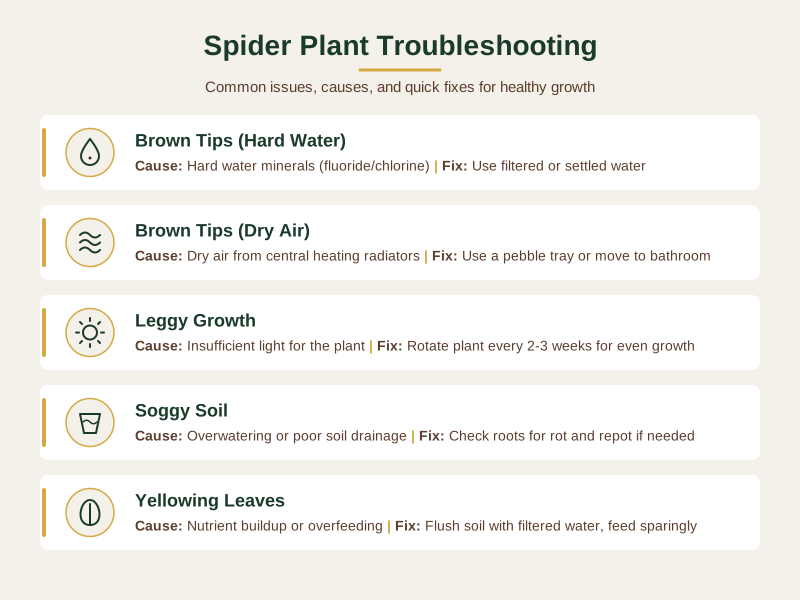
Spider Plant Care: Common Issues & Solutions
| Issue | Cause | Quick Fix |
|---|---|---|
| Brown tips | Hard water minerals (fluoride/chlorine) | Use filtered or settled water |
| Brown tips | Dry air from radiators | Use a pebble tray or move to bathroom |
| Leggy growth | Insufficient light | Rotate plant every 2-3 weeks |
| Soggy soil | Overwatering or poor drainage | Check roots for rot and repot if needed |
| Yellowing leaves | Nutrient buildup or overfeeding | Flush soil with filtered water and feed sparingly |
What to Do Now
If you are dealing with related issues, see our guide to Does UK Hard Water Affect Houseplants?. You now know the three main reasons your spider plant’s tips are turning brown and have a clear, UK-tailored action plan: switch to filtered or settled water, boost humidity with a pebble tray or bathroom steam, and prune the damaged ends. Keep an eye on light levels and avoid over-feeding, and you’ll see fresh green growth within a few weeks.
If you’ve followed the steps and still feel a little unsure, or if you’ve got another plant acting up, feel free to get in touch with any questions. Alternatively, Download the Free Houseplant Troubleshooting Checklist and keep it on your kitchen counter for quick reference.
Remember, spider plants are tough. They have survived neglect, low light, and the occasional overwatering out of kindness. With the right water, a splash of humidity, and a tidy trim, yours will bounce back and keep sending those elegant off-shoots your way. If new growth is still browning after three weeks, the water is the problem — try leaving it out overnight before every water.
Related Guides
For a complete overview, see our Popular Houseplant Care: Troubleshooting the UK’s Favorite Plants.
- Royal Horticultural Society - Advice on sensitive indoor foliage and salt buildup
- Royal Botanic Gardens, Kew - How to care for houseplants and manage humidity
- Royal Horticultural Society - Profile on Chlorophytum comosum (Spider Plant)