Spider Mites on Indoor Plants: UK Eradication Guide
eBay Partner Network: we earn a commission when you buy through eBay links on this page.
This page contains affiliate links. As an Amazon Associate we earn from qualifying purchases — this does not affect the price you pay.
Bugs are every plant parent’s nightmare. Our Houseplant Pests UK: How to Identify and Eradicate Bugs hub walks through identification and treatment; this article focuses on one pest.
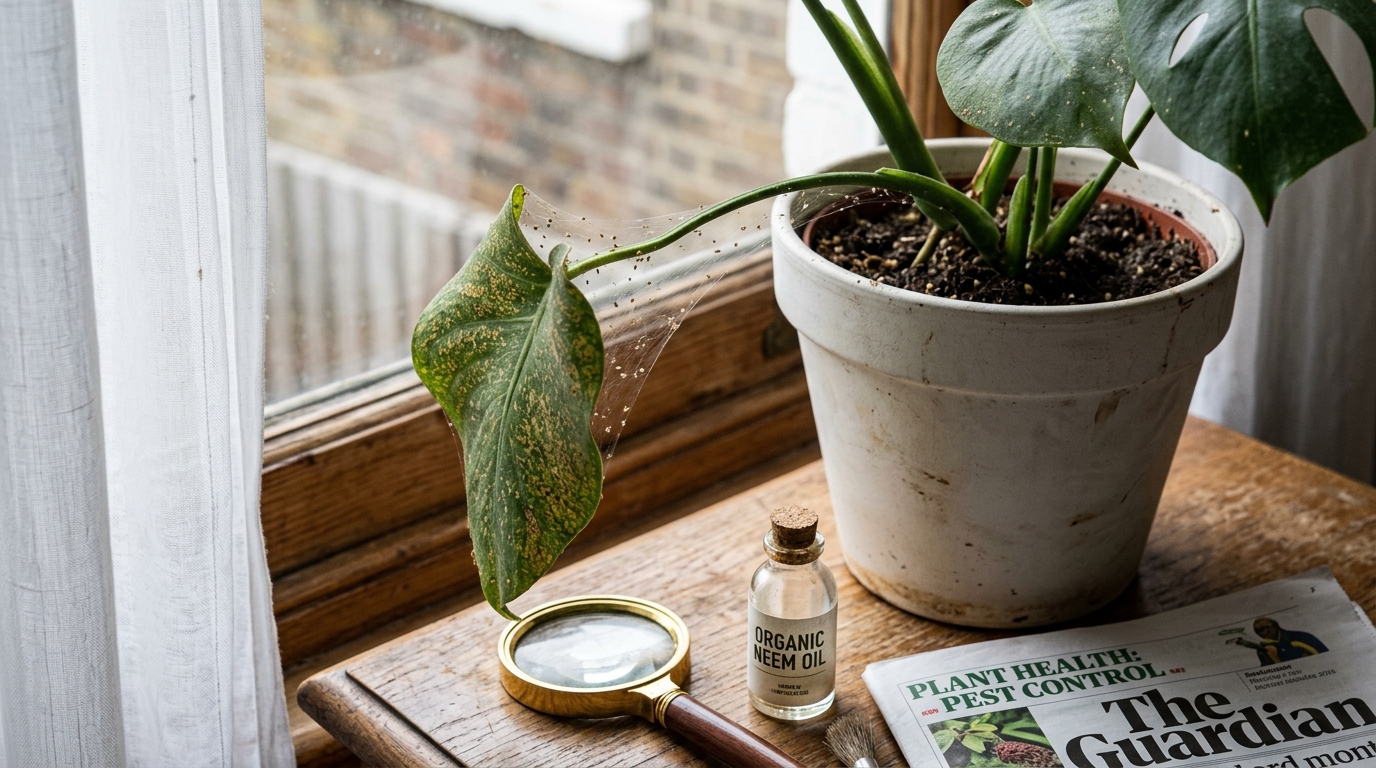
Fine silken threads under your Monstera’s leaves, yellow stippling that looks like flour dusting—you’ve found spider mites. Don’t panic. They’re a seasonal nuisance driven by central heating, not an immediate death sentence. You can knock them out without turning your flat into a chemical war zone. This is exactly how to confirm the infestation, drop the mites quickly, and keep them away for good.
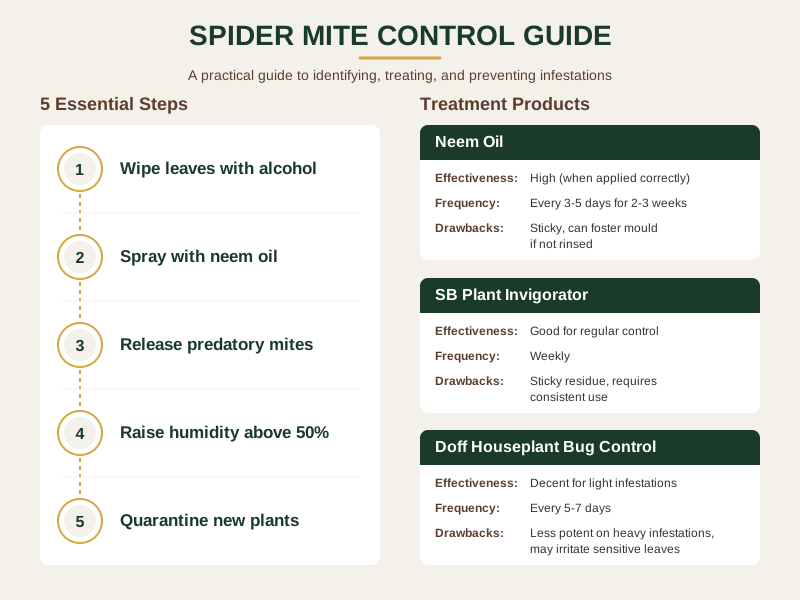
Quick reference: See the infographic below for a visual summary of the key points, or download the data table for full details.
How do you get rid of spider mites on indoor plants?
To get rid of spider mites, start with the physical stuff—wipe leaves with 70% isopropyl alcohol or blast them with a strong spray of lukewarm water to knock the pests off. If they stick around, apply a natural spray like cold-pressed neem oil (5ml per litre of water) or SB Plant Invigorator (paid link) every three to five days. For a chemical-free, long-term fix, release predatory mites (Amblyseius andersoni) onto the soil; they’ll hunt down the rest. Finally, get the humidity up above 50% with a pebble tray or humidifier, because spider mites thrive in the dry air from your radiators.
Check SB Plant Invigorator price → (paid link)
Spotting the Enemy: UK-Specific Signs
First, be sure you’re dealing with spider mites and not just dust or a nutrient issue. Here’s the quick visual checklist:
📺 Watch: Life cycle of spider mite — Koppert
- The “White Dust” test: Gently rub the top of a leaf between your fingers, then press it onto white paper. A faint red-brown smear is mite excrement. Dust just wipes away.
- Webbing: Look for fine, almost invisible silk threads in leaf joints or along the pot rim. In a bad case, it looks like a tiny cobweb.
- Discolouration: Tiny yellow dots (stippling) pepper the leaf, often on the newest growth first.
- Movement: Tap a leaf and watch for tiny specks scurrying away.
According to the Royal Horticultural Society (RHS), these mites breed fast in warm, dry conditions. Spotting them early, before leaves start dropping, is key. Once you’ve ticked these boxes, you can move on to the cure.
Why do spider mites thrive in UK winter homes?
Spider mites love UK homes in winter because central heating drops indoor humidity to 20–30%—the perfect dry breeding ground. Hard tap water doesn’t help; it leaves mineral deposits on leaves as it evaporates, stressing the plant and making it an easier target. Low winter light is the final blow; a north-facing window might only give a couple of hours of gentle daylight, leaving your plant weakened.
A quick tip: never bring a plant straight from the garden into a heated room in October. Give it a week on a cooler windowsill to acclimatise first. The sudden change is an open invitation for mites.
Mechanical Removal – The “Save the Plant” First Step
If the infestation is still light, start here. It’s chemical-free and works immediately.
- Isopropyl alcohol: Dab a cotton bud soaked in 70% isopropyl alcohol onto leaves and stems. It kills on contact. Many owners learn the hard way this burns fuzzy leaves like Calatheas, so avoid those. Work in small sections and let the leaf dry.
- Water spray: A strong jet of lukewarm water from a spray bottle can dislodge mites. Wipe the leaf dry afterwards to stop fungal issues in dark corners.
- Bagging: Slip the plant into a clear plastic bag for 24 hours. It traps any stragglers and stops them spreading.
These steps are quick, cost nothing, and are safe for pets. Think of them as the “belt and braces” approach before you reach for any sprays.
Natural Sprays – Safe for Pets & Kids
A pre-mixed OURONS Water Soluble Neem Oil (paid link) saves the faff of mixing your own. Spray the undersides of leaves every three days for two weeks and the mites usually clear without any chemical residue.
Check OURONS Water Soluble Neem Oil price → (paid link)
When the infestation’s a bit heavier, a repeatable, non-toxic spray does the job.
- Neem oil: Mix 5ml of cold-pressed neem oil with a litre of lukewarm water and a few drops of mild liquid soap. Spray the whole plant, especially the undersides. It acts as a repellent but can get sticky—if you see black mould forming, rinse the leaves with plain water after a day.
- SB Plant Invigorator (eBay paid link) This eco-friendly spray is good for keeping a range of pests at bay. It needs weekly applications and can leave a sticky residue, so a light wipe-down afterwards stops it becoming a mould magnet.
- Doff Universal Bug Control (paid link): The budget 1 L spray works reasonably well on early-stage mites. It’s easy to use straight from the bottle, but don’t expect it to clear a severe infestation on its own—you might need to combine it with the mechanical steps above.
View Doff Universal Bug Control on Amazon → (paid link)
Pros/Cons at a glance
| Spray | Effectiveness | Frequency | Drawbacks |
|---|---|---|---|
| Neem oil | High (when applied correctly) | Every 3-5 days for 2-3 weeks | Sticky, can foster mould if not rinsed |
| SB Plant Invigorator (paid link) | Good for regular control | Weekly | Sticky residue, requires consistent use |
| Doff Universal Bug Control (paid link) | Decent for light infestations | Every 5-7 days | Less potent on heavy infestations, may irritate sensitive leaves |
If you’re willing to spend a little more for peace of mind, neem is worth the investment. On a tighter budget, the Doff spray is a decent stop-gap.
Biological Controls – The “Pro” Move
For a long-term, chemical-free solution, introduce nature’s own predators.
- Amblyseius andersoni (predatory mites): These tiny arachnids hunt spider mites relentlessly. They’re harmless to humans, cats, and dogs. You release them onto the soil surface; they’ll wander up the plant and start feeding.
- Where to buy: UK suppliers like biological control suppliers stock them, typically in the region of £20-£30 for a starter pack (enough for a medium-sized pot).
- How to apply: Shake the packet over the soil, then mist the top lightly with water to help them move up. Keep humidity up for the next few days—they like it moist.
Predatory mites work well on a fiddle-leaf fig that’s been battling mites for months — within a week the webbing is gone and the plant perks up. They’re the most effective way to clear spider mites without chemicals.
Prevention: Keeping Them Away for Good
The best cure is a solid defence.
- Increase humidity: Mites hate moisture. A pebble tray with water beneath the pot, or a modest tabletop humidifier (roughly £15-£25), can lift humidity to 50% where they struggle.
- Regular leaf checks: Every week, wipe each leaf with a damp cloth, especially the undersides. It’s the simplest preventative measure you can do.
- Quarantine new arrivals: Before you bring a new plant home, isolate it for two weeks and check daily for webbing.
Even a cheap humidifier on a timer in a south-facing flat can bring mite numbers down dramatically over a month. Small, consistent actions work.
Recovery: Nursing Your Plant Back to Health
Treatments can stress a plant, so expect some yellowing or leaf drop. Here’s how to help it bounce back:
- Don’t panic over yellow leaves: It’s a stress response. If a leaf is more than half-brown, prune it so the plant focuses on new growth.
- Feed wisely: After the infestation is cleared, use a balanced, water-soluble fertiliser (around £10-£15 for a 500ml bottle) every two weeks during the growing season.
- Boost light: Even a small increase—a reflective foil behind the plant or a low-cost LED grow light (£30-£40)—can speed up recovery.
Over-feeding a spider-mite-ridden philodendron with a high-nitrogen feed sends the new growth limp. The lesson? Stick to a modest dose once the plant looks greener again.
Keep Learning
You’ve got a clear plan: knock the mites off physically, treat with a pet-safe spray if needed, and consider predatory mites for lasting peace of mind. Keep humidity up, wipe leaves weekly, and quarantine new arrivals.
If you’re still unsure where to start, the Free Houseplant Troubleshooting Checklist is a quick diagnostic tool that pinpoints exactly what your plant needs next.
Got more questions? Feel free to get in touch. You’ve got this, and your plant is far from gone to pot—it just needs a little TLC and the right strategy.
Related Guides
For a complete overview, see our Houseplant Pests UK: How to Identify and Eradicate Bugs.
Further Reading
Products linked above are ones we recommend based on owner feedback and UK-condition testing.
Note: This guide provides general information based on UK horticultural practices. Always verify specific treatment methods and product suitability for your particular plant species and local conditions. Consult a qualified professional or official source for critical plant health decisions.
If you are dealing with related issues, see our guide to Signs of Thrips on Houseplants.