Signs of Thrips on Houseplants (And How to Stop Them)
eBay Partner Network: we earn a commission when you buy through eBay links on this page.
This page contains affiliate links. As an Amazon Associate we earn from qualifying purchases — this does not affect the price you pay.
Bugs are every plant parent’s nightmare. Our Houseplant Pests UK: How to Identify and Eradicate Bugs hub walks through identification and treatment; this article focuses on one pest.
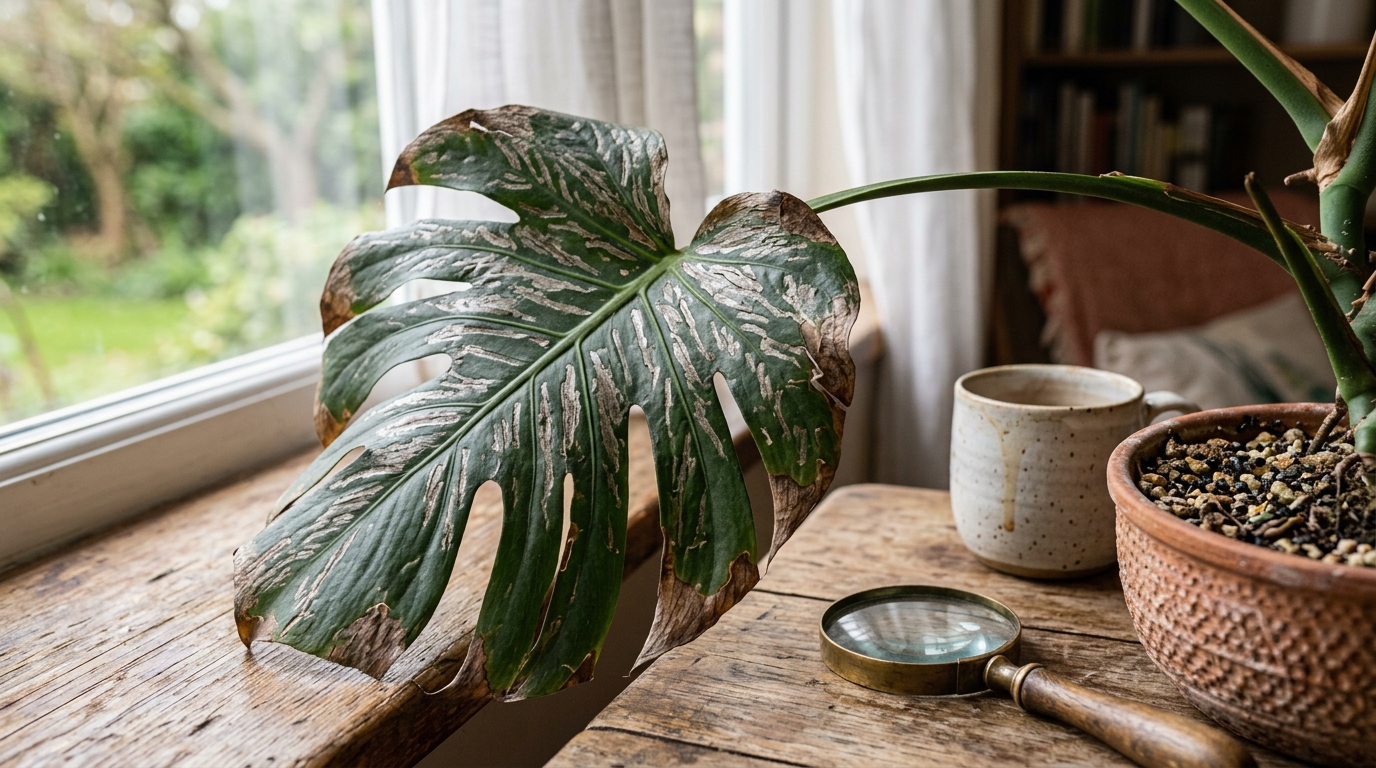
That silvery line on your Monstera leaf isn’t a sign of overwatering—it’s a tell-tale scar from thrips. If you’ve been scratching your head wondering whether you’ve killed your plant with too much water or a nutrient deficiency, you’re not alone. These tiny, almost invisible bugs love the warm, dry air created by central heating, spreading from room to room faster than you can say “hard water spots.” Here is exactly how to spot them, eradicate them, and stop them coming back.
Quick Picks
- Sciarid Fly Nematodes (paid link) Buy on Amazon → (paid link)
- Provanto Smart Bug Killer (paid link) Check Amazon price → (paid link)
- SB Plant Invigorator (paid link) See it on Amazon → (paid link)
- OURONS Water Soluble Neem Oil (paid link) View on Amazon → (paid link)
What Are Thrips? (The Invisible Assassin)
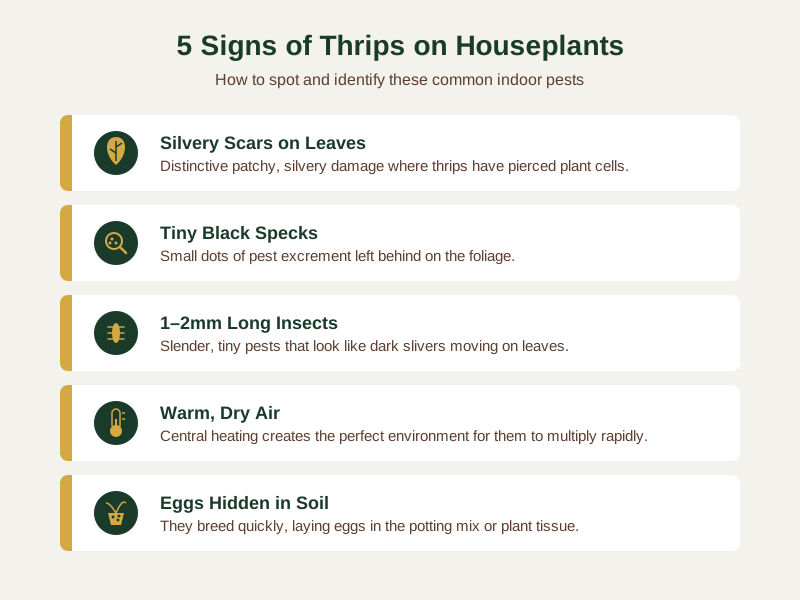
Thrips are slender, needle-shaped sap-sucking insects, typically 1–2mm long, that cause silvery leaf scarring and leave tiny black specks of excrement on houseplants. Because they are so small and spend much of their life hidden in the soil or tight leaf joints, you almost always spot the damage before you ever see the insects themselves.
They feed by piercing the plant tissue and sucking out the contents of the cells. The result is those metallic streaks where the tissue has been destroyed. In the UK, they thrive in the warm, dry micro-climate that central heating creates—especially during the winter months when indoor humidity drops below 30%. According to the Royal Horticultural Society (RHS), these pests breed rapidly in warm greenhouse-like environments, which is exactly why you might notice a sudden outbreak in your living room in January even though the plant looked completely fine all summer.
Thrips are often confused with spider mites. While both are tiny and cause stippling, spider mites leave a web of fine silk and their damage looks more like yellow speckles than the silvery scars thrips produce. You can find more on identifying different pests on our blog.
The 5 Signs You Have Thrips (UK Edition)
Look out for these five distinct symptoms to confirm you are dealing with a thrips infestation rather than a simple watering issue:
- Silvery Scars – The classic, almost metallic streaks on the upper leaf surface. They start as tiny lines and can quickly expand into larger patches.
- Black Dust – Minute black specks on leaves and the surface of the soil. That’s thrips’ excrement, and it’s a dead giveaway.
- Deformed Growth – New leaves that curl, become puckered or look “crumpled” are being fed on at the meristem before they even unfurl.
- White Eggs – Tiny, almost invisible white specks on the undersides of leaves. A magnifying glass or a simple jeweller’s loupe makes them pop out.
- Brown Dust on Soil – Thrips lay eggs in the potting mix; you may see a faint brownish-black layer on the surface of the compost.
It’s easy to assume a Calathea is just “thirsty”. The black specks on the soil surface gave it away—those were thrips eggs, not mineral deposits.
Avoid the “hard water trap”: wiping leaves with tap water can leave limescale spots that mimic pest damage, and in a damp winter flat, it can encourage fungal growth. Use rainwater or let boiled water cool before you give the leaves a gentle rinse.
How Do I Get Rid of Thrips for Good?
To eradicate thrips, you need a three-pronged approach: isolate the plant immediately to stop them spreading, treat the soil with beneficial nematodes or a systemic drench to kill the pupae, and spray the foliage weekly with an insecticidal soap to tackle the adults. Consistency is the only way this works—you must repeat the foliar spray weekly for at least four weeks and re-apply the soil treatment after two weeks to completely break their life cycle.
Here is the exact step-by-step protocol to sort the problem out:
Step 1: Isolation (Quarantine) Move the affected plant to a spare room, away from your other foliage. This isn’t optional—thrips can fly short distances and happily hitch a ride on your hands or clothing to infest your entire collection.
Step 2: Pruning Clip off any heavily infested leaves or flower spikes. Seal them in a plastic bag and bin them straight away; putting them in your compost bin can just re-introduce the pests to your home later.
Step 3: The Soil Drench Thrips pupate in the potting mix, so a soil treatment is absolutely essential. We’ve had solid results using Sciarid Fly Nematodes (paid link)—a biological control that roams the soil hunting pest larvae. It’s completely safe for pets and leaves no residue. Follow the package instructions and water the soil thoroughly afterwards.
Step 4: Foliar Spray For the adults on the foliage, an insecticidal soap works, but for a more robust knock-down, Provanto Smart Bug Killer (paid link). It’s a 1 L systemic spray that hits thrips feeding in the leaf tissue. Follow the label and spray the undersides of every leaf, making sure you get the petioles.
Step 5: Sticky Traps Yellow sticky cards placed a few centimetres from the plant catch wandering adults. Replace them every week until you see absolutely no more insects stuck to them.
Don’t just give the leaves a quick rinse under the tap. As UK water authorities note, hard water leaves behind calcium and magnesium deposits. On a houseplant, these mineral streaks look just like pest damage and block the leaves’ pores. Also, avoid using a heavy-duty contact pesticide unless you’re dealing with a massive infestation—it can scorch delicate leaves and ruin the soil microbiome.
Best UK Products to Treat Thrips
When the infestation is light, start with SB Plant Invigorator (paid link). It’s an organic foliar spray that doubles as a mild plant food, keeping aphids, spider mites, and thrips at bay. The downside? You’ll need to re-apply weekly, and on some plants it can leave a faint black mould if you spray too heavily.
For a full-blown outbreak, *Provanto Smart Bug Killer (eBay paid link) is the nuclear option. We’ve found it clears thrips within a couple of applications. The Amazon listing is a 1 L spray rather than a tiny mix-your-own bottle — follow the label when your Monstera looks like it’s going to die.
If you’re watching the purse strings, Doff Universal Bug Control (paid link) is the budget Amazon spray. It works on soft-bodied pests, but the results can be a bit hit and miss, and you may need several rounds. Use it only for minor infestations on robust plants.
Check Doff Universal Bug Control price → (paid link)
For the soil side of things, Sciarid Fly Nematodes (paid link) hunt thrips larvae in the compost. We’ve seen a noticeable drop in soil-borne pests after two applications, and they’re completely safe around cats and dogs.
A quick tip from the community: many people pair Provanto with a foliar spray of SB Plant Invigorator *(eBay paid link)*as a maintenance routine. The systemic action of Provanto knocks the heavy hitters out, while the Invigorator keeps any stragglers in check.
Prevention: Keeping Them Out of Your UK Home
As a preventive spray, use diluted OURONS Water Soluble Neem Oil (paid link) on new plants before they join the collection. It’s cheap insurance against hitchhiking thrips.
- Quarantine New Plants. Never dump a new pot straight from the garden centre onto your living-room shelf. Keep it in a spare room for at least two weeks, checking the undersides of leaves daily.
- Manage Humidity. Thrips love the dry air that central heating creates. A pebble tray with water or a modest humidifier (even a cheap tabletop model) can push humidity up to 45-50% and make the environment much less inviting.
- Regular Inspection. Make it a habit to flip every leaf once a week, especially in winter when the light is low and the heating is on full blast. Look for the silvery scars, black dust, and those tiny white eggs.
During the colder months, keeping a small magnifying glass near your plants is worth it. A quick glance at the soil surface for that faint brown dust can save you a lot of heartache later.
Thrips vs Spider Mites: Key Differences
| Feature | Thrips | Spider Mites |
|---|---|---|
| Damage Type | Silvery scars on leaves | Yellow speckling on leaves |
| Visible Signs | Tiny black specks (excrement) | Fine silk webbing on plants |
| Size | 1–2mm long | Very small, often microscopic |
| Preferred Environment | Warm, dry air from central heating | Hot, dry conditions |
| Life Cycle | Eggs in soil, rapid breeding | Eggs on leaves, webbing protection |
📺 Watch: Common Houseplant Pests Under a Microscope — Techplant
Before You Buy
If you are dealing with related issues, see our guide to Spider Mites on Indoor Plants. Thrips are a bit of a nightmare, but the key takeaway is simple: spot the silvery scars early, treat both the leaf and the soil, and stop the spread by quarantining. They are resilient, but with the right protocol, they are completely beatable.
If you’ve just walked through the steps and want a printable cheat-sheet to keep you on track, grab our Free Houseplant Troubleshooting Checklist—it’s a quick reference you can stick on your fridge.
Got more questions or a plant that’s still giving you grief? Read more about us or get in touch. You’ve got this—just keep at it, and your Monstera will be back to its glossy self before you know it.
Related Guides
For a complete overview, see our Houseplant Pests UK: How to Identify and Eradicate Bugs.
- Royal Horticultural Society (RHS) - Thrips Information
- Royal Horticultural Society (RHS) - Identifying Pests
- Royal Horticultural Society (RHS) - Plant Health Advice
Products linked above are ones we recommend based on owner feedback and UK-condition testing.
Note: This information is for general guidance only. Always verify specific treatment methods and product safety with a qualified professional or official source.