How to Prune Basil and Mint for Bushier Growth
This page contains affiliate links. As an Amazon Associate we earn from qualifying purchases — this does not affect the price you pay.
A basil plant’s growing tip produces a hormone that suppresses side shoots. Removing the tip removes the suppression, allowing buds at the leaf nodes below to break and grow. This apical dominance explains why cutting back a herb leads to bushier growth, not less.
For most people growing basil and mint in a UK flat, the problem isn’t survival. It’s getting them to thrive. Basil goes leggy and sparse. Mint escapes its pot and takes over the kitchen. Both issues come from the same root cause: nobody told you how to prune them properly.
The fix is straightforward once you know it. And once you do, you’ll wonder why you ever worried about cutting anything back at all.
Unlocking bushier growth through pruning
The fear of harming the plant is what puts most people off. You’ve coaxed this little basil from a supermarket pot, watered it carefully, and kept it off the cold windowsill at night. The last thing you want is to take scissors to it.
But herbs are forgiving. They bounce back from pruning in a way that most houseplants don’t. That’s the point. These plants have evolved to be harvested, and they’ve built their growth strategy around exactly that.
When you clip basil or mint regularly, you interrupt the plant’s natural urge to flower and set seed. Instead, it redirects energy into producing new stems and leaves. The result is continuous, harvestable foliage rather than one scrappy crop followed by a quick decline.
For someone growing herbs on a kitchen windowsill in a centrally heated flat—where the air gets dry and the light is never quite strong enough in winter—this matters. You need every edge you can get, and pruning gives your plants one.
It’s a quick task that pays off. Five minutes on a Sunday morning, a clean pair of scissors, and you’re set up with fresh basil for the week. That’s a trade-off worth making.
Two different plants, two different cuts
This is where most guides fall short. They tell you to “pinch out” your basil and “trim” your mint, but they skip the part that actually determines whether you end up with a bushy plant or a sad, leggy one.
Basil grows from the top. The main stem extends upward, and if you leave it alone, it puts all its energy into that single vertical shoot. You want side branching—two, three, sometimes four new stems growing outward from each cut point.
The trick is to cut above a leaf node. A node is the point on the stem where a pair of leaves meets the main branch. That’s where dormant buds are sitting, waiting. When you cut just above that point, the plant wakes those buds up and forces two new shoots. Leave the node intact. Cut the stem above it.
That’s the step that gets left out. “Pinch out the tips” is fine, but if you pinch in the wrong place—mid-stem, between nodes—you won’t trigger the branching response. You’ll just end up with a shorter, weaker stem. Do it right, and a single basil plant can produce significantly more leaves.
Mint is a different beast. It doesn’t grow from the top like basil. Mint grows from the base, sending up new shoots as runners that spread outward. Left unchecked, it’ll fill its pot completely and start reaching for other pots nearby. Mint is notorious for its rampant growth—it’s one of those plants that will test your boundaries.
The pruning approach is the opposite of basil. Instead of cutting the tips, you cut the stems at soil level. Remove the older, woodier stems to make room for fresh new runners pushing up from the base. This keeps mint contained, productive, and easy to harvest from rather than a tangled mess.
A clean, sharp pair of scissors makes a difference. Blunt blades crush the stem rather than cutting it cleanly, which can introduce disease.
If you’re noticing other issues with your herbs—yellowing leaves, sticky residue, or tiny insects—it could be a pest problem rather than a pruning one. Have a look at our guide to common houseplant pests before you reach for the scissors.
Harvesting for continuous growth
Pruning and harvesting are the same action for these plants. You’re not doing two separate jobs. When you cut basil above a node, you’re pruning it and putting those leaves in your pasta. When you take mint stems at the base, you’re controlling its growth and filling a glass.
Regular clipping when cooking through summer keeps the plant responding. Many basil varieties benefit from this approach to maintain a continuous supply of fresh leaves rather than watching the plant bolt to seed.
To harvest basil correctly, cut the stem above a node and take what you need. The plant will branch from that point and produce new stems. Mint is even more forgiving. New stems seem to appear almost regardless of what you do to it.
The difference between the stuff you buy in plastic bags and fresh-cut from your own windowsill is significant enough that once you’ve had it, you won’t go back.
Fresh basil on a summer salad, mint muddled into a drink, herbs picked five minutes before dinner—that’s the payoff for ten minutes of pruning work spread across the week.
Common mistakes to avoid
The biggest mistake is being too gentle. Many gardeners are shy about harvesting and don’t want to cut back. I understand the instinct—it feels wasteful to remove growth you’ve been patiently nurturing. But herbs don’t work that way. Holding back just delays the inevitable and reduces your yield. The plant isn’t doing you a favour by staying tall. It’s just not doing its job.
With basil, the other common error is letting it flower. Once basil starts to flower, it redirects energy into seed production and the leaves can become bitter and sparse. Pinch off flower buds as soon as you see them. It sends the plant back to leaf production immediately. Trimming before the flowers arrive—not after—is one of the secrets to big, bushy basil plants.
With mint, the mistake is usually not cutting back hard enough or often enough. If you only take the tips, the plant slowly fills the pot with older stems that produce less. Cut right down to soil level on the stems you’re removing. The new growth comes from the base, and it’s vigorous enough that you’ll barely notice the gap within a week or two.
One more thing worth flagging: if you’re growing mint in a pot without a drainage tray, or if it’s sitting on a surface you care about, watch out for the runoff. Mint needs regular watering, so be mindful of where excess water goes.
Pruning is rarely the fix on its own if the fundamentals are wrong. Watering technique, light levels, and soil quality all play their part. If your herbs are struggling despite good pruning, it might be worth checking whether one of these other factors is the real culprit.
Pruning techniques compared
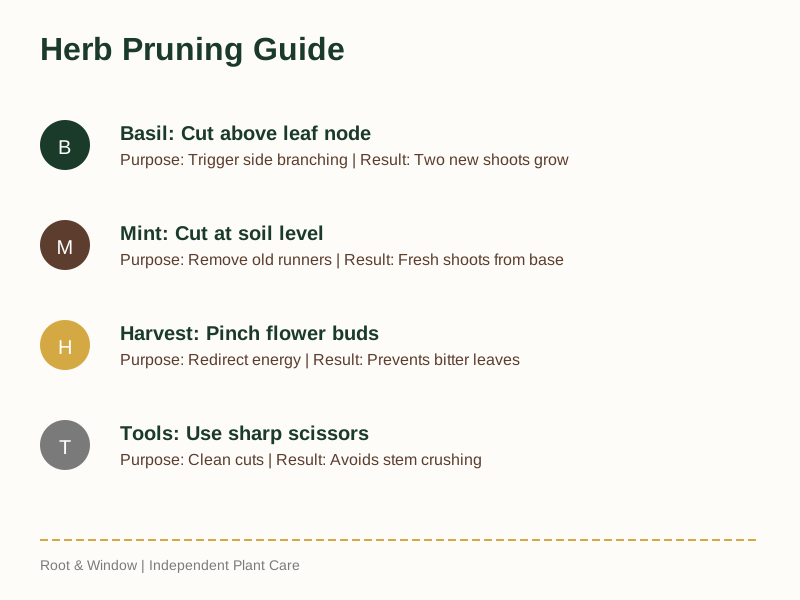
| Plant | Cut Location | Purpose | Result |
|---|---|---|---|
| Basil | Above a leaf node | Trigger side branching | Two new shoots grow from the cut point |
| Mint | At soil level | Remove old runners | Fresh new shoots emerge from the base |
| Basil | Pinch off flower buds | Redirect energy | Prevents leaves from becoming bitter |
| Mint | Trim tips | Control spread | Keeps the plant contained in the pot |
Frequently asked questions
Can I prune basil after it flowers?
Yes, but it’s better to prevent flowering in the first place. Once you spot flower buds forming, pinch them off immediately. This keeps the plant focused on leaf production rather than setting seed. If flowers have already opened, cutting the flowering stem back hard above a node will encourage fresh branching and new leaf growth, though the plant may take a little longer to recover.
How often should I prune mint?
Whenever the stems start getting long and woody—typically every week or two during the growing season. Mint responds well to regular harvesting, so there’s no harm in cutting it back often. The more you take, the more it produces. If it’s looking crowded in the pot, remove some stems entirely at soil level to let air circulate and encourage fresh shoots.
Do I need special tools?
No. A clean, sharp pair of scissors is all it takes. Just make sure they’re clean—wiping the blades with a damp cloth between plants reduces the risk of spreading disease.
When pruning isn’t enough
The core distinction is simple: basil needs top-trimming above a leaf node to trigger side branching, and mint needs base-cutting at soil level to control its runners and encourage fresh growth. Two different plants, two different techniques, one shared principle—cutting back is how you get more, not less.
Herbs are forgiving, which means you can experiment without much risk. If you cut in the wrong place, the plant will usually recover. That’s the point: these plants are designed to be harvested. They want you to take what you need.
However, pruning only works on a healthy plant. If your basil or mint is yellowing, recently repotted, or showing signs of stress, focus on stabilising it first. Address watering issues, check for pests, and ensure adequate light before applying any pruning technique. A struggling plant needs recovery time, not additional stress from cutting.
Now you know what to look for. Before you head to the kitchen, it’s worth making sure there aren’t other issues quietly undermining your herbs—pests, watering mistakes, or nutrient problems can all cancel out even the best pruning technique.
Grab the Free Houseplant Troubleshooting Checklist and work through your plant’s current condition. It’s a quick diagnostic that’ll tell you whether pruning is the right next step or whether something else needs sorting first.
Got questions? Get in touch—always happy to help sort out what’s going on with your herbs.
Related guides
For a complete overview, see our Growing Herbs Indoors UK: Complete Windowsill Care Guide.
The honest next buy, if you need one, is the LE TAUCI ceramic set (paid link) — 11 + 13 + 17 cm pots with drainage — the jump a supermarket herb needs when you split the plug.
View LE TAUCI ceramic set on Amazon → (paid link)
Sources and further reading
General guidance only, verify details with a qualified professional or official source.