Why Are My Pothos Leaves Turning Black? UK Fix
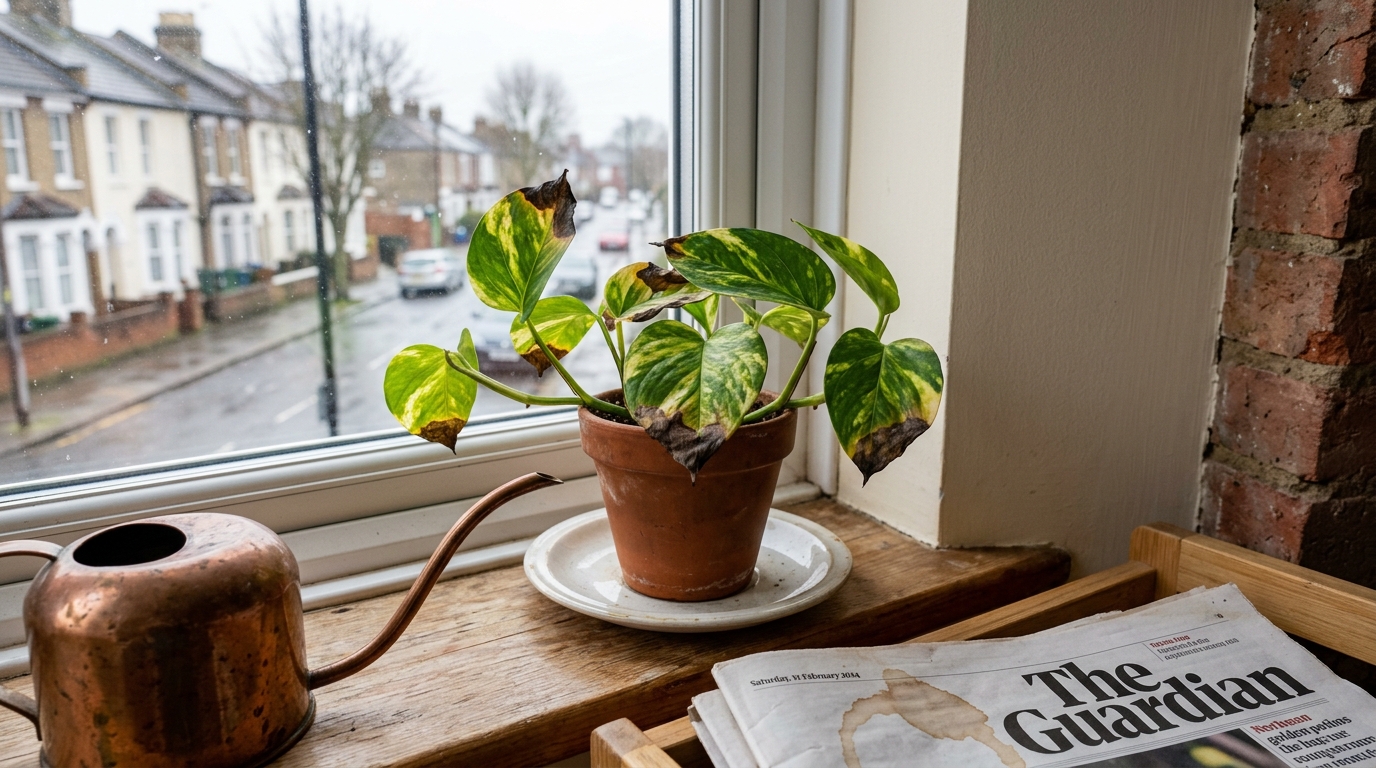
Some plants show up in every British flat for a reason. Our Popular Houseplant Care: Troubleshooting the UK’s Favorite Plants hub covers the UK’s favourites; this guide tackles one specific issue.
Black spots on your pothos aren’t a death sentence—they’re usually a symptom of an environmental issue you can fix today. We’ve seen the panic in a flat‑share kitchen when a fresh variegated pothos suddenly looks like it’s been through a tiny forest fire. The good news is that by checking whether the black spots are soft or crispy, you can immediately pinpoint the problem, tweak your routine, and start the rescue process.
The “Soft vs. Dry” Diagnostic Flowchart
If your pothos leaves are turning black, the first step is to feel the leaf. The texture tells you exactly what has gone wrong. If the black area feels mushy or soggy, the plant is likely suffering from root rot due to overwatering. If the black spots are dry, papery, and crispy at the edges, the cause is usually environmental stress from central heating draughts or hard water mineral buildup. Identifying which one you have dictates exactly how you rescue it.
Here is what to look for when you inspect the damage:
Soft & Mushy → Root rot or bacterial blight.
- The stem may feel like a limp noodle.
- Leaves often develop water‑soaked spots that expand quickly.
Dry & Crispy → Heat, draught, or hard‑water burn.
- Black edges are usually dry, with a brown‑ish rim.
- The rest of the leaf may stay green, just the tips are scorched.
Black Tips Only → Tip burn from mineral buildup, especially with hard tap water.
A quick way to run the flowchart:
- Touch test – Is the black part soft?
- Inspect the stem – Does it snap cleanly or pull away?
- Check the environment – Is the plant near a radiator or a draughty window?
If you’re still unsure, grabbing a basic houseplant troubleshooting checklist can help you walk through these exact symptoms.
The “Central Heating” Factor (UK Specific)
Radiators are the silent plant killers in many British flats. The dry heat they emit pulls moisture straight out of foliage, leaving the edges of pothos leaves blackened and brittle. According to the Royal Horticultural Society (RHS), positioning tropical indoor plants too close to artificial heat sources is a leading cause of crispy foliage in winter.
Keep an eye out for these heating hazards:
- Proximity matters – Plants within 30 cm of a radiator often show the first signs of stress.
- Cold draughts – In winter, opening a window for fresh air can create a chilly breeze that shocks the leaves, especially on north‑facing sills.
What to do:
- Move your pothos at least 90 cm (3‑4 ft) away from any heat source.
- If space is tight, set up a pebble tray with a few centimetres of water; the evaporating moisture raises local humidity without needing an expensive humidifier.
Perching a pothos on a TV unit directly above a radiator might look “stylish”. After a week the leaves were black at the tips and the plant looked wilted. A quick reposition and a pebble tray later, the new growth was glossy again. You can find more practical setup ideas on our blog.
Does Hard Tap Water Turn Pothos Leaves Black?
Yes, hard tap water can absolutely turn pothos leaf tips black. Tap water in most UK towns contains high levels of calcium and magnesium. When the water evaporates, those minerals settle in the soil and on leaf surfaces, eventually burning the leaf tips and turning them a dry, crispy black.
Water providers like Thames Water note that over 60% of households in England are in hard water areas, making this a massive and often overlooked issue for British plant owners.
How to spot hard‑water burn:
- Black tips are dry, not mushy.
- You may notice a faint white chalky residue on the leaf edges or crust on the topsoil.
Simple fixes:
- Let it sit – Fill a jug and leave the water out for 24 hours; chlorine evaporates and a tiny amount of hardness can settle.
- Rainwater or filtered water – Collect rain in a clean container or use a simple carbon filter. You’re looking at roughly £5‑£10 for a basic tap‑mounted filter.
- Dilute – Mix one part tap water with two parts distilled or rainwater for a gentler feed.
Switching entirely to rainwater helps once a variegated pothos starts developing black tips despite regular misting. Within two weeks the new leaves were vibrant, and the old blackened tips stopped spreading.
Root Rot: The Silent Killer
When the black spot feels soft, the roots are likely rotting. Over‑watering, especially in winter when the soil stays damp for days, creates an anaerobic environment that encourages fungal growth.
Diagnosing root rot:
- Gently tug a leaf; if it comes away with a rubbery, blackened stem, that part is dead.
- Lift the plant out of its pot – healthy roots are white and firm, while rotten roots are brown, mushy, and may give off a sour smell.
Rescue steps:
- Prune – Using clean scissors, cut away any black, mushy stems back to healthy tissue.
- Dry out – Let the soil dry completely for 48 hours; a dry period halts the fungus.
- Repot – Use a fresh, well‑draining mix (a peat‑free blend with perlite works well). If the root system is severely damaged, propagate the healthy top cuttings.
A common winter mistake is watering a pothos every few days because the radiator makes the flat feel warm. The soil stays wet and the stems can turn black and mushy. A hard prune and a fresh pot can save the healthy top growth.
Pest Identification: Fungus Gnats & Scale
Most pests don’t turn pothos leaves black on their own, but they can exacerbate other problems and weaken the plant.
Watch out for these two common culprits:
- Fungus gnats – Tiny, mosquito‑like flies hover over damp soil. Their larvae feed on fine roots, weakening the plant and making it more susceptible to rot. Look for a “soggy” feel in the topsoil and a few adult gnats near the pot.
- Scale – Small, shell‑like bumps on stems that suck sap. They often bring sooty mould, a black, powdery coating that can easily be mistaken for a leaf disease.
Quick fixes:
- Sticky traps – Place a Blooven yellow sticky trap (paid link) near the pot to catch adult gnats.
- Alcohol wipe – Dab a cotton swab in 70% isopropyl alcohol and wipe each scale bump; the insects die on contact.
See Blooven yellow sticky trap on Amazon → (paid link)
Black spots like this are easy to mistake for a fungal infection, but a closer look often reveals a thick layer of sooty mould from a hidden scale infestation. A couple of alcohol wipes and a few sticky traps usually sort it.
Note: The insecticide BugClear Ultra has been reported to cause leaf burns on pothos, so we would avoid it unless you’re dealing with a severe sap‑sucking pest and have no other options.
The “Save Your Pothos” Protocol
Now that you know what you’re looking at, here is a step-by-step rescue plan to get your plant back on track.
Step 1: Diagnose the leaf texture
Feel the blackened areas of your pothos before making any changes. If the spots are dry and crispy, you are dealing with environmental stress like heat or hard water. If the spots are soft, mushy, and the stem feels limp, the issue is root rot from overwatering.
Step 2: Relocate away from heat and draughts
Move your plant at least 90 cm away from active radiators and draughty windows. Central heating pulls moisture straight out of the leaves, causing the edges to scorch. If space is tight, place the pot on a pebble tray filled with water to boost local humidity naturally.
Step 3: Prune the damaged foliage
Using clean, sharp scissors, cut away the black portions of the leaves. If the damage is just at the tip, you can trim along the natural curve of the leaf to keep it looking tidy. For mushy, rotting leaves, remove the entire stem back to healthy green tissue to stop the rot from spreading.
Step 4: Adjust your watering routine
Let the top 2-3 cm of soil dry out completely before watering again. If you live in a hard water area, switch to rainwater or use a basic water filter to prevent mineral buildup. In winter, depending on your heating, you will likely only need to water your pothos once every 10 to 14 days.
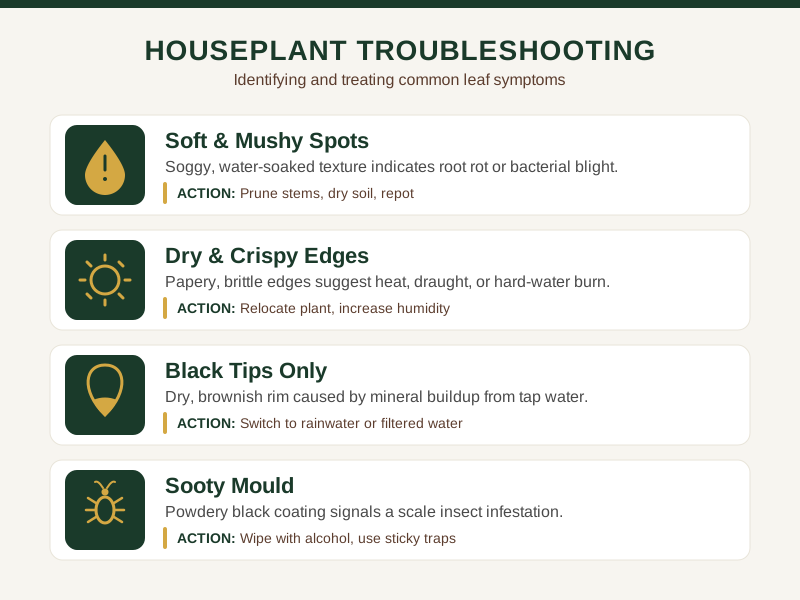
Pothos Black Leaf Diagnosis
| Symptom | Texture | Likely Cause | Action Required |
|---|---|---|---|
| Soft & Mushy | Soggy, water-soaked | Root rot or bacterial blight | Prune stems, dry soil, repot |
| Dry & Crispy | Papery, brittle edges | Heat, draught, or hard-water burn | Relocate, increase humidity |
| Black Tips Only | Dry, brownish rim | Mineral buildup from tap water | Switch to rainwater or filtered water |
| Sooty Mould | Powdery black coating | Scale insect infestation | Wipe with alcohol, use sticky traps |
Before You Buy
Blackening leaves are usually a symptom of something you can tweak – be it a draughty radiator, hard tap water, or a bit of over‑watering. Identify whether the problem feels soft or dry, move the plant away from heat sources, adjust your watering routine, and treat any pests promptly.
Got more questions or need a hand with a stubborn plant that just won’t behave? Drop us a line via the contact page – we’re always happy to help a fellow flat‑dweller keep their green corner thriving. Once you’ve fixed the black spots, give the plant a month of stable conditions before you judge the recovery — pothos bounce back slowly, but they do bounce back.
Related Guides
For a complete overview, see our Popular Houseplant Care: Troubleshooting the UK’s Favorite Plants.
- Royal Horticultural Society (RHS) - Growing Houseplants Guide
- Thames Water - Water Quality and Hardness Information
- Royal Horticultural Society (RHS) - Pests and Diseases
Note: This information is for general guidance only. Always verify details with a qualified professional or official source.
If you are dealing with related issues, see our guide to Houseplant Pests UK.