How to Pot On Supermarket Herbs (Without Killing Them)
This page contains affiliate links. As an Amazon Associate we earn from qualifying purchases — this does not affect the price you pay.
Supermarket herb pots are grown for a short retail life, not sustained growth. They’re sown densely to look full on the shelf, grown in peat-based compost that dries out unpredictably, and complete their production cycle in just a few weeks. When you bring one home, you’re inheriting a system designed to fail unless you intervene at the root level.
That intervention—splitting the tangled root mass—is what separates a plant that wilts within days from one that provides fresh leaves for months. Here’s how to break the supermarket cycle and give these herbs a proper start.
Why Supermarket Herbs Struggle Indoors
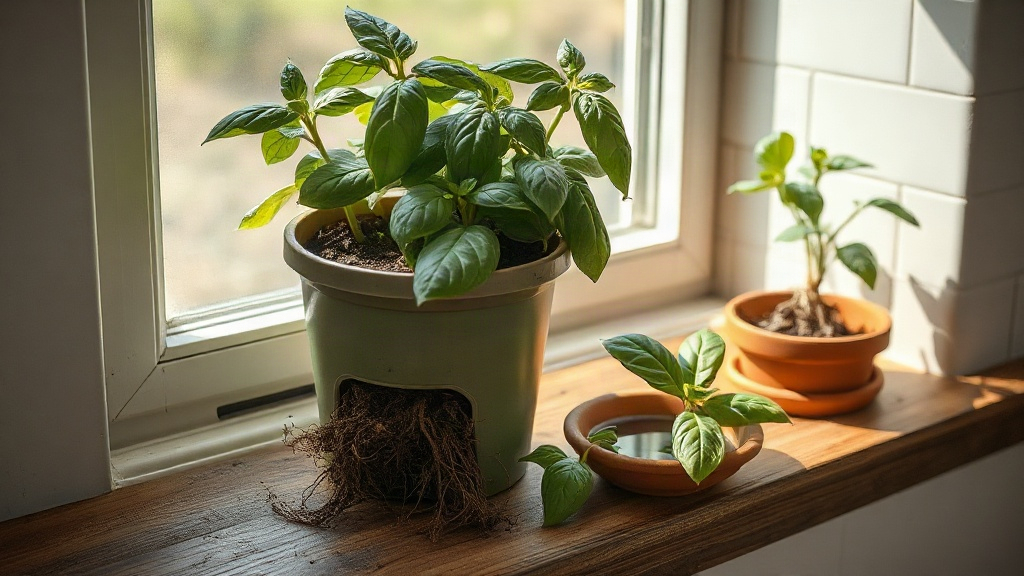
Pick up a pot of supermarket basil and you’re holding dozens of seedlings crammed into a tiny space. Commercial growers sow seeds thickly to create that lush appearance, but the roots quickly become entangled, competing for limited resources. If you examine the root ball, you’ll find a solid mat of circling roots with no room to grow.
This overcrowding creates a hidden problem when you repot. Most gardeners transfer the entire root ball into a larger container, but the inner roots remain trapped in a wet core that never dries properly. Within weeks, root rot sets in despite the soil surface appearing dry. The plant’s decline looks like under-watering but is actually suffocation.
The Critical Root Separation
To give supermarket herbs a fighting chance, separate the root mass into smaller sections immediately after purchase. This isn’t about saving every seedling—aim for three to five healthy clumps per pot. Some may not survive, but you’ll end up with stronger plants than if you’d kept them tangled together.
Separating the roots addresses the core issue: trapped moisture. Each divided clump can manage its own compost volume, with proper airflow preventing waterlogging. It’s the difference between shared overcrowded accommodation and having your own space.
The Royal Horticultural Society advises that overcrowded supermarket herbs often need dividing to thrive indoors. While these pots are marketed for short-term use, with proper root work they can become lasting kitchen plants.
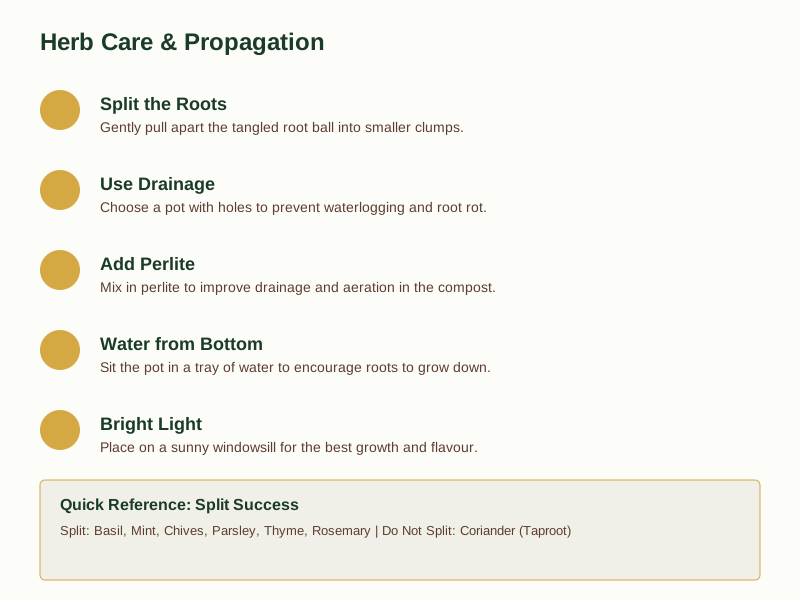
Coriander is the main exception—it resists root disturbance and often bolts if transplanted. For basil, mint, chives, parsley, thyme and rosemary, gentle separation works well. Tip out the plant and tease apart the roots with your fingers rather than forcing them apart.
Repotting Divided Herbs
Once separated, pot each clump into containers with drainage holes — 7–10 cm pots work well for small divisions. A Green Thumbz 10 cm terracotta pack (paid link) (six pots with saucers) matches that size. Without drainage, herbs will succumb to rot regardless of your care.
See Green Thumbz 10 cm terracotta pack on Amazon → (paid link)
Use a peat-free mix opened up with perlite. Westland Houseplant Potting Mix (paid link) (4 L) is the base.
Check Westland Houseplant Potting Mix price → (paid link)
Open it with Grow Chem Perlite 10 L (paid link) (medium 2–5 mm) — that is the balance herbs need. Avoid pure peat mixes that dry out unpredictably and garden soil that compacts in containers.
View Grow Chem Perlite 10 L on Amazon → (paid link)
Water the newly potted herbs thoroughly after planting, ideally from below by standing pots in a tray of water. This encourages deeper root growth.
Place the pots in a bright, warm spot. A south-facing windowsill is ideal during brighter months. In winter, UK light levels can challenge herbs, especially in north-facing rooms. Basil in particular dislikes cold draughts and may need moving to a warmer location during colder periods.
Herb-Specific Splitting Advice
Most supermarket herbs respond well to division:
- Basil thrives when split—this is the most crucial herb to separate upon purchase.
- Mint spreads vigorously and benefits from being contained in its own pot after division.
- Chives form dense clumps that separate easily into smaller bunches.
- Parsley tolerates root disturbance well when handled gently.
- Thyme and Rosemary have woodier roots but can be divided successfully.
Leave coriander undisturbed—its taproot makes transplanting risky. Use supermarket coriander promptly rather than attempting long-term cultivation.
Spring and summer offer the best conditions for division, when plants recover more quickly. Winter attempts may yield slower results.
Common Questions About Herb Splitting
Can supermarket herbs survive UK winters outdoors?
Most supermarket herbs are tender varieties that won’t withstand frost. Basil in particular needs protection from cold temperatures. While rosemary and thyme are hardier, supermarket plants accustomed to indoor conditions should be gradually acclimatised if moving outdoors. For winter survival, keep them on a sunny indoor windowsill.
What compost works best for repotted herbs?
A standard peat-free houseplant mix amended with perlite provides the drainage and moisture retention herbs need. The perlite prevents compaction and waterlogging. Avoid using garden soil in containers, as it becomes dense and retains too much moisture.
Should I split herbs with pest infestations?
Address pest issues before dividing plants. Whitefly can be managed with yellow sticky traps and insecticidal soap treatments, but splitting an infested plant risks spreading the problem. If the plant is otherwise healthy, you can separate it while keeping new pots isolated during treatment.
What to Expect After Repotting
In the first week after splitting and repotting, herbs may show some wilting as they adjust to their new conditions. This is normal—keep them in bright, indirect light and water when the top centimetre of compost feels dry.
Within a month, healthy divisions should produce new growth. You’ll notice fresh leaves emerging from the centre of each plant. After a full season, successfully repotted herbs will have established root systems and regular harvests become possible.
For detailed guidance on long-term herb care, our Growing Herbs Indoors UK guide covers everything from seasonal adjustments to troubleshooting common problems.
Supermarket Herb Division Guide
| Herb | Suitable for splitting? | Notes |
|---|---|---|
| Basil | Yes | Crucial for long-term survival |
| Mint | Yes | Benefits from container restriction |
| Chives | Yes | Divides easily into smaller clumps |
| Parsley | Yes | Handles root disturbance well |
| Thyme | Yes | Woodier roots but divisible |
| Rosemary | Yes | Can be divided with care |
| Coriander | No | Taproot dislikes disturbance |
A simple root separation when you first bring supermarket herbs home can transform their lifespan. Give each plant adequate space, proper drainage and suitable compost, and place them where they’ll receive sufficient light.
If you’re struggling with houseplant care generally, our free troubleshooting checklist helps identify common issues before they become serious problems.
Download the Free Houseplant Troubleshooting Checklist
Examine any struggling herbs on your windowsill—if the roots form a solid mass when tipped from their pots, separation could revive them.
Further Reading
- Royal Horticultural Society herb growing advice
- Garden Organic guidance
- Kew Gardens plant care resources
Note: General guidance only, verify details with a qualified professional or official source.