Troubleshooting the UK's Most Popular Houseplants
eBay Partner Network: we earn a commission when you buy through eBay links on this page.
This page contains affiliate links. As an Amazon Associate we earn from qualifying purchases — this does not affect the price you pay.
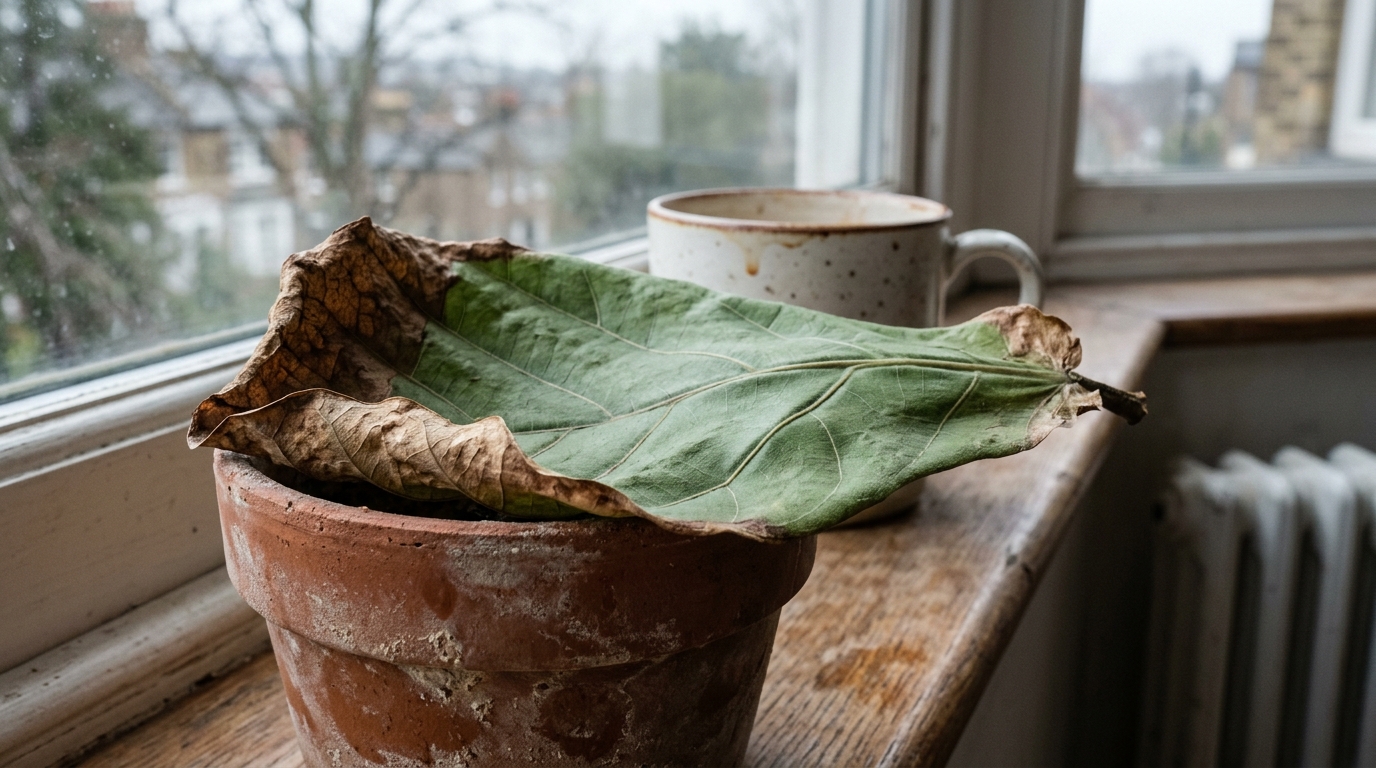
Your fiddle-leaf fig is wilting on the windowsill, your monstera is turning yellow, and you’re pretty sure you haven’t mucked up the watering. You’ve spent good money on a trendy plant, only to watch it go completely to pot. In our experience, most of these sad symptoms in British homes come down to three things: hard tap water, the dry heat from central heating, and the low-light reality of our flats.
Download the Free Houseplant Troubleshooting Checklist – it’s the quickest way to spot the problem before it goes full-blown.
Why is Your New Trendy Plant Drooping in the UK?
A drooping plant in a British flat is rarely just about needing a drink. The three most common culprits are mineral build-up from hard tap water, bone-dry air from winter central heating, and low light from north-facing windows making the plant weak. If your soil feels damp but the leaves are still limp, check these three usual suspects:
- Hard water – According to the Drinking Water Inspectorate, over 60% of homes in England have hard water. When you water a Calathea or fern, calcium and magnesium can build up on the roots, effectively “burning” them and causing limp leaves.
- Central heating – Radiators pull moisture from the air, leaving the foliage dry and the leaf edges crispy. Even a plant that loves humidity can look wilted if the room sits at 18-20°C with the heating on.
- Low light – North-facing windows or winter gloom make plants stretch, producing leggy growth and drooping stems as they reach for any hint of sunshine.
Add to that the “shop trap”: most retailers keep their stock in bright, humid conservatories, so the plants arrive already acclimatised to conditions you don’t have at home.
If the soil feels soggy but the leaves are still drooping, check the water quality first. A quick test is to let a glass of tap water sit for 24 hours; if a white crust forms, you’ve got hard water and need filtered or rainwater for sensitive species.
Switch to rainwater for a fiddle leaf fig in a north-facing flat and, within two weeks, the droop usually disappears – the plant perks up as if it’d had a proper drink.
For more on why UK tap water causes so many problems, see our guide to hard water and houseplants.
Worth knowing: Most UK houseplant issues stem from hard water, dry heating, and low light rather than a lack of care. Adjusting these three factors often solves the problem.
Why Are My Fiddle Leaf Fig Leaves Crispy?
Crispy, brown leaf edges on a fiddle leaf fig are usually caused by a lack of humidity combined with inconsistent watering. Central heating drops the moisture in the air, drying out the foliage, while letting the roots swing between bone-dry and soaking wet damages the plant’s ability to take up water.
Light matters, but not the way you think
Fiddle leaves love bright, indirect light. A south-facing window is ideal, but direct summer sun can scorch the leaves, especially when the glass magnifies the intensity. Position the plant a foot back from the sill, or use a sheer curtain to filter the light.
Humidity is your secret weapon
During winter, the heating can dry the air to under 30% relative humidity. A pebble tray filled with water and a layer of gravel works wonders – the water evaporates, lifting the humidity around the pot. If you’re willing to spend a fiver, a small tabletop humidifier is worth the investment for a fiddle leaf fig.
Watering schedule – keep it strict
Fiddle leaves hate the “wet-then-dry” swing. Stick to a once-every-10-days routine (adjust for pot size and season) and always water until it runs out of the drainage holes. Never let the plant sit in a saucer of water; root rot is a quick route to a dead fig.
Common mistake: letting the fig sit on a tray of standing water for a week because “more water can’t hurt”. The roots went mushy and the plant lost a whole branch. Lesson learned – ditch the saucer.
Monstera Deliciosa: Fixing Yellowing and Brown Spots
Yellowing lower leaves and brown, water-spot-like marks are classic Monstera warnings in UK homes.
Drainage is non-negotiable
Monstera roots need air. A well-draining mix – coir, perlite, and a bit of bark – lets excess water drain away. The Soil Ninja House Plant Potting Soil (paid link) is a peat-free 10 L base mix that does that job without sitting wet. It’s a bit pricier than standard compost, but the drainage is spot on. If you’re watching the wallet, the Westland Houseplant Potting Mix (paid link) is a decent, peat-free 4 L alternative; just add an extra handful of perlite to improve aeration.
Check Westland Houseplant Potting Mix price → (paid link)
See Soil Ninja House Plant Potting Soil on Amazon → (paid link)
Hard water kills the vibe
Tap water leaves mineral deposits that appear as brown spots on the leaves. Switch to filtered water or collect rainwater in a clean bucket. A simple Brita filter is often enough on its own to stop the yellowing.
Light balance
Monstera love bright, indirect light but can scorch under a harsh summer sun. A bright east-facing window with a thin curtain gives just enough glow without the burn.
Calathea: The “Drama Queen” That Needs Rainwater
If you’ve ever seen a Calathea leaf curl dramatically, you’ve met the drama queen of houseplants. The problem is almost always hard water.
Water only with rain or distilled
Even a quick rinse with tap water will leave mineral scars that cause leaf curling and brown tips. The Royal Horticultural Society (RHS) actually advises against using hard tap water for sensitive indoor plants for exactly this reason. Keep a 5-litre rainwater barrel on the balcony and use it exclusively for Calatheas. It’s a tiny habit that makes a massive difference.
Humidity is a must
Winter heating drops indoor humidity to the point where Calatheas start dropping leaves. A pebble tray (a shallow dish with pebbles and water) under the pot is a cheap, effective fix – the water evaporates and creates a micro-climate the plant loves. If you’ve got a bathroom with a hot shower, that steam is the best natural humidifier.
Light – keep it medium
Bright, filtered light works best. Direct sun will scorch the leaves, while too little light makes the plant lose its vibrant pattern. A north-facing window with a sheer curtain is actually perfect.
Pothos & Snake Plants: The Low-Light Survivors
When you’re not sure about light levels, these two are the “no-faff” options that survive almost anything a UK flat can throw at them. If you’re looking for more indestructible options, have a browse through our blog for beginner-friendly picks.
- Watering: Only water when the top inch of soil feels dry. Overwatering is the main cause of mushy stems, especially in winter when the heating dries the surface quickly.
- Light: They thrive in low-light corners. A north-facing windowsill or even a dim hallway works fine. Too much direct sun can turn the leaves yellow, so keep them out of the harsh midday glare.
- Pests: If you see yellowing leaves, check for spider mites – they love the dry air. A gentle spray of water on the leaves can dislodge them, and a weekly misting routine helps keep the humidity up enough to deter pests.
Giving a pothos a “bright spot” on a south-facing sill, only to watch the leaves turn pale and droop. The lesson? Less light, not more, for these hardy mates.
Pest Control: SB Plant Invigorator (paid link) vs. The Rest
Check SB Plant Invigorator price → (paid link)
Fungus gnats and spider mites love the damp soil that comes with over-watering, and they’re a common nightmare in UK flats.
SB Plant Invigorator (eBay paid link)– the gentle, eco-friendly choice
It’s a foliar spray that also works as a light soil drench, keeping aphids, whitefly, and spider mites at bay without burning the leaves. The downside? You need to reapply weekly for consistent control. For most of us, that trade-off is worth it – the plant stays healthy and the spray is safe around pets.
Budget alternative – Doff Universal Bug Control (paid link)
If you’re watching the pound, Doff’s 1 L pesticide-free spray is the cheaper Amazon option. It knocks down soft-bodied pests quickly, but it can be a bit harsh on delicate foliage like calatheas or the new leaves of a fiddle leaf fig. We’ve used it on pothos with decent results, but we would avoid it on any plant that’s already stressed by dry air or hard water.
View Doff Universal Bug Control on Amazon → (paid link)
A quick, non-chemical add-on
Yellow sticky traps such as Blooven fungus gnat traps (paid link) are brilliant for catching adult gnats. A big pack of yellow cards gives you a visual cue of pest levels. Just place them near the soil surface; they won’t solve a heavy infestation on their own, but they’re a useful part of a belt-and-brace approach.
See Blooven fungus gnat traps on Amazon → (paid link)
Overall, for most UK flats the SB Plant Invigorator + sticky traps combo is the most balanced solution – it’s gentle enough for sensitive plants and effective for the typical pest load we see in heated homes.
If you’re not sure about light levels, Pothos and Snake Plants are the no-faff options that survive almost anything a UK flat can throw at them.
How to Diagnose a Struggling Houseplant
If you’re staring at a sad plant and aren’t sure where you mucked it up, follow these steps before you reach for the watering can:
1. Check the soil moisture first Push your finger about an inch into the soil. If it feels wet and smells slightly swampy, you have overwatered it. If it is bone dry and pulling away from the sides of the plastic nursery pot, it needs a soak.
2. Inspect the underside of the leaves Look closely at the backs of the leaves and where the stems meet the main plant. Tiny webs indicate spider mites, while small flying black bugs around the soil are fungus gnats.
3. Assess the room temperature and drafts Is the plant sitting directly above a hot radiator or next to a drafty single-glazed window? Move it a foot away from extreme temperature swings to see if the drooping stops.
4. Review your water source If the soil moisture and light are spot on but the leaf edges are going brown and crispy, your tap water is likely too hard. Switch to rainwater for a month to see if the new growth comes in healthy.
Common Houseplant Issues & Causes
| Symptom | Likely Cause | Quick Fix |
|---|---|---|
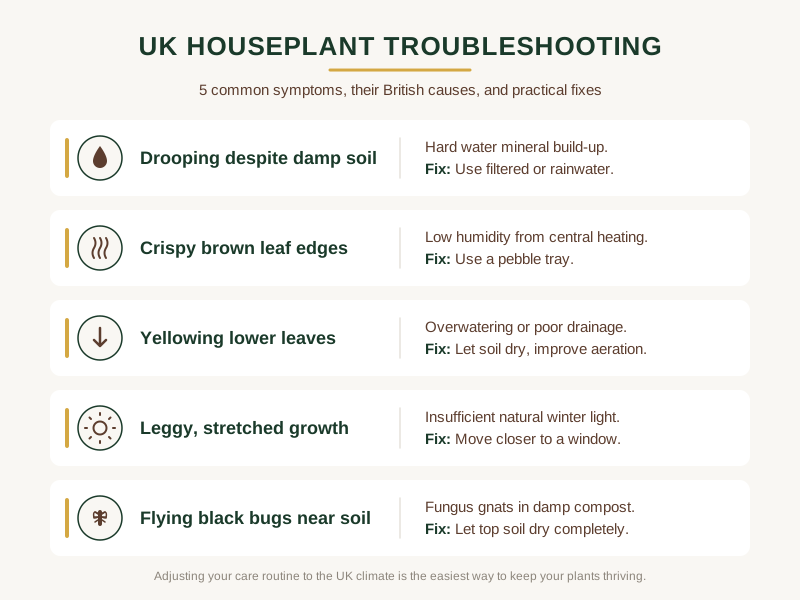
| Drooping leaves despite damp soil | Hard water mineral build-up | Use filtered or rainwater |
| Crispy leaf edges | Low humidity from central heating | Use a pebble tray or humidifier |
| Yellowing lower leaves | Overwatering or poor drainage | Let soil dry out, improve aeration |
| Brown spots on leaves | Mineral deposits from tap water | Switch to distilled or rainwater |
| Leggy growth | Insufficient light | Move closer to a light source |
| Tiny webs on leaves | Spider mites | Increase humidity and mist leaves |
| Flying black bugs near soil | Fungus gnats | Let top soil dry out completely |
Your Next Step
The key takeaway is that UK homes have three hidden stressors – hard water, dry heating, and limited light – and most trendy plants falter because generic care advice ignores them. By adjusting water quality, boosting humidity, and placing your plants where they get the right amount of indirect light, you’ll turn those drooping, yellowing messes into thriving foliage.
Ready to give your plant a proper diagnosis? Download the Free Houseplant Troubleshooting Checklist and have a quick reference to spot the exact issue next time a leaf looks a bit off.
If you’ve got a specific problem that still feels on the blink, feel free to get in touch – we’re always happy to chat over a cuppa and help you sort it out.
The trick is to fix one thing at a time. Change the water first, then the light, then the humidity. Most plants show improvement within a fortnight of the right tweak.
Explore More Topics
Quick answers:
Go deeper on specific topics:
- Monstera Leaves Turning Yellow: How to Diagnose and Fix
- Why is My Peace Lily Drooping? Quick Revival Steps
- Calathea Leaves Turning Crispy: How to Stop the Browning
- Why Is My Spider Plant Going Brown? UK Fix
- Why Are My Pothos Leaves Turning Black? UK Fix
Further Reading
Products linked above are ones we recommend based on owner feedback and UK-condition testing.
Note: This guide provides general troubleshooting advice for common houseplant issues in the UK. Always verify specific plant requirements and consult a qualified professional or official source for critical care decisions.