Why Are My Plant's Leaves Curling? UK Causes & Fixes
If your plant is looking rough, our Houseplant Troubleshooting: How to Save a Dying Plant hub covers the full diagnostic process. This article focuses on one particular problem.
This page contains affiliate links. As an Amazon Associate we earn from qualifying purchases — this does not affect the price you pay.
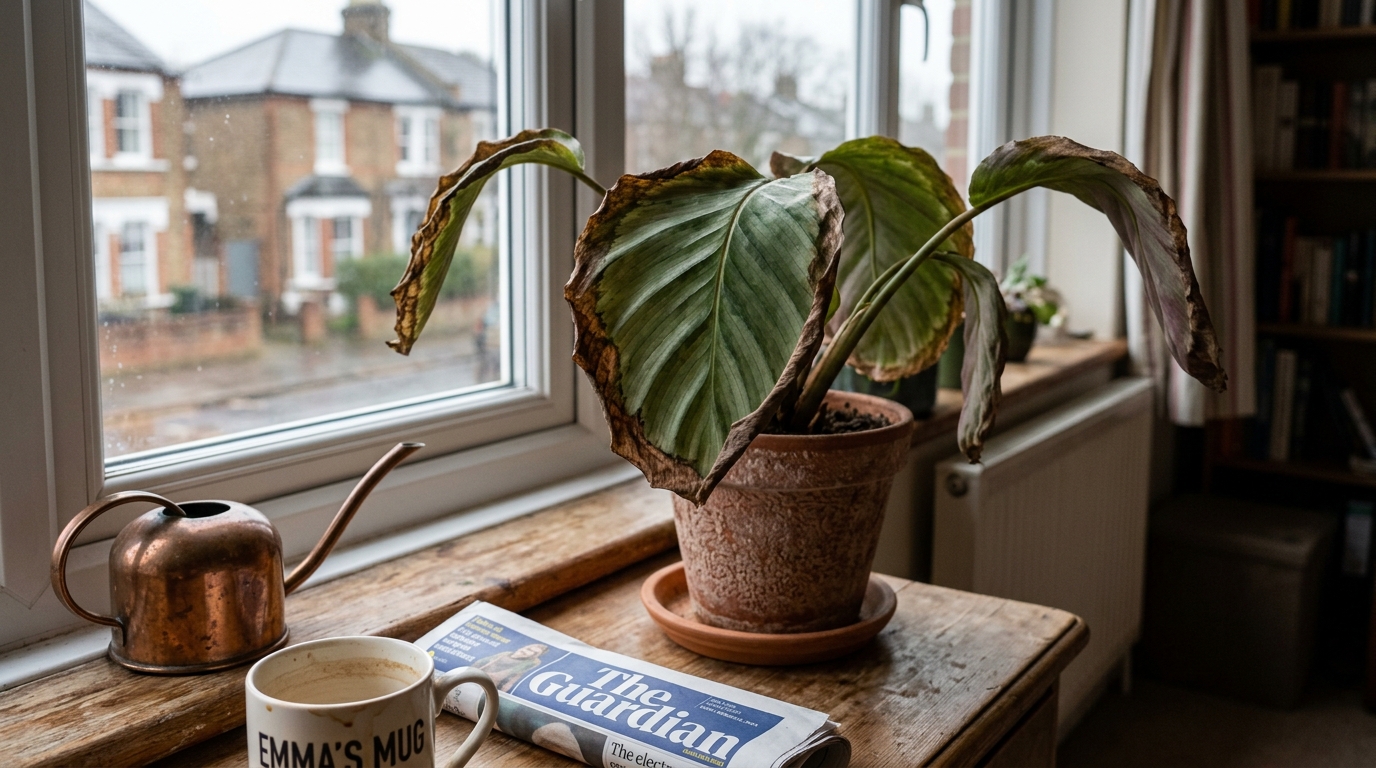
Curling leaves are a classic stress signal from your plant, not an immediate death sentence. When your houseplant starts looking like a wilted taco, it’s usually reacting to something easily fixed in a typical British flat—like a radiator blasting dry air, hard tap water building up in the soil, or a sudden cold draft. You don’t need a botany degree to sort it out; you just need to know which type of curl you’re looking at.
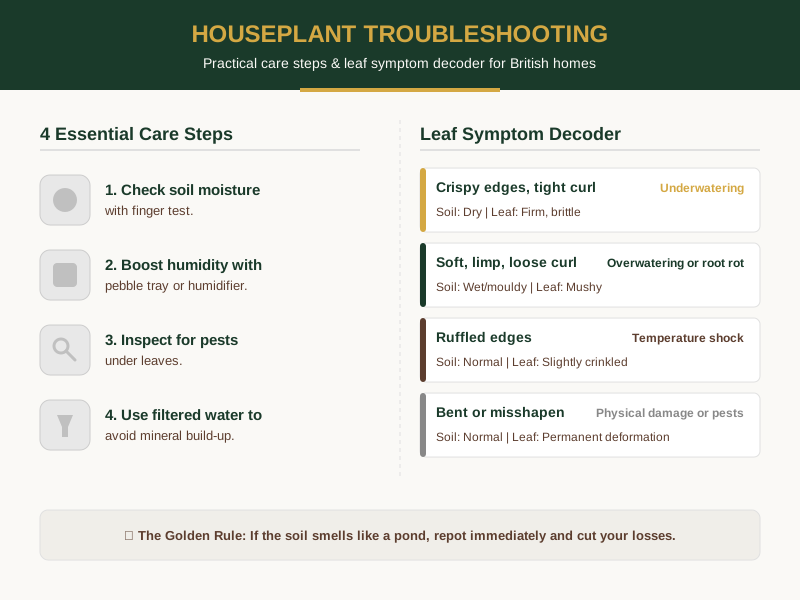
Quick reference: See the infographic below for a visual summary of the key points, or download the data table for full details.
A quick “first‑aid” checklist
Still unsure? A XLUX Soil Moisture Meter (paid link) removes the guesswork. Stick it in the soil and you’ll know in seconds whether the roots are sitting in water or crying out for a drink.
Buy XLUX Soil Moisture Meter on Amazon → (paid link)
Before you start pulling out pots or buying new tools, run through this three‑step check to spot the obvious and stop the panic.
- Soil moisture: Stick your finger about an inch into the soil. If it feels dry, the plant is likely thirsty; if it’s soggy, it’s probably sitting in water.
- Humidity: Is the radiator blowing hot air straight onto the plant? A dry, warm breeze can sap moisture from leaves faster than you think.
- Pests & light: Flip the plant over, look under the leaves for tiny dots or webbing, and check whether the pot is in a bright spot or a dim corner.
If any of those look off, you’ve already got a direction. A calathea curling up right in front of a radiator is a common sight. A simple move to the bathroom windowsill (where the shower steam gives a bit of extra humidity) sorted it in 48 hours.
You now have the full picture – Download the Free Houseplant Troubleshooting Checklist.
Why are my plant’s leaves cupping inwards?
Leaves cup inwards primarily because the air is too dry, usually thanks to central heating. When humidity drops below the 40‑60% range that most tropical foliage likes, plants like ferns, calatheas, and pothos will curl their leaves to reduce their surface area and conserve moisture.
Central heating is the main culprit in a British flat, often drying the air to around 20% relative humidity in winter. A calathea can easily start curling every December once the heating goes on. Misting once a week often isn’t enough on its own, since the mist evaporates before it can be absorbed. Moving it to a pebble tray with water, and giving it a weekly spray during the heating season, flattens the leaves within a week. As the Royal Horticultural Society (RHS) points out, raising local humidity is essential for keeping indoor tropicals happy through the winter months.
Tip: If you can’t justify a humidifier, a shallow tray of pebbles and water under the pot (making sure the plastic nursery pot isn’t actually sitting in the water) is a cheap, effective hack.
When the leaf curls downwards, think water balance
A downward‑pointing curl often means the roots are unhappy. The trick is to tell whether the plant is thirsty or drowning by checking the soil and the leaf texture.
- Underwatering: The soil feels dry, the edges of the leaf are crisp, and the curl is tight. The plant is desperately trying to conserve water.
- Overwatering / root rot: The soil is wet or smells of a damp pond, the leaf is soft and limp, and the curl is looser. Too much water blocks oxygen to the roots, leading to rot.
Hard water makes this confusion worse. The calcium and magnesium in UK tap water can build up in the soil, causing a false sense of moisture while the plant actually needs a drink. This is easy to learn the hard way with a peace lily; watering with tap water every few days, the leaves curl, and the soil stays soggy. Switching to filtered water and letting the top centimetre dry out each week cured it.
Quick comparison
| Symptom | Soil feel | Leaf texture | Likely cause |
|---|---|---|---|
| Crispy edges, tight curl | Dry | Firm, brittle | Underwatering |
| Soft, limp, loose curl | Wet/mouldy | Mushy | Overwatering or root rot |
If you spot the latter, check the plant care guides on the blog for the next steps on fixing root rot.
Temperature shock shows up as ruffled edges
Sudden temperature changes – a cold draft from a poorly insulated window or a blast of hot air from a radiator – can cause leaves to ruffle, curl, or develop brown tips. Tropical plants like monsteras and philodendrons hate being moved from a cosy 22 °C spot to a chilly window ledge overnight.
A monstera’s leaves can start ruffling after a new radiator goes in under a north-facing windowsill. The heat raises the plant’s temperature by 5 °C during the day but then the room cools rapidly at night, creating a daily shock cycle. Moving the pot a metre away from the radiator and adding a thin curtain to block the night‑time draft usually stops the ruffling within a week.
Remember: Keep plants away from direct drafts and avoid placing them on top of radiators. A belt‑and‑brace approach – using a small fan to circulate warm air gently – can help maintain a stable temperature.
Worth knowing: A simple move to a bathroom windowsill can sort a curling calathea in 48 hours thanks to extra shower steam.
Bent or misshapen leaves often point to damage or pests
Physical damage is an easy culprit you might overlook. A bump from a passing cat, a pet’s curious paw, or even brushing the leaf against a door frame can cause a leaf to bend or curl permanently. If the leaf also shows tiny holes or stippling, pests are likely.
Spider mites love the dry, warm air that central heating creates. They leave fine webs on the underside of leaves and cause a characteristic “speckled” curl. A plant with a few mites can look fine for weeks, but the damage spreads quickly if you ignore it.
A pothos with a few curled leaves and tiny yellow spots is worth a closer look — a quick inspection under a lamp can reveal a spider mite infestation. A mild solution of water and a few drops of neem oil, sprayed – a cheap, UK‑available product – once a week for two weeks. The mites receded, but the old curled leaves stayed a bit warped. New growth was healthy, proving that early pest detection saves the plant.
Recovery timeline – what to expect
Fixing curling leaves isn’t an instant miracle. Here’s a realistic week‑by‑week guide to what happens after you fix the core issue:
- Week 1: Stress factor removed (e.g., humidity raised, watering corrected). Leaves may still look curled but should feel less brittle.
- Week 2: New growth starts appearing at the tip of the stem. Existing curled leaves may begin to flatten slightly as the plant rehydrates.
- Week 3‑4: Most new leaves are fully normal. Old curled leaves may stay a bit twisted, but they won’t worsen.
- Week 5+: Plant returns to its usual vigour, assuming the underlying issue stays resolved.
Patience is key – pulling or pruning the curled leaves won’t speed things up and can actually cause more stress.
Prevention: how to stop it happening again
The best defence is a regular care routine that tackles the main stressors before they force your plant to curl up:
- Check moisture weekly: Use the finger test or a cheap moisture meter.
- Boost humidity: A pebble tray, occasional misting, or a modest humidifier (roughly £15‑£25) goes a long way in winter.
- Rotate for even light: Turn pots every few days so all sides get the same exposure, especially on a north‑facing sill.
- Use filtered or rain water for sensitive plants: It avoids the calcium build‑up that hard tap water brings. Data from UK water suppliers shows that much of southern and eastern England has very hard water, which is notorious for upsetting calatheas and peace lilies.
Keep a simple weekly checklist somewhere handy: “Moisture? ✔ Humidity? ✔ Light? ✔ Pests? ✔”. It’s a tiny habit, but it keeps your leafy friends from going back to the brink.
Curling leaves are a clear SOS from your plant, but it is rarely a death sentence.
Your Next Step
Leaf curling is a clear SOS from your plant, but it’s rarely a death sentence. The most common UK triggers – dry indoor air from central heating, hard tap water, and temperature swings – are all fixable with a bit of attention and the right tools. By checking moisture, boosting humidity, watching temperature, and keeping an eye out for pests, you’ll give your plant the environment it needs to thrive.
If you want a handy way to track these steps and spot future issues before they become emergencies, download the Free Houseplant Troubleshooting Checklist. It’s a quick reference you can stick on your fridge or in your plant diary.
Got more questions or a stubborn plant that just won’t behave? Feel free to get in touch. We’re always happy to help you get your leafy companions back on track.
Take a breath, give your plant a little love, and let those leaves straighten up again. Most curling fixes show results within a week — if nothing changes after ten days, check the roots, because the real problem is usually hiding underneath.
Related Guides
For a complete overview, see our Houseplant Troubleshooting: How to Save a Dying Plant.