Safe Houseplants for Cats & Dogs: The UK Plant Parent’s Guide
If you are figuring out which plants suit your space, our Best Houseplants UK: Choosing the Right Plant for Your Space series is a good place to start.
A single leaf from a true lily can cause fatal kidney failure in a cat within days. That’s the panic that hits when you spot a pretty white bloom on the windowsill and your rescue kitten is already chewing the tip. Most plant parents have been there: a new plant from the local supermarket, the cat giving it a curious sniff, and a frantic Google search for “toxic houseplant”. But not every leaf is a death sentence. You can keep an indoor jungle without risking a trip to the emergency vet, provided you know exactly what you’re bringing into the flat.
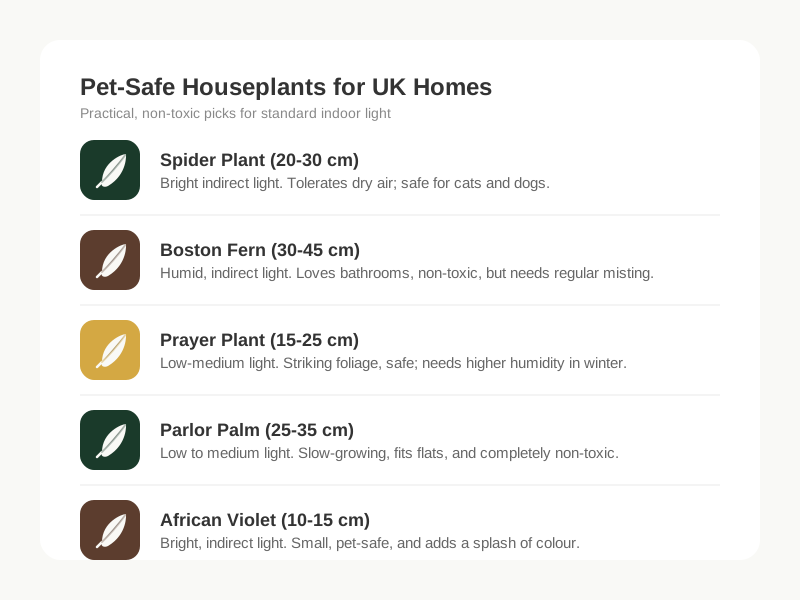
Quick reference: See the infographic below for a visual summary of the key points, or download the data table for full details.
The “Supermarket Confusion”: Why UK Names Matter
Supermarket labels love catchy common names but often skip the scientific ones, leaving you guessing whether “Devil’s Ivy” is a harmless vine or a cat-killer. Here’s a quick map of the most common UK shop names and what they actually are:
- Devil’s Ivy = Epipremnum aureum – toxic to cats and dogs.
- Pothos = Scindapsus pictus (the smaller, variegated type) – toxic to cats and dogs according to the ASPCA. Treat the same as Devil’s Ivy.
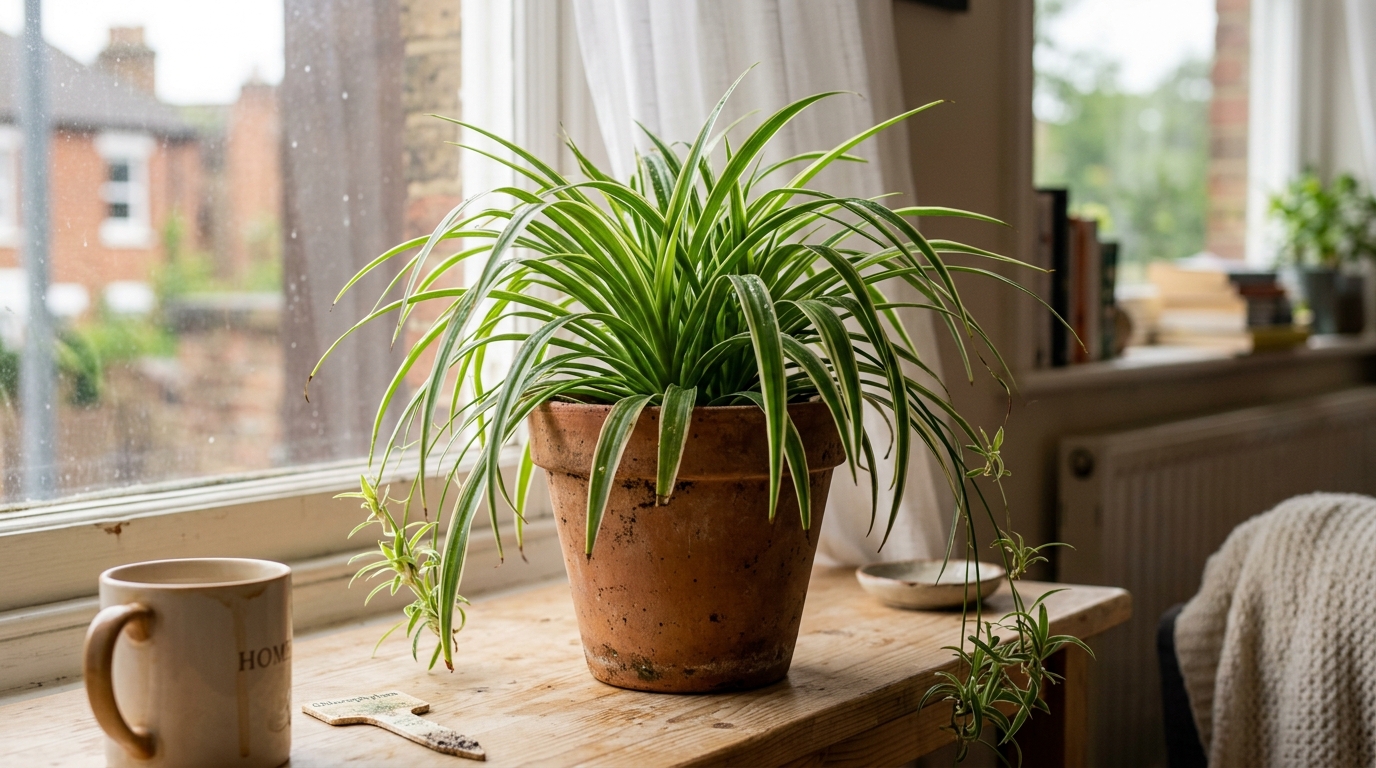
- Spider Plant = Chlorophytum comosum – safe and hardy.
- Peace Lily = Spathiphyllum – toxic despite the tranquil name.
Buy a “Devil’s Ivy” from a supermarket, and it’s worth checking the RHS guidelines on harmful plants before letting a cat anywhere near it. A search of the scientific name will confirm whether it’s safe. Always double-check the Latin name – it’s the only way to be 100% sure.
Why Do Cats Chew Houseplants?
Cats usually chew houseplants out of boredom, a desire for extra fibre, or simply because they enjoy the texture of the leaves. Enrichment works far better than scolding. Here’s a quick checklist of boredom busters you can set up in a weekend to distract them:
- Cat grass kit – a small pot of oat or wheat grass gives a safe chew.
- Interactive toys – puzzle feeders keep their minds occupied.
- Vertical space – a cat shelf or tree gives a high perch and a place to survey the room.
- Window perch – a sunny spot to watch birds satisfies their hunting instinct.
The “just spray bitter apple” route on a spider plant doesn’t always work — plenty of cats keep nibbling anyway. Adding a cat grass pot on the kitchen windowsill usually does the trick instead: the cat prefers the fresh grass, and the plant’s leaves get left alone.
Top 5 Safe Houseplants for UK Homes
These five plants have survived central-heating-dry UK flats, tolerate the light levels most renters have, and are proven non-toxic.
📺 Watch: TOP 20 PET SAFE HOUSEPLANTS! Non-Toxic, Low-Maintenance Plants 🌿 Pet Friendly Indoor Plants 🐾 — The Jungle Haven
| Plant | Light | Typical Size (pot) | Why it is safe |
|---|---|---|---|
| Spider Plant (Chlorophytum comosum) | Bright indirect – north-facing windows are fine | 20-30 cm | Tough, tolerates dry air; safe for cats and dogs. |
| Boston Fern (Nephrolepis exaltata) | Humid, indirect light – perfect for bathroom windows | 30-45 cm | Loves the steamy bathroom, non-toxic, but needs regular misting. |
| Prayer Plant (Maranta leuconeura) | Low-medium light, avoid direct sun | 15-25 cm | Striking foliage, safe; remember it needs higher humidity in winter – a pebble tray helps. |
| Parlor Palm (Chamaedorea elegans) | Low to medium light, tolerates shade | 25-35 cm | Slow-growing, fits flats, and is completely non-toxic. |
| African Violet (Saintpaulia ionantha) | Bright, indirect light – a sunny windowsill works | 10-15 cm | Small, pet-safe, and adds a splash of colour; just avoid over-watering. |
A spider plant on a north-facing windowsill thrives even when the radiators are cranking at 22°C in January. Boston ferns do best on the bathroom shelf where the shower steam gives them the humidity they crave – a simple trick that makes a huge difference.
The “Don’t Buy” List: Lilies & Peace Lilies
Lilies (Lilium spp.) – the absolute worst for cats. Even a tiny bit of pollen can cause fatal kidney failure. Cats are attracted to the scent; a single brush of a pet’s nose against a stamen can be lethal, as noted by Cats Protection.
Peace Lily (Spathiphyllum) – toxic but less lethal. It contains calcium oxalate crystals that cause oral irritation, vomiting, and drooling. Still not worth the risk in a flat with curious paws.
Aloe Vera – popular for its gel, but both cats and dogs can suffer vomiting and diarrhoea after ingestion.
If you have already got one of these, move it to a high shelf immediately or consider gifting it to a friend without pets. The PDSA has a full list of plants toxic to cats worth bookmarking.
Not sure if your current plants are safe? Download the Free Houseplant Troubleshooting Checklist to verify your whole collection in two minutes.
Practical Placement: Keeping Plants Out of Reach
Physical barriers are often more effective than bitter sprays. Here’s a quick placement strategy to keep your foliage intact:
- Hang from the ceiling – use macramé hangers for trailing plants like pothos (safe varieties only).
- High shelves – a cat-tree or wall-mounted shelf puts the plant out of reach and gives the cat a new lookout point.
- Citrus spray – a light mist of orange oil on leaves deters many cats without harming the plant.
- Bitter apple spray – use a pet-safe version and reapply after watering.
We tried moving a peace lily to a low coffee table; the cat leapt onto it anyway. After installing a narrow cat shelf above the plant, the cat now uses it as a perch and the leaves stay untouched.
Buying Guide: How to Spot a Safe Plant
When you’re at a garden centre or supermarket, ask yourself these three questions:
- Does the label show a scientific name? If it only says “Devil’s Ivy”, walk away.
- Has the staff confirmed it is pet-safe? A quick “Is this safe for cats and dogs?” can save a lot of worry.
- Does the plant have milky sap or a strong scent? Those are immediate red flags for toxicity.
A quick tip many learn the hard way: a supermarket label saying just “Pothos” often omits that it’s actually Epipremnum aureum — the Latin name gets left off entirely. Always verify before you buy.
Before You Buy
You now have the tools to decode supermarket plant names, keep your cat entertained, and choose five reliable, pet-friendly houseplants that thrive in the dry, heated air of a typical UK flat. Remember, “safe” doesn’t mean “indestructible” – proper placement and enrichment are key to a harmonious home.
If you want a quick way to audit every plant you already own, download the Free Houseplant Troubleshooting Checklist. It’s a two-minute cheat sheet that tells you at a glance which leaves are fine to share and which need to be out of reach.
Got more questions or a tricky plant-pet scenario? Drop us a line on the contact page.
Give your cat a decent perch by the window – they’ll thank you by leaving your leaves alone.
Related Guides
For a complete overview, see our Best Houseplants UK: Choosing the Right Plant for Your Space.
Further Reading
Note: This information is for general guidance only. Always verify details with a qualified professional or official source.