How Often to Water Rosemary and Thyme (Without Killing It)
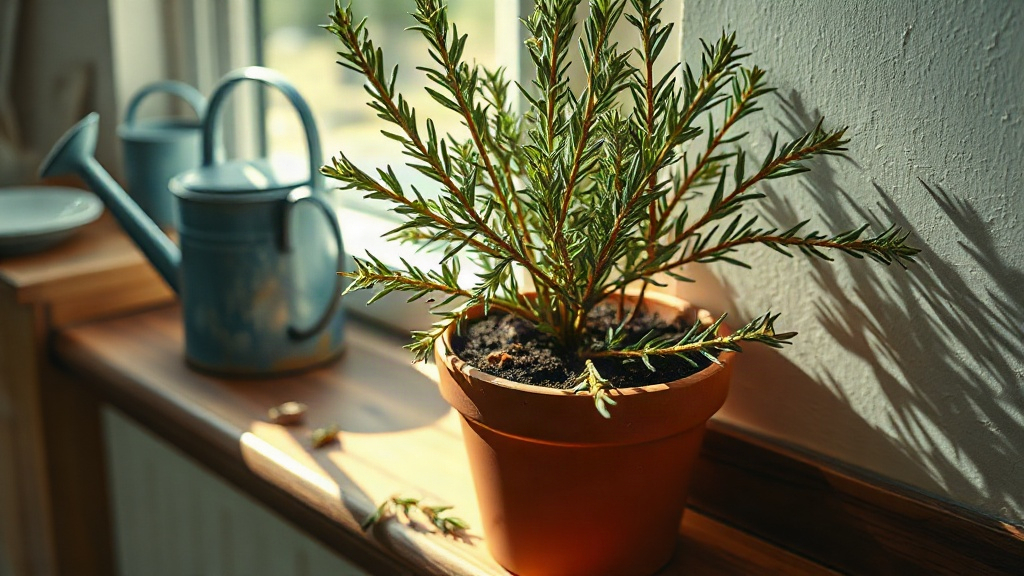
This page contains affiliate links. As an Amazon Associate we earn from qualifying purchases — this does not affect the price you pay.
The instruction on supermarket pots says water once a week. That advice rarely survives contact with a centrally heated UK flat. In winter, with the heating on and light levels low, you might find yourself watering rosemary and thyme only once every fortnight.
The problem isn’t your plant-care skills. Rosemary and thyme are Mediterranean plants that evolved in dry, rocky hillsides. Your centrally heated living room with a pot of constantly damp compost is their idea of drowning. The fix is straightforward: abandon the weekly schedule entirely.
Why Your Rosemary is Dying (The UK Climate Factor)
Rosemary and thyme come from the baking hills of the Mediterranean — poor, free-draining soil, long dry spells, and relentless sun. That origin tells you everything you need to know about what they hate. When you pot them up in rich, moisture-retaining compost and water them like a fern, you’re not caring for them; you’re slowly killing them.
In their natural habitat, these plants experience long periods without rain. Their roots have adapted to hunt for water in dry conditions, and they store moisture in their needle-like leaves (rosemary) or tiny aromatic foliage (thyme). The RHS notes that both herbs thrive in free-draining conditions and actually prefer poor soil to rich, wet compost.
The problem for UK indoor growers is that British homes — particularly flats with central heating — create an environment that works against these plants. Heating dries the air but keeps the compost from drying out properly in winter. Low light means slower evaporation. Most growers, trying to be responsible, water on a schedule that keeps the soil permanently damp. The roots can’t breathe, rot sets in, and by the time you notice (brown needles, soft stems, that unmistakable smell of decay), the damage is often done.
The turnaround comes when you stop watering rosemary “properly” and start treating it like the drought-adapted Mediterranean native it is. Garden centre labels are written for outdoor growing, not for a pot on a north-facing kitchen windowsill in a heated UK flat.
The “When” Rule: The 2 cm Finger Test
Water rosemary and thyme only when the compost is dry 2 cm down. That is the rule that will save your plants.
The mechanism is simple: root rot happens when roots sit in waterlogged soil and cannot access oxygen. By waiting until the top 2 cm of compost is dry, you ensure the deeper roots — the ones that actually matter — have a chance to breathe. You’re also mimicking the natural dry-wet cycle these plants evolved with.
The finger test works like this: push your finger into the compost up to the second knuckle. If it comes out dry, water. If there’s any moisture on your finger, leave it alone. No apps, no schedules, no guessing.
In UK winter — low light, heating on, slower evaporation — this typically means watering far less often than you might think. In summer, when the plants are growing actively and your windowsill is warmer and brighter, you’ll be checking more frequently. This system adapts automatically to whatever your flat throws at it, without you having to remember the weather.
The “why” matters here because once you understand that these plants prefer drought over deluge, the weekly watering habit starts to feel obviously wrong. You aren’t being a bad plant parent by forgetting to water. You are being a better one by letting the soil tell you when it’s thirsty.
The quick test: If you’re standing at the sink about to water, stop. Push your finger in first. The plant will either be telling you it needs a drink, or it’ll be telling you to leave it alone for another week.
How Much Water to Use: The Soak Method
When you do water, do it properly. Don’t just sprinkle the surface; the roots sit lower in the pot, and surface watering means the critical root zone stays dry while the top stays waterlogged.
Water thoroughly until it runs out of the drainage holes at the bottom. This ensures the dry compost gets saturated and the roots at the bottom of the pot get a drink. Then — this bit is crucial — empty the saucer. Standing in water is as bad as overwatering. The plant can wick moisture back up, leaving the roots in a damp environment.
In some parts of England, tap water is hard, meaning it contains minerals like calcium and lime. Over time, these can build up in the compost, creating a white crust on the soil surface. Using room-temperature water and occasionally flushing the pot through with rainwater can help avoid this. It’s not urgent, but it’s the difference between a plant that survives and one that thrives.
The honest next buy, if you need one, is the Vitax Horticultural Potting Grit (paid link) — the drainage add-in rosemary and thyme actually need, not extra compost.
View Vitax Horticultural Potting Grit on Amazon → (paid link)
Frequently Asked Questions
Can I use ice cubes to water my herbs?
No. Ice cubes can cause temperature shock to the roots, which is particularly stressful in winter when the compost is already cold. Stick to room-temperature water.
Why are my thyme leaves turning brown?
Two main causes, and they’re opposites. Crispy, papery brown leaves mean underwatering — the plant has dried out too much. Soft, wet, slightly slimy brown leaves mean root rot from overwatering. The fix is completely different, so before you do anything, check the compost. If it’s wet and you’re seeing soft brown stems, you’ve found your answer.
Do I need to mist rosemary or thyme?
No. These are Mediterranean plants that prefer dry air. The RHS describes them as plants for free-draining, dry conditions. Misting is unnecessary and can encourage fungal issues. If your central heating is making the air very dry, a humidity tray (pebbles and water beneath the pot, not sitting in it) is enough.
Rosemary and Thyme Watering Schedule
| Season | Watering Frequency | Conditions |
|---|---|---|
| Winter | Less often | Low light, heating on, slower evaporation |
| Summer | More often | Active growth, warmer and brighter windowsill |
| General Rule | When top 2cm is dry | Use finger test, no schedules |
Where to Go From Here
The shift you need to make is from a schedule mindset to a check-the-soil mindset. Rosemary and thyme aren’t fussy plants; they’re just misunderstood. They don’t want constant moisture; they want the occasional deep drink followed by a proper dry-out.
If you’ve been watering weekly and your plant is looking sorry for itself, stop. Check the compost. If it’s still damp, wait. These plants are surprisingly resilient once you give them the conditions they evolved for. A neglected rosemary that’s been allowed to dry out properly will bounce back faster than one that’s been gently drowned with kindness.
You can grab the Free Houseplant Troubleshooting Checklist to help you identify what’s actually going on with your herbs right now — and what to do about it. It’s a quick download that walks you through the common mistakes and how to fix them before your plant is beyond saving.
The good news is rosemary and thyme want the same regime. You have exactly one rule to remember: water only when the top 2 cm of compost is dry. For other herbs that need a different approach—like basil or parsley—our Growing Herbs Indoors UK: Complete Windowsill Care Guide explains the full spectrum.
Related Guides
For a complete overview, see our Growing Herbs Indoors UK: Complete Windowsill Care Guide.
Sources & Further Reading
Note: General guidance only, verify details with a qualified professional or official source.