How to Harvest Parsley (Without Killing It)
This page contains affiliate links. As an Amazon Associate we earn from qualifying purchases — this does not affect the price you pay.
Parsley grows new stems from its centre, where a cluster of young leaves forms the plant’s primary growing point. Cutting these central stems damages the production hub and can trigger yellowing as the plant struggles to recover. This botanical mechanism explains why harvesting technique matters more than watering frequency for keeping parsley green.
The plant isn’t dying from neglect—it’s struggling because the harvesting method has stripped its ability to regenerate. Understanding this distinction lets you fix yellowing parsley without replacing the entire plant.
Why harvesting damages parsley
Two main factors cause yellowing leaves, but harvesting damage is the one most advice overlooks.
Harvesting stress occurs when you remove too much foliage at once or cut into the heart—the dense cluster of young leaves at the centre where new growth emerges. This removes the plant’s capacity to photosynthesise effectively. The roots become starved of energy, forcing the plant to cannibalise older leaves, which then yellow and drop.
Environmental pressures like heat, inconsistent watering, and pot-bound roots also contribute, but if your watering routine is reasonable and yellowing persists, harvesting technique is the likely culprit.
Check your plant now. If the central heart remains intact with several healthy outer stems, environmental factors may be responsible. If the centre shows damage or outer stems are sparse, harvesting methods need adjustment.
When parsley is harvested correctly—taking outer stems while preserving the centre—it continues producing new growth from the undamaged heart.
The right way to harvest parsley
Parsley’s growth pattern dictates how you should harvest it. As a biennial plant, it stores energy in its leaves and regenerates from the centre.
Harvest from the outside only, taking one or two stems at a time and cutting them near the base. Never remove more than a third of the foliage in a single harvest, and always avoid cutting the central heart.
Accidental heart damage often happens when grabbing handfuls of stems for cooking. The tight cluster of young leaves gets pulled or snipped along with outer stems. The plant doesn’t die immediately but shows stress within days as it redistributes limited energy reserves.
Leave sufficient foliage after harvesting—enough mature leaves to support photosynthesis and new growth. Strip too many leaves and the plant cannot fuel regeneration. Complete stripping causes yellowing and severely limits recovery.
If your parsley has already yellowed after a heavy harvest, recovery depends on the heart’s condition. An intact heart means the plant can rebound with proper care; a damaged heart leads to slower, less vigorous recovery.
Environmental factors that stress container parsley
Even with perfect harvesting, UK indoor conditions challenge parsley in pots. Containers constrain roots and cause faster drying and temperature fluctuations.
Pots on south-facing balconies can overheat in summer, stressing roots even when surface compost appears moist. This accelerates yellowing and may trigger premature flowering—the plant’s survival response under duress.
Watering technique differs in containers too. Small pots dry out quickly, requiring thorough watering that reaches the root zone rather than light surface sprinkling. The goal is consistent moisture without waterlogging.
Heat sensitivity affects parsley more than many realise. As a cool-season herb, it bolts to seed in high temperatures, ending the leafy production phase. Unventilated flats or sunny pots during UK heatwaves push plants toward flowering.
Parsley tolerates sunlight but UK summer intensity can scorch leaves in small pots, especially on south-facing windowsills. Bright light with protection from strongest rays often yields more productive plants than full sun exposure in containers.
Mineral buildup from tap water can gradually make container compost less hospitable to roots. If decline occurs over months of tap water use, occasional rainwater or filtered water helps flush accumulated salts.
Restoring yellowing parsley
When yellowing appears, assess the plant’s centre before taking action. The plant sacrifices older leaves when stressed—either from environmental factors or over-harvesting. If new growth appears in the centre, the plant remains active and outer yellowing may be natural senescence.
With an intact heart, stop harvesting completely. Provide consistent watering and wait several weeks for regeneration. The plant will likely shed yellowed outer leaves as it redirects energy to new growth from the centre.
If the heart is damaged, recovery will be slower as the plant must regenerate from the base. Consider whether nursing it back justifies the time versus starting with a new plant while applying corrected harvesting techniques.
Once parsley flowers, leaf production ceases and leaves turn bitter. At this stage, the plant has completed its lifecycle—you can collect seeds for kitchen use or replanting, but don’t expect further edible leaves.
Parsley harvesting guidelines
| Action | Frequency | What to avoid |
|---|---|---|
| Cut stems | One or two at a time | Cutting the heart |
| Remove foliage | Never more than one-third | Stripping all leaves |
| Harvest method | Cut at base, near crown | Pulling whole bunches |
| Post-harvest | Leave ample mature foliage | Harvesting to bare stems |
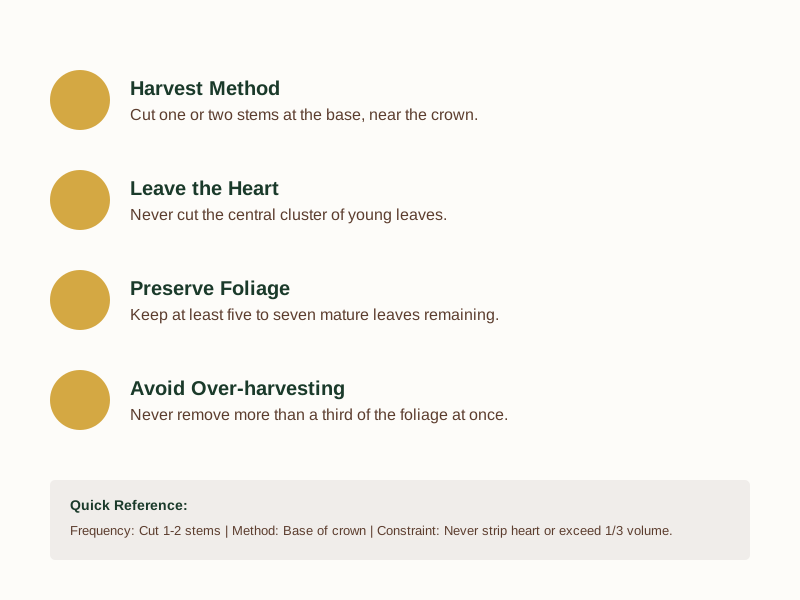
Harvest parsley by taking outer stems only, never more than a third of the plant at once, and do it little and often—that’s the complete maintenance routine. This method preserves the growing centre and prevents the yellowing that follows over-harvesting.
If you’re unsure whether your current plant can recover, our free checklist provides a straightforward diagnosis.
Download the Free Houseplant Troubleshooting Checklist
For comprehensive guidance on growing herbs indoors, including potting mixes and positioning details that extend your plant’s lifespan, see our full windowsill care guide.
Related guides
For a complete overview, see our Indoor Herb Rescue UK: Diagnose and Save Dying Windowsill Herbs.
The honest next buy, if you need one, is the Westland Houseplant Potting Mix (paid link) — peat-free 4 L bag, the base mix we use when repotting windowsill herbs.
View Westland Houseplant Potting Mix on Amazon → (paid link)
Sources & further reading
Note: General guidance only, verify details with a qualified professional or official source.