Why Is My Coriander Not Growing? (UK Flat Dweller Guide)

This page contains affiliate links. As an Amazon Associate we earn from qualifying purchases — this does not affect the price you pay.
The hot, sunny windowsill that suits basil is exactly what pushes coriander to stall and bolt. Coriander wants bright but cool light, so the first fix is position, not feeding or water. Yet even in a perfect spot, you might still face tall, flowering plants with sparse, bitter leaves.
This is a classic flat-dweller puzzle. Generic advice doesn’t cover how shallow pots and central heating conspire against a plant that’s oddly dramatic for something you can buy for 60p a bunch.
The good news is there’s a straightforward fix. Here’s what’s actually going on and how to sort it.
The “Taproot Trap”: Why Your Coriander Bolts Indoors
Most articles miss a key physical problem: coriander has a long taproot. In its natural habitat, this root grows deep searching for stable ground. Indoors, in a typical kitchen pot, it hits the bottom within weeks.
When the root tip hits an impassable surface, the plant interprets this as a signal that it’s run out of room. It diverts energy away from leaf production and into flowering instead. Bolting is a stress response — the plant is panicking into survival mode.
That’s why your coriander grows tall, thin, and bitter rather than bushy and full. It’s adapting, but that adaptation makes the leaves taste soapy.
Many common pots are simply too shallow. To allow the taproot to develop without immediately triggering this stress, a deeper container is needed. While heat can accelerate bolting, root restriction is often the primary trigger for plants grown in flats. Plenty of growers try every watering schedule without success, only to discover the pot was the problem.
Choosing the Right Pot for Your Space
Pot depth is where the fix lives. General horticultural advice recommends a container deeper than the standard 10 cm pots found in many kitchenware ranges, to give the taproot room to grow.
Width also helps. A wider pot allows the root system to spread horizontally, which can support a better leaf harvest. A narrow pot concentrates roots, bringing us back to the same stress problem.
For a budget fix, a standard 15 cm plastic plant pot from a supermarket or garden centre solves the core issue at low cost. It’s not beautiful, and you’ll need a drainage saucer, but the depth does the job.
If you only have shallow pots and don’t want to buy new ones, a different strategy can work — which brings us to the next section.
Position matters too. Coriander likes light but prefers cooler conditions. A pot sitting in direct sun behind double glazing can heat up significantly, adding stress and accelerating bolting.
Now you know what to look for — Download the Free Houseplant Troubleshooting Checklist to check your other plants for similar issues.
A Sowing Strategy for Continuous Leaves
If you want leaves, the most reliable approach is to stop treating coriander as a permanent plant. Treat it like a short-term salad crop: sow small batches regularly, and harvest before bolting begins.
The strategy is simple: sow a small batch of seeds every few weeks from spring through to early autumn. Each batch will produce leaves for several weeks before it starts to flower. By the time one pot is bolting, the next is ready to harvest. This way, you always have a supply of fresh, tender leaves.
Harvest from the outside in — pick the larger outer leaves first and leave the centre to continue growing. This extends the productive period. Once a plant starts sending up a flower stalk, leaf production slows dramatically. At that point, let it flower if you want seeds, or pull it up.
Switching to this regular approach is what keeps you in coriander across an entire summer. Sow a whole packet at once and everything bolts simultaneously. Regular sowings are worth it — and the seeds cost pennies.
For seasonal timing:
- Spring (March–May): First sowings as light improves. Coriander germinates in 7–10 days at room temperature.
- Summer (June–August): Main growing period. Keep pots out of direct midday sun if possible.
- Autumn (September–October): Final sowings. Plants last longer as temperatures cool, but growth slows.
This approach sidesteps the pot depth problem entirely — you’re harvesting before taproot restriction becomes a trigger. The trade-off is continuous replanting.
Growing for Seeds Instead of Leaves
If you’re after coriander seeds, the strategy flips. You want the plant to flower and complete its full lifecycle. Sow in spring or early summer, giving the plant plenty of time to grow, flower, and ripen seeds before the season ends.
Coriander is an annual, completing its cycle in a single growing season. Start by early summer if you want seeds to ripen fully before autumn cold arrives. Sow later and you risk seeds not maturing.
Once flowering begins, leaf production effectively stops. You either grow for leaves and harvest early, or grow for seeds and accept a brief leaf phase.
For kitchen use, ripe brown seeds are strongly aromatic, used whole in curries and pickles. Green, unripe seeds are milder and slightly citrusy. Harvest seed heads once flowers have dried, hang stems upside down over a paper bag, and let seeds drop.
You can save enough seed from one summer to sow the following year, bringing the cost of growing essentially to zero.
A Hardy Winter Alternative: Vietnamese Coriander
For UK flat dwellers wanting a year-round option, Vietnamese coriander (Persicaria odorata) is a different plant and often a better fit.
Unlike regular coriander, Vietnamese coriander is a perennial, meaning it can come back year after year. However, it is frost-sensitive and is best kept frost-free or brought indoors during cold snaps. It handles British conditions better than its annual cousin, but isn’t indestructible.
The trade-off is availability — it’s harder to find as seed or young plants in the UK. The leaves look different: pointed and larger, with a distinctive dark marking on the stem. The flavour is similar, making it a good substitute in many dishes.
This makes it a better long-term investment for a permanent windowsill herb, though overwintering care requires more attention than the annual approach.
Your Coriander Questions Answered
Why does my coriander taste like soap?
This usually means the plant has bolted. Once flowering starts, leaf chemistry changes, developing a bitter, soapy flavour. It’s not a watering or nutrient issue. If your plant is tall, thin, and flowering, the leaves won’t improve. Pull it and start fresh, or harvest the seeds.
Can I grow coriander indoors all year round?
It’s difficult in a UK winter. Low light levels and dry air from central heating are the main barriers. Coriander needs good light to grow compactly. A south-facing windowsill can help, but you’ll get better results focusing on spring-to-autumn growing, or trying Vietnamese coriander.
How deep should a pot be for coriander?
A minimum depth of around 15 cm (6 inches) is widely suggested to allow the taproot to develop without restriction. Shallower pots increase bolting risk, particularly in warm conditions. If you have shallow pots, the regular sowing strategy lets you harvest before the taproot issue becomes a problem.
Building a Standing System
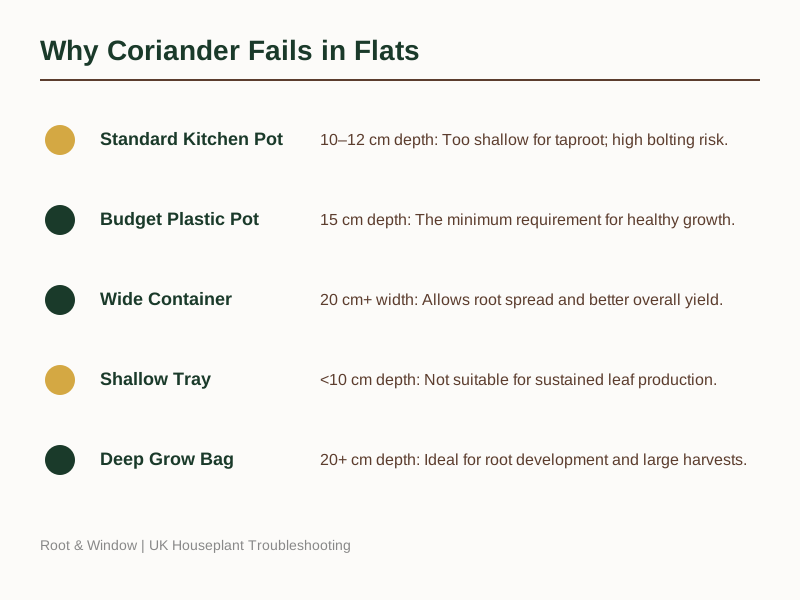
Shallow pots often trigger the stress response that makes coriander bolt. Using a deeper pot or adopting a regular sowing approach addresses the cause, rather than papering over it. A standard 10–12 cm kitchen pot is often too shallow and increases bolting risk, while a 15 cm+ plastic garden pot provides adequate depth for taproot development. For the best yield, a wide container or deep grow bag of 20+ cm allows for good root spread.
If you’ve been frustrated, put that aside. Coriander is trickier than it looks, and common advice is written for gardens, not kitchen windowsills.
The most reliable method is to create a rotation: keep two pots staggered so the second is sown when the first is cut for the initial harvest. You leave with a system, not a rescue mission. Download the Free Houseplant Troubleshooting Checklist to see what other common plant problems you can solve with simple changes.
#The honest next buy, if you need one, is the Garpsen clip-on grow light (paid link) — a clip-on for a dark UK sill — not a greenhouse substitute, just extra winter light.
View Garpsen clip-on grow light on Amazon → (paid link)
Related Guides
For a complete overview, see our Indoor Herb Rescue UK: Diagnose and Save Dying Windowsill Herbs.
Sources & Further Reading
- Royal Horticultural Society (RHS) guide to growing coriander.
- Missouri Botanical Garden plant finder for Persicaria odorata.
Note: General guidance only, verify details with a qualified professional or official source.