Why Is My Coriander Flowering? (And How to Stop It)
This page contains affiliate links. As an Amazon Associate we earn from qualifying purchases — this does not affect the price you pay.
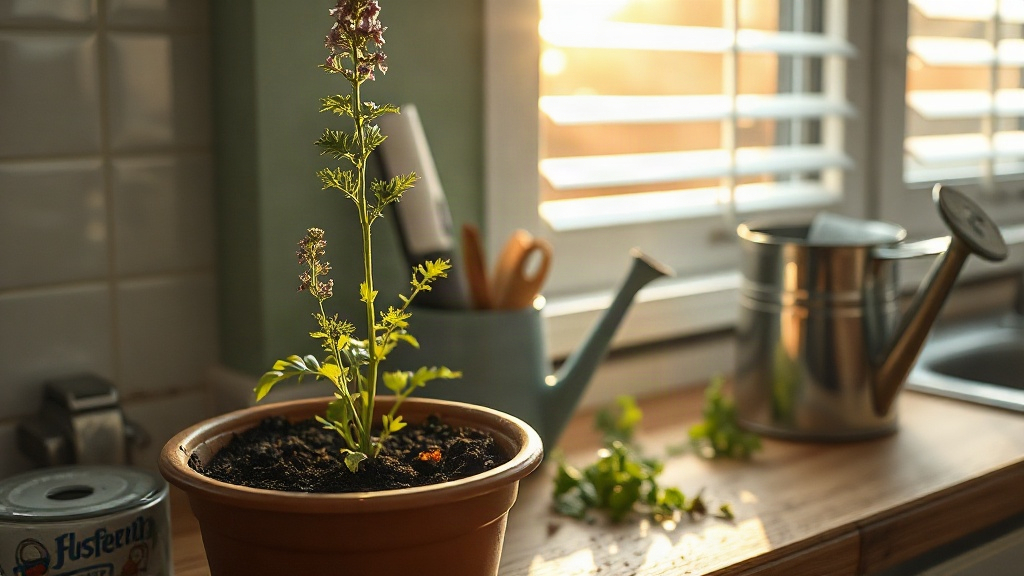
A flowering coriander plant isn’t malfunctioning. Producing seed is its entire biological programme. The indoor grower’s job isn’t to stop it, but to delay the trigger. This article identifies what pulls that trigger inside your flat.
Most people assume it’s the heat. The windowsill is warm, the central heating is on, coriander likes cool conditions—so obviously it’s too hot, right? In reality, the problem is almost certainly your pot size. Here’s why your windowsill coriander is bolting and exactly what to do about it.
Why Coriander Bolts
Coriander is an annual plant, hardwired to complete its entire life cycle in a single growing season. Its sole purpose, from a botanical standpoint, is to flower, set seed, and die. That’s not a disease or a sign you’re doing something catastrophically wrong—it’s just the plant doing what it’s programmed to do.
Think of it like a plant version of growing up fast. Once the plant senses that its time is running out, it rushes to reproduce before it disappears. When it flowers, leaf production effectively stops. The energy goes into the flowers and then the seeds, and the leaves you were harvesting become a distant second priority. The RHS describes coriander as a “quick-growing annual,” which is a polite way of saying it has no intention of hanging around.
Bolting is accelerated by longer days and warmer temperatures, but those aren’t the whole story—not even close.
Root Restriction Is The Real Culprit
Most articles get this wrong: coriander doesn’t bolt primarily because it’s warm. It bolts because it’s root-bound.
Coriander grows a long taproot—the kind of root that wants to push straight down into deep, loose soil. When that taproot hits the bottom of a shallow pot and can’t go any further, the plant interprets this as a crisis. It’s running out of space. Its survival response kicks in: flower now, produce seeds, ensure the next generation. Bolting is essentially the plant’s emergency reproduction protocol.
This is why you can keep coriander in a cool room and still watch it bolt. Your flat’s temperature is probably not the problem. Your pot almost certainly is.
Shallow pots—the kind you’d naturally reach for on a sunny windowsill—are the main culprit for flat-dwellers. A typical 10cm-deep pot looks reasonable for a small herb, but it acts as a cage for the taproot. Once it hits the bottom and starts circling, the plant stops investing in leaves and starts investing in flowers.
The mechanism is straightforward: give the roots room to breathe, and the plant has no reason to panic.
How to Stop Bolting
The fix sounds obvious when you understand it, but it eludes a lot of people: repot into a deeper container. At least 20cm deep is widely recommended. Use a rich, well-draining compost—something that holds a bit of moisture without waterlogging. If you’re buying compost, the multi-purpose kind with a bit of perlite mixed in works well.
There’s a secondary strategy that works alongside repotting: successional sowing. Rather than growing one large pot of coriander and watching it inevitably flower all at once, sow small batches every three to four weeks into separate containers. When one pot starts to bolt, you have others at different growth stages coming up behind it. The result is a near-continuous supply of fresh leaves rather than a glut followed by a gap.
If you can’t move your coriander into a bigger pot—perhaps the windowsill is too narrow—then harvest the leaves aggressively. Frequent harvesting signals the plant to keep producing foliage rather than flowers. Pinch out any flower stems the moment they appear.
Here’s a quick checklist for repotting if you’re doing it today:
- Choose a pot at least 20cm deep with drainage holes
- Fill with moist, well-draining compost
- Gently tease out the root ball if the plant is severely pot-bound
- Water lightly after repotting and place back on the windowsill
- Begin harvesting leaves within two weeks once new growth appears
Now you know what to look for—Download the Free Houseplant Troubleshooting Checklist to help you catch this and other common plant problems early.
What to Do If It’s Already Flowering
If the flower stalk has already appeared, don’t throw the whole plant out. The leaves are still edible, though they can become smaller and develop a more pungent flavour as the plant shifts its energy. Whether that matters depends on what you’re cooking. A bolognese won’t notice. A salsa verde might.
You have two useful options here. The first is to let the plant continue flowering and harvest the seeds when they mature. Coriander seeds are entirely edible and are a genuinely useful thing to have in the kitchen—they have a warm, citrusy flavour that works in curries, pickling spice mixes, and bread. If you’re growing herbs to save money on groceries, this isn’t a bad outcome.
The second option is to pinch out the flower heads as soon as they appear. This will redirect the plant’s energy back into leaf production, buying you a few more weeks of harvestable foliage before the plant eventually gives up entirely. Coriander is an annual—once it has flowered and set seed, it will die. There’s no reversing that. But you can extend the leafy phase if you act quickly.
Coriander Pot Size Guide
| Pot Depth | Root Space | Bolting Risk | Best For |
|---|---|---|---|
| 10cm | Restricted | High | Short-term use only |
| 15cm | Limited | Moderate | Occasional harvest |
| 20cm+ | Ample | Low | Continuous supply |
| 25cm+ | Deep | Very Low | Long-term growth |
Common Coriander Questions
Can I eat coriander flowers?
Yes, and they’re worth trying. The flowers have a distinctive, milder flavour. Use them as a garnish, toss them into salads, or stir them into yoghurt-based sauces. They won’t save a bolting plant, but they aren’t a waste either.
Does coriander grow back after flowering?
No. Coriander is an annual, which means it completes its entire life cycle in one season. Once it has flowered and produced seeds, the plant dies. This is why successional sowing—starting new plants every few weeks—is the real secret to a constant supply. You’re not trying to keep one plant alive indefinitely; you’re ensuring there’s always a younger plant coming up behind it.
Why does my coriander taste bitter?
Bitter coriander leaves are usually a sign of stress, most commonly bolting. The plant’s chemistry changes as it shifts energy from leaf production to reproduction, and that shows up in the flavour. Cooler growing conditions and a deeper pot delay bolting and keep the leaves milder. If your coriander is bitter even before it flowers, it may be too old—older leaves naturally become more pungent.
Once a flower stalk is visible, leaf quality falls within days. So pick everything usable now and sow the next pot this week. For help with other coriander problems, see our Indoor Herb Rescue UK guide.
The honest next buy, if you need one, is the LE TAUCI ceramic set (paid link) — 11 + 13 + 17 cm pots with drainage — the jump a supermarket herb needs when you split the plug.
View LE TAUCI ceramic set on Amazon → (paid link)
Sources & Further Reading
Note: General guidance only, verify details with a qualified professional or official source.