Why Is My Basil Turning Yellow? (And How to Fix It)
This page contains affiliate links. As an Amazon Associate we earn from qualifying purchases — this does not affect the price you pay.
When the lower leaves on your basil turn yellow, the standard advice to water more actively worsens the problem. Yellowing basil in a UK home is almost always a nitrogen-depletion issue, not a watering problem. The plant is pulling nutrients from its older leaves to fuel new growth, and adding water won’t replace what’s missing.
It can be frustrating to bring home a supermarket basil plant and watch it fade within weeks on your kitchen windowsill. You’ve provided light and water, yet the lower leaves turn yellow while the top looks fine. The pattern matters more than most advice suggests. That specific yellowing is the diagnostic clue telling you what’s actually going on.
The Three Most Common Culprits
When basil leaves start yellowing, the usual suspects are overwatering, pests, and low light. These are worth ruling out quickly, but they rarely produce the specific pattern most windowsill growers actually see.
Overwatering causes mushy stems, blackened leaves, and an overall look of collapse rather than gradual yellowing from the bottom up. If your basil is flopping rather than just fading from the lower leaves, overwatering is your problem. The fix is the opposite of what you’d intuitively do: let it dry out and check whether the roots have started to rot.
Pests—spider mites and aphids, mostly—show up as stippling on the leaves, fine webbing underneath, or visible insects. They don’t cause the uniform yellowing pattern most readers describe. If you can see pests, deal with them first. A wash-down with diluted neem oil usually sorts it for indoor herbs.
Low light stresses basil and can cause general pallor, but it doesn’t produce the classic “lower leaves yellow, top stays green” pattern either. Your plant might look a bit washed out, but the diagnostic signature you’re seeing points elsewhere.
Most yellowing on a windowsill basil plant is nutritional, not environmental. If you’re reading this, there’s a strong chance your plant isn’t drowning or infested—it’s simply running out of the fuel it needs to stay green.
Don’t drown it just because it looks sad. Wilting and yellowing can look similar, and the instinct is to water more. But if the yellowing is coming from the bottom up and the stems are still firm, more water won’t help—it might make things worse.
Spotting the Pattern: What Your Leaves Are Telling You
The location of the yellowing tells you almost everything you need to know. This is the diagnostic step most advice misses.
Lower leaves yellowing, top growth green: This is the key indicator. The plant is pulling nitrogen from its older leaves to feed new growth at the top. It’s not a disease—it’s a nutrient shortage. The plant is choosing which leaves to sacrifice, and it’s choosing the oldest ones. New growth staying green means your basil is still functioning; it’s just running on empty.
Dark patches alongside yellowing: If you see brown or black patches, particularly on the undersides of leaves, you may be dealing with downy mildew—a fungal pathogen, not a nutritional issue. This requires removing the plant to stop it from spreading.
Cotyledons yellowing on very young plants: If your basil has only just germinated and the seed leaves (cotyledons) are yellowing while the true leaves are green, this is usually normal development. The seedling is shedding its starter leaves as it grows.
Uniform yellowing across the whole plant: This suggests a systemic issue—light, water stress, or general nutrient depletion across the whole root zone. But the pattern most readers encounter—lower yellow, top green—is structurally different and points to a specific cause.
If the pattern matches “lower leaves yellow, new growth green,” you likely have a nitrogen depletion issue in a small pot. The fix is straightforward, and it’s not about watering.
Now you know what to look for—download the free Houseplant Troubleshooting Checklist to cross-check other common issues and keep your indoor plants in shape.
Why Nitrogen Runs Out in Small Pots
Here’s what’s actually happening. Basil is a heavy feeder—it needs more nutrients than many other common herbs, particularly nitrogen. In its natural habitat, it would have a whole soil profile to draw from. In a small pot on your windowsill, it has only what was in the compost when you bought it.
That compost runs out faster than you’d expect.
Supermarket herbs are grown in optimal conditions with liquid feeding in commercial nurseries—conditions your windowsill simply can’t replicate. The compost was formulated for controlled glasshouse growth, not indefinite windowsill cultivation. When nitrogen runs low, the plant does something clever and slightly sad: it re-mobilises nitrogen from its older leaves, moving it up to feed the new growth at the tips. The lower leaves yellow and eventually drop because they’ve been stripped of their nutrients. The top stays green because the plant is prioritising survival.
This is why watering more doesn’t fix it. There’s no nitrogen in water. It’s not a hydration problem—it’s a starvation problem.
The mechanism is well understood in horticulture: heavy-feeding herbs in small containers will always run into this issue without intervention. The same pattern shows up again and again among herb growers—supermarket basil going yellow within weeks, almost always because the pot’s too small and the compost’s exhausted. It’s a structural problem with how these plants are sold, not a reflection of your care.
The core fix is moving the plant into a larger container with fresh compost. That’s it. Everything else follows from that.
How to Rescue Your Basil
Rescuing yellowing basil from nitrogen depletion is straightforward, but you need to do things in the right order.
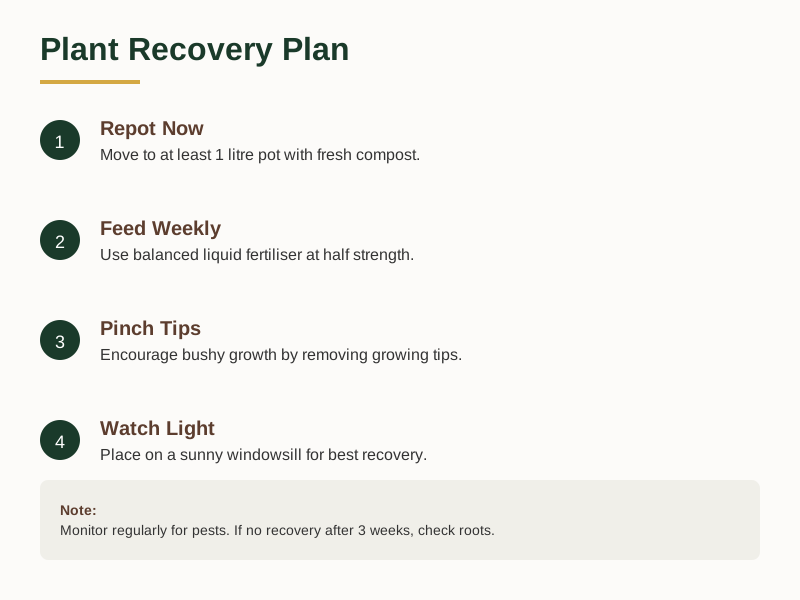
Repot into a larger container. Choose a pot that gives the roots more space—a litre or larger is a good target. Any container with a drainage hole will work. Fill it with a good-quality multipurpose compost.
Gently remove the plant from its existing pot. If the roots are circling tightly, tease them apart slightly before planting. This encourages them to grow outward into the new compost rather than continuing to circle.
Water lightly after repotting—the compost should be moist, not waterlogged. Place the pot on your sunniest windowsill. South-facing is ideal, but east or west-facing will work. Basil loves light, and the extra photons help it recover faster.
Start fertilising soon after repotting. Once the plant has settled into its new pot, begin feeding it regularly with a balanced liquid fertiliser diluted to half strength. A standard liquid houseplant or tomato fertiliser works perfectly. Feed basil regularly during the growing season, reducing or stopping in winter when growth slows. Basil kept under grow lights year-round can be fed throughout.
Pinch and prune. Remove the yellow lower leaves with your fingers or scissors. This tidies the plant and encourages bushier growth from the top. Pinching out the growing tip encourages branching, helping turn a leggy supermarket basil into a properly productive plant.
Maintain a watering rhythm. Once established in the larger pot, water when the top inch of compost feels dry. Basil doesn’t like to sit in wet compost, but it also doesn’t want to dry out completely.
The plants that respond fastest are those where the top is still green and growing. If your basil is still pushing out new leaves, it’s got enough life left to recover. You should see improvement within a few weeks.
When to Give Up (and What to Do Instead)
Sometimes a basil plant is genuinely beyond saving, and it’s better to know that early than to spend months nursing something that won’t recover.
Downy mildew: If you see dark patches on the leaves alongside the yellowing—particularly on the undersides—your plant has a fungal infection. This isn’t a nutrient problem and won’t respond to repotting or feeding. Horticultural sources confirm that downy mildew is caused by a pathogen and requires removing the infected plant entirely. Don’t compost it—bin it, ideally in a sealed bag, to prevent spread.
Root rot: If the stems are soft, mushy, or black at the base, the roots have rotted, usually from overwatering. Once the root system is compromised, the plant can’t take up water or nutrients. If the stems are black and mushy, the plant is usually too far gone to rescue. The only option is to take a cutting from any firm, green growth at the top and root that separately. If only the very top of the plant is still firm and green, you might be able to take a cutting and root it in water—but the parent plant is done.
Rooting from cuttings: If your basil has some healthy top growth, snip a 10 cm stem just below a node, remove the lower leaves, and place it in a glass of water on a bright windowsill. Roots will develop within one to two weeks. Once the roots are a few centimetres long, pot it up. This is a useful skill—one healthy supermarket basil can be propagated into several plants if you get in early.
Yellowing in winter is often a combination of low light and cool temperatures reducing the plant’s ability to take up nutrients. But it can also be nitrogen depletion if the compost is exhausted. Move the plant to your brightest spot, consider a grow light if you have one, and repot in spring when growth resumes. Windowsill basil often struggles during the darker British winter months.
Not every plant is savable, and that’s fine. A dead basil plant is usually a small financial loss and a bit of bruised confidence. The knowledge you pick up from diagnosing what went wrong is worth more than the plant.
Basil Rescue Checklist
| Action | Timing | Details |
|---|---|---|
| Repot | Immediately | Use a larger pot with fresh compost |
| Water | After repotting | Keep compost moist, not waterlogged |
| Feed | Soon after repotting | Balanced liquid fertiliser, half strength |
| Prune | Regularly | Pinch tips to encourage bushiness |
| Monitor | Ongoing | Check for pests or fungal issues |
| Replant | Spring | If plant fails to recover after several weeks |
Use this article’s logic as a decision rule: if the yellowing stops after repotting and feeding, the cause was nitrogen depletion. If it continues, the cause is likely one of the secondary issues covered here, like downy mildew or root rot. For a complete diagnostic overview of all common windowsill herb problems, see our Indoor Herb Rescue UK guide, which details the next steps for each scenario.
Yellow leaves don’t always mean you’re a bad plant parent. Often, it just means your basil needs a bigger home and some fresh compost. The pattern of lower leaves yellowing while the top stays green is the plant’s way of telling you exactly what’s wrong—and it’s almost always a fixable nutrient issue, not the overwatering everyone assumes.
Repotting into a larger container with fresh compost is the core fix. Add a regular feeding routine and you’ll be surprised how quickly it bounces back. Supermarket basil gets a bad reputation for being difficult, but the reality is it’s grown for a single use and sold in pots too small for long-term health. Give it space and food, and it behaves like a proper plant.
Not sure if your plant is struggling with something else? Grab our free Houseplant Troubleshooting Checklist to diagnose other common issues and keep your indoor garden in shape.
#The honest next buy, if you need one, is the Westland Houseplant Potting Mix (paid link) — peat-free 4 L bag, the base mix we use when repotting windowsill herbs.
View Westland Houseplant Potting Mix on Amazon → (paid link)
Related Guides
For a complete overview, see our Indoor Herb Rescue UK: Diagnose and Save Dying Windowsill Herbs.
Sources & Further Reading
Note: General guidance only, verify details with a qualified professional or official source.