How to Increase Humidity (Without Ruining Your Plants)
British flats are tough on tropical plants. Our UK Indoor Plant Care: Surviving Central Heating & Low Light hub covers the big environmental fixes; this guide zooms in on one of them.
This page contains affiliate links. As an Amazon Associate we earn from qualifying purchases — this does not affect the price you pay.
Your calathea has crispy edges, your fern’s tips are brown, and the radiator is humming away. Welcome to a UK winter, where central heating turns your cosy flat into a desert for houseplants. You don’t need a rainforest on your windowsill, just a few clever tricks to give your leafy friends the moisture they crave without rotting their roots or covering them in limescale.
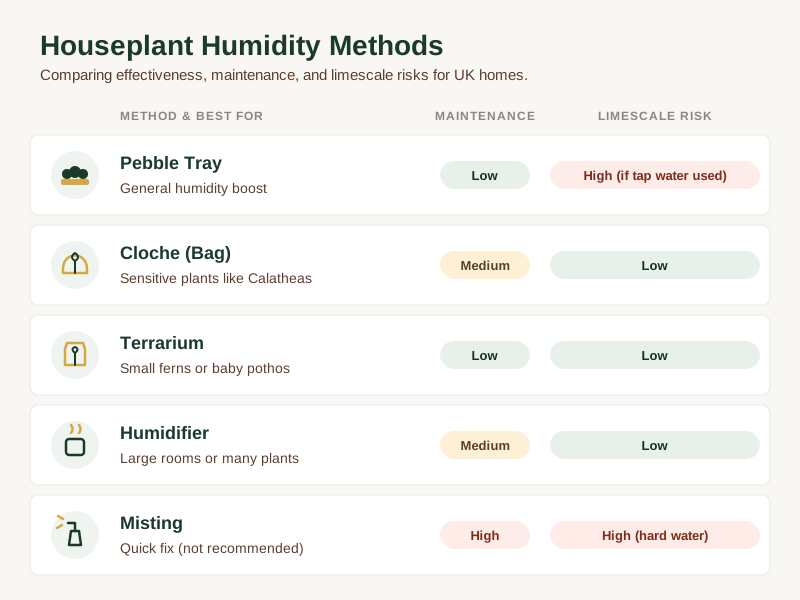
Quick reference: See the infographic below for a visual summary of the key points, or download the data table for full details.
Why Is Misting Killing My Plants? The Hard Water Trap
Misting often does more harm than good here because of our hard tap water. When it evaporates, it leaves behind a chalky limescale film that scorches the leaves. That white crust you see building up? It blocks light and slowly burns the plant, causing ugly brown patches.
Many owners learn this the hard way: misting a calathea every morning with tap water, convinced they are being extra caring. After a couple of weeks, the leaves looked like they’d been dusted with flour. Switching to collected rainwater sorted it within ten days—the crust vanished and new growth stayed glossy. If you live in a hard water area, never mist straight from the tap. The Royal Horticultural Society (RHS) advises against it for sensitive plants for exactly this reason.
The “Radiator Shield” Strategy
Putting a pebble tray or humidifier on top of a radiator seems logical, but the heat turns it into a rapid-drying fan. The water evaporates too quickly to help, and the plant gets a brief burst of moisture followed by a scorching shock.
The trick is distance. Keep any humidity setup at least 30–60 cm away from radiators or heating vents. Even better, position plants in the buffer zone between the radiator and the window. That spot gets the gentle rise of warm air without the direct blast that dries everything out.
Never stand a fern directly on a radiator; if one has been sitting there, move it away from the direct heat before you try anything else. If you’re unsure where to put things as the seasons change, our blog has more seasonal survival tips.
The “No-Bathroom” Solution: Creating Micro-Climates
If you want a set-and-forget solution, the Orfonbi Portable Cordless Humidifier (paid link) sits discreetly on a windowsill and keeps the air around your plants at a steady 50-60% humidity. No pebbles, no bowls, no daily topping up.
View Orfonbi Portable Cordless Humidifier on Amazon → (paid link)
If you don’t have a steamy bathroom window, you can still trap moisture around your most sensitive plants with a few household items.
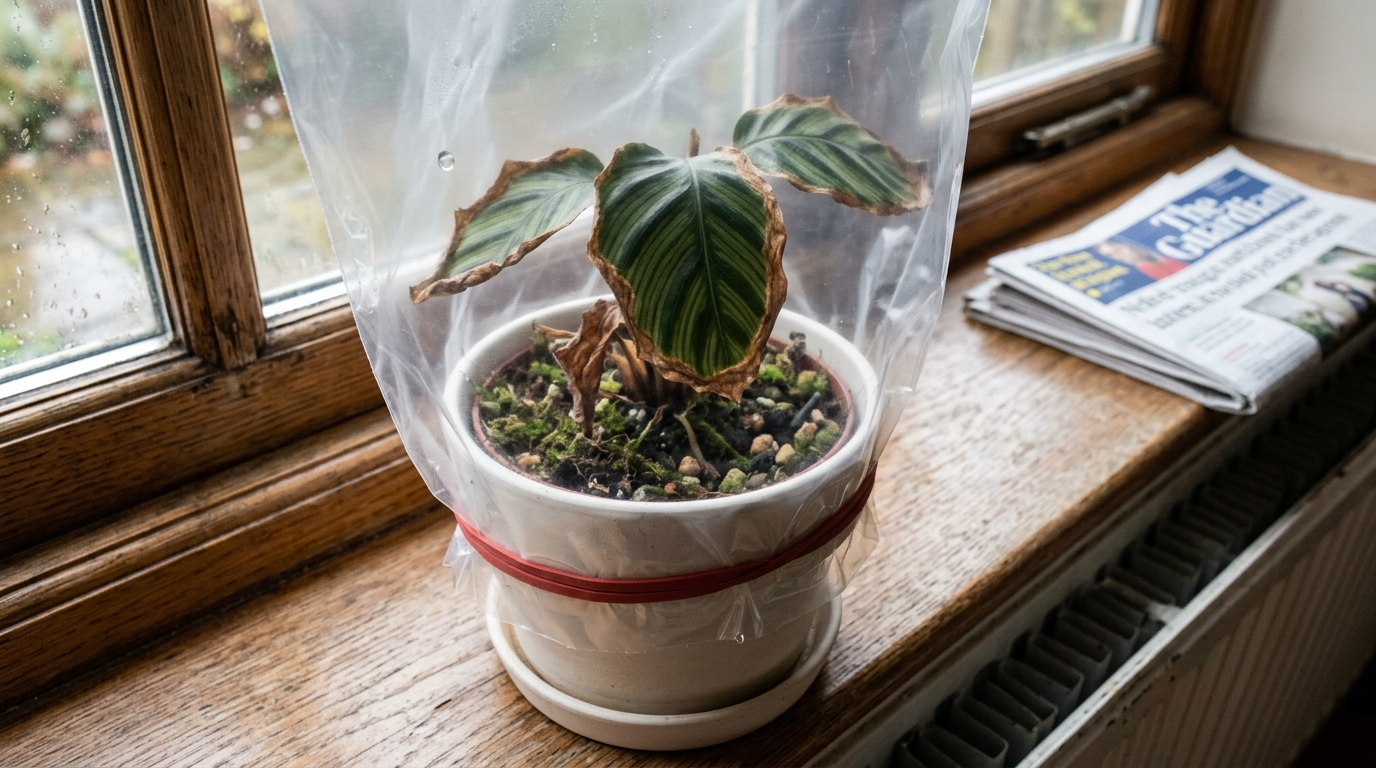
Method 1 – The Cloche (plastic bag tent)
- Find a clear bag: Use a breathable plastic bag big enough to cover the plant without crushing it.
- Cover overnight: Place the bag over the pot in the evening, securing the rim with a rubber band.
- Vent in the morning: Open the bag each morning to let excess condensation escape, then re-cover it at night.
The bag creates a mini-greenhouse, raising the local humidity noticeably. Try this on a struggling calathea, and within two weeks the leaf edges stop crisping.
Method 2 – The Terrarium A large, clean glass jar works perfectly for small ferns or baby pothos. Put a thin layer of pebbles in the base, add a splash of water, and place the plant inside. The sealed environment recycles moisture, mimicking a tropical understory.
Method 3 – Kitchen-Sink Grouping Group plants near the dishwasher or kettle where steam is released during use. The occasional burst adds humidity right where they sit. Just make sure boiling water isn’t splashing directly onto the leaves.
Passive Methods: Trays and Pebbles
These are cheap, low-maintenance, and work brilliantly when you’re short on time.
- Pebble Tray: Fill a shallow tray with pebbles, add water until it just touches the tops, and set the pot on the stones. The water evaporates slowly, raising the immediate air moisture. Crucially, the pot’s base stays dry, preventing root rot.
- Water Bowl: A large bowl of water placed near a cluster of plants does the same thing on a slightly larger scale.
- Grouping: Cluster plants together. They each release moisture through transpiration, creating a shared humid zone that’s far more effective than any single misting session.
A simple pebble tray under a monstera lifted the local humidity by roughly 10–15%—enough to stop the brown tips from spreading. Just remember, as mentioned earlier, never set the tray on a radiator.
Active Methods: Humidifiers and Misting (The Right Way)
When passive tricks aren’t quite cutting it, active tools can help, though they come with caveats.
📺 Watch: Best Humidifier UK (Best Home Humidifiers UK) — BEST UK REVIEWS
- Humidifiers: A cool-mist humidifier can raise room humidity to a healthy 50–60% for most tropicals. They’re effective but can be a bit of a faff to run all winter. If you do invest, you’re looking at around £30 for a decent model.
- Misting: Only mist with rainwater or distilled water, and do it in the morning. This gives the leaves time to dry before evening, reducing the risk of fungal problems.
- Fungal Risk: If you mist in the evening or use tap water, the lingering moisture creates a perfect breeding ground for diseases. The RHS highlights poor air circulation and damp foliage as primary causes of powdery mildew in UK homes.
We’ve tried plant invigorator sprays on a fern suffering from low humidity; they helped with pests but didn’t replace the need for proper humidity. Think of misting as a supplement, not a substitute.
Humidity Methods Comparison
| Method | Best For | Maintenance | Risk of Limescale |
|---|---|---|---|
| Pebble Tray | General humidity boost | Low | High (if tap water used) |
| Cloche (Bag) | Sensitive plants like Calatheas | Medium | Low |
| Terrarium | Small ferns or baby pothos | Low | Low |
| Humidifier | Large rooms or many plants | Medium | Low |
| Misting | Quick fix (not recommended) | High | High (hard water) |
What to Do Now
If you are dealing with related issues, see our guide to Does UK Hard Water Affect Houseplants?. The key takeaways are simple: ditch tap-water misting, keep humidity rigs away from radiators, and create a small, plant-focused micro-climate wherever you can. Whether you opt for a cheap pebble tray, a DIY bag cloche, or a modest humidifier, the goal is to give your leaves a consistent, gentle lift in moisture without the side effects of hard water or heat shock.
Your flat might be dry, but your plants don’t have to suffer. When first starting out, many think chucking water at the problem is the only answer. With a bit of patience and the right hacks, you’ll see those crispy leaves perk up.
It always depends on your specific space, but a little trial and error will get you there. If you’ve got any lingering doubts, feel free to get in touch – we’re always happy to chat about plant problems.
Related Guides
For a complete overview, see our UK Indoor Plant Care: Surviving Central Heating & Low Light.
Further Reading
Note: This article provides general guidance on increasing humidity for houseplants. Always verify specific plant needs and environmental conditions with a qualified professional or official source.