How to Save a Dying Plant (UK Troubleshooting Guide)
This page contains affiliate links. As an Amazon Associate we earn from qualifying purchases — this does not affect the price you pay.
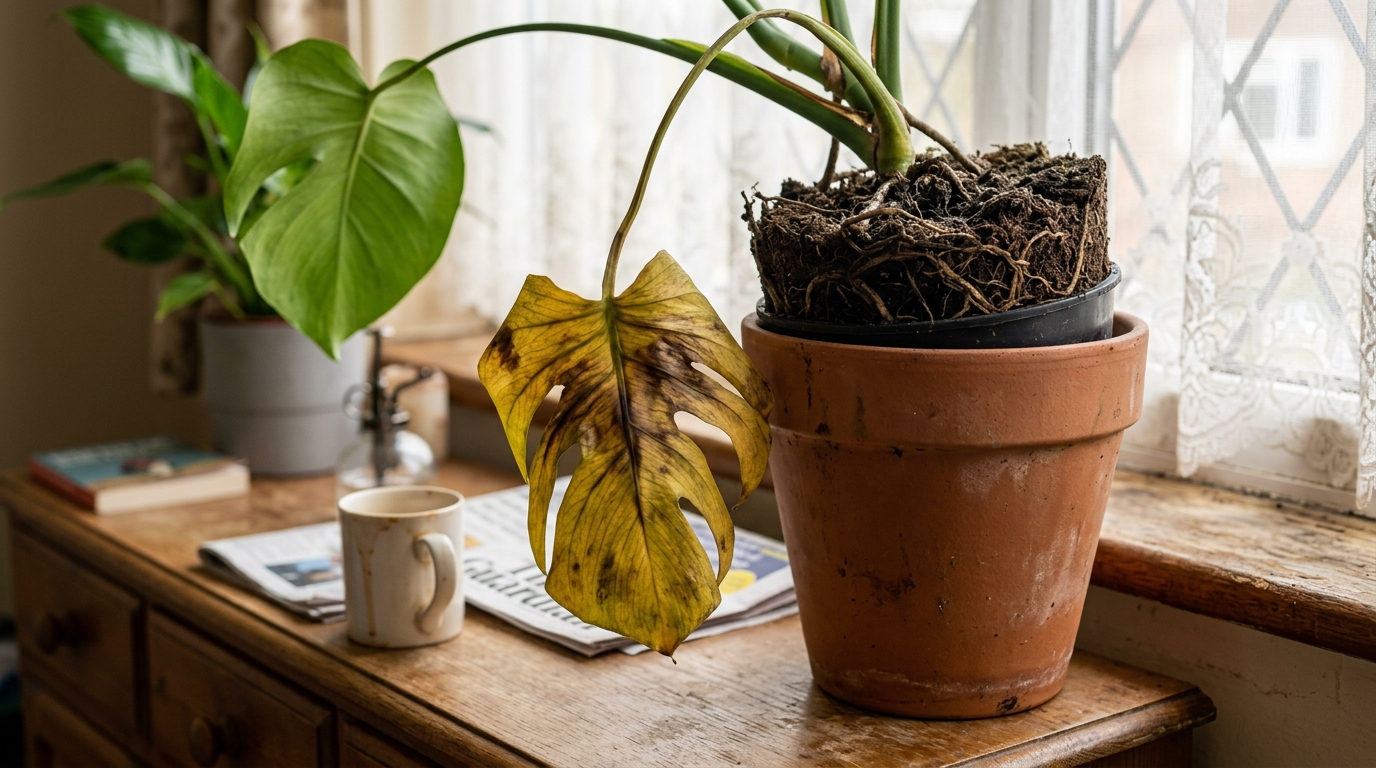
Your monstera’s leaves are turning yellow, the soil feels like a soggy swamp, and you’re staring at the pot wondering if you’ve just killed another plant. Before you bin it, stop and check the basics. Most dying houseplants in British homes are suffering from either winter overwatering, radiator-scorched air, or hard tap water. You can usually bring them back from the brink by identifying exactly which of these environmental shocks is happening and adjusting your routine.
If your plant looks like it’s dying, follow this straightforward rescue plan. First, check the soil—if it’s wet and smells sour, stop watering immediately and trim away any brown, mushy roots. Second, assess the environment. Central heating destroys indoor humidity, so add a pebble tray or move the plant away from radiators, and switch to boiled or collected rainwater if you live in a hard water area. Finally, inspect the undersides of the leaves for pests. Use a gentle foliar spray for light infestations, or simply adjust your watering frequency for winter dormancy. You will usually see signs of recovery within a week.
Step 1: Is the Soil Too Wet?
If the soil feels damp an inch below the surface and the pot is heavy, your plant is waterlogged and at risk of root rot. Push your finger into the compost; if it’s wet all the way down, stop watering immediately and let it dry out.
A quick “lift test” helps confirm this: pick the pot up. A healthy pot feels relatively light, while a waterlogged one feels heavy like a brick. If the soil is soggy, look at the roots. Gently tease a few out; healthy roots are white and firm, while rot-affected roots turn brown, feel mushy, and give off a faint, sour smell. That smell is the silent killer of many UK houseplants, especially when the heating goes on and you instinctively water more often to compensate for the warm room.
In winter, radiators keep flats cosy but also draw moisture from the air. The soil on the surface can look bone-dry while the lower layers stay drenched because the heat creates a convection loop. The Royal Horticultural Society (RHS) advises that most indoor plants need watering only when the top inch of compost is dry, and that frequency drops dramatically during the colder months.
If you catch root rot early, trim away the brown, mushy bits with clean scissors, repot in a well-draining mix, and leave it alone for a few days to recover.
Step 2: The “Radiator Rescue” (Humidity & Heat)
Dry, crispy leaf edges are usually the radiator’s doing, not a watering mistake. Central heating can drop indoor humidity to 20% or less, and tropical favourites like calatheas, ferns, and even your favourite pothos will develop brown, papery tips that look crispy within days.
Quick fixes that actually work:
- Pebble tray: Fill a shallow tray with pebbles, add a few centimetres of water, and set the pot on top. As the water evaporates, the surrounding air gets a humidity boost. A decent tray costs roughly £10-15.
- Plant grouping: Cluster a few pots together; they create a micro-climate that raises local humidity without any extra equipment.
- Avoid cold windowsills: In winter, window glass can be a cold shock zone. Keep sensitive plants a few inches away from the pane, especially if you have single glazing or a draughty frame.
This is easy to learn the hard way with a calathea perched right next to the radiator. Its leaves went from deep green to a brittle, brown fringe overnight. A simple pebble tray turned the situation around within a week.
Step 3: The “Hard Water” Check
Tap water in many UK towns is hard—it contains calcium and magnesium that leave a white crust on the soil surface and can cause chlorosis (yellowing) in sensitive foliage. You’ll often see a powdery deposit on the pot’s rim or a faint film on the leaves.
How to tell if hard water is the issue:
- Look for a chalky white ring at the base of the pot after a few weeks of watering.
- Yellowing that persists despite correct watering schedules is a massive red flag.
According to Garden Organic, hard water can impede nutrient uptake over time, leading to the classic yellow-tip syndrome.
Mitigation tricks that cost next to nothing:
- Boil and cool: Bring tap water to a boil, let it cool to room temperature, then use it. Boiling precipitates most of the lime, and the cooling step prevents shocking the roots.
- Rainwater collection: A simple bucket or a cheap water butt (around £20-30) gives you pure water straight from the sky—the absolute gold standard for UK plant parents.
- Filtered water: If you’re willing to spend roughly £15-25 on a basic charcoal filter jug, it’ll strip most hardness without the faff of boiling.
Step 4: Pest Patrol (The “Nuclear” Option)
A sudden influx of tiny insects can feel like an invasion. The most common UK indoor pests are fungus gnats, spider mites, and mealybugs. Spot them early and you’ll save yourself a lot of heartache.
Gentle, everyday defence: Keep a spray bottle of SB Plant Invigorator (paid link) on the kitchen shelf. It’s a non-toxic foliar feed that also smothers soft-bodied pests. It works well enough that you only need to reapply every week, but be aware it can leave a faint black film on leaves if you overspray—a minor faff that owners just wipe off with a damp cloth.
Buy SB Plant Invigorator on Amazon → (paid link)
When the infestation gets nasty: Reach for Provanto Smart Bug Killer (paid link). It’s a concentrate that knocks out aphids, whitefly, thrips, and even stubborn spider mites. The trade-off is the extra mixing step and a price tag that sits in the region of £15-20 for a bottle. Use it sparingly; it’s a “nuclear” option for a reason.
Check Provanto Smart Bug Killer price → (paid link)
Budget rescue: Yellow sticky traps are brilliant for fungus gnats—they give you a visual count and reduce the adult population. Pair traps with letting the soil dry out between waterings for a double whammy.
Step 5: The “Winter Dormancy” Trap
Winter isn’t just cold outside; it’s a slowdown for most houseplants too. Low light levels mean photosynthesis drops, so the plant’s water uptake plummets. Yet many of us keep the summer watering schedule going, leading straight to root rot.
What to do:
- Check the light: South-facing windows give the best winter sun, but even they deliver only a few hours of direct light. If your plant is on a north-facing sill, expect even slower growth.
- Water less: Aim to water only when the top inch of soil is dry. Often that means once every 10-14 days for a fiddle-leaf fig, and even longer for a snake plant.
- Use a moisture meter: They’re cheap (around £5-10) and take all the guesswork out of the equation.
If you’re not seeing new growth, you’re probably overwatering. Many owners have killed their first peace lilies doing exactly this out of kindness.
Common UK Houseplant Issues
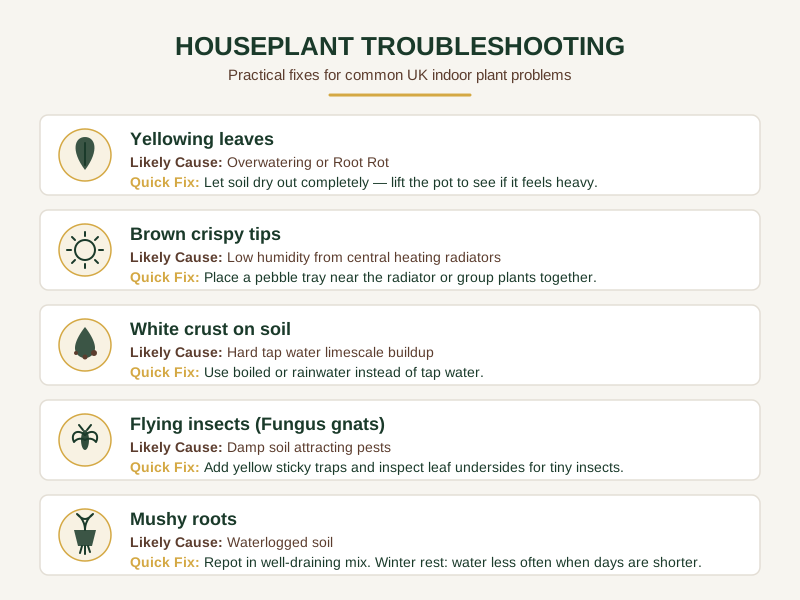
| Symptom | Likely Cause | Quick Fix |
|---|---|---|
| Yellowing leaves | Overwatering or Root Rot | Let soil dry out completely |
| Brown crispy tips | Low humidity from radiators | Use a pebble tray or group plants |
| White crust on soil | Hard tap water | Use boiled or rainwater |
| Flying insects | Fungus gnats | Yellow sticky traps |
| Mushy roots | Waterlogged soil | Repot in well-draining mix |
What to Do Now
You’ve now got the core checklist: test the soil, tame the radiator, fix the water, hunt down pests, and respect winter’s slower pace. Each step is a small win that adds up to a thriving plant again. If you’re looking for more specific species guides, check out the blog for a deep dive into individual plant care, or read about us to feel better about your drooping monstera.
Remember, plant rescue isn’t rocket science; it’s about spotting the right symptom and taking a straightforward fix. Keep an eye on humidity, water smartly, and give your leafy mates a bit of patience. You’ve got this, and we’ll be cheering you on. If you’re completely stuck and need a second opinion, feel free to get in touch. The plants that survive your early mistakes teach you more than the ones that thrive first time — that’s how every good plant parent is made.
Explore More Topics
Quick answers:
Go deeper on specific topics:
- Why Are My Plant Leaves Turning Yellow? Causes & Cures
- How to Save an Overwatered Plant from Root Rot
- Crispy Brown Tips on Houseplants: How to Fix Humidity
- Why is My Houseplant Drooping? (And How to Revive It)
- Why Are My Succulent Leaves Falling Off? UK Fix
- Why Is My Houseplant Getting Mould on the Soil?
- Why Are My Plant’s Leaves Curling? UK Causes & Fixes
Further Reading
Products linked above are ones we recommend based on owner feedback and UK-condition testing.
Note: This guide provides general troubleshooting advice. Always verify specific plant needs and consult a qualified professional or official source for critical care decisions.