How to Identify and Eradicate Houseplant Pests (UK Guide)

eBay Partner Network: we earn a commission when you buy through eBay links on this page.
This page contains affiliate links. As an Amazon Associate we earn from qualifying purchases — this does not affect the price you pay.
Finding a bug on a Monstera leaf tends to produce immediate panic — but most houseplant pest problems are entirely manageable once you know what you’re dealing with. The real challenge in UK homes is that dry centrally-heated air and hard water stress plants in ways that make them more vulnerable, so the same pest hits harder here than it might elsewhere. Here is how to identify the usual culprits and which treatments actually work without turning your living room into a chemistry lab.
How Do You Spot and Treat Vine Weevil in Houseplants?
Vine weevils are treated by drenching the soil with Steinernema feltiae nematodes, which actively hunt and kill the root-eating larvae within 48 hours. You can spot an infestation if your plant suddenly wilts or feels heavy in the pot despite damp soil, as the grubs destroy the root system from the inside out.
📺 Watch: Life Cycle Of Vine Weevils. How To Get Rid Of Vine Weevils — Cloud Gardener UK
Adult vine weevils nibble the edges of leaves, but it’s their grub-like larvae that do the real damage. If you’ve ever wondered why a plant looks thirsty even after a good soak, that’s your first red flag. According to the Royal Horticultural Society (RHS), these grubs are one of the most destructive pests for potted plants because the damage happens entirely out of sight.
The lifecycle is simple: adult beetles emerge in spring, lay eggs in the soil, and the larvae hatch and feed on roots for several weeks before pupating. Because the damage is underground, you often only notice the problem when the plant collapses overnight.
What to look for:
- Sudden wilting or a plant that feels “heavy” in the pot despite a damp surface.
- White, C-shaped grubs when you gently tip the soil or lift the plant out of its pot.
- Tiny holes or ragged edges on the leaf margin where adults have been feeding.
Sudden drooping with no obvious cause is a good reason to tip the plant out of its pot and look. If you find creamy larvae in the soil, you need to treat the soil, not just spray the foliage.
Solution – vine weevil nematodes:
Biological control with specialist vine weevil nematodes is the reliable way to target the larvae in the pot. Nemasys-branded packs sold on Amazon UK are a fruit-and-veg mix, not a vine weevil product, so buy a labelled vine weevil nematode pack from a garden centre or specialist supplier. They are completely safe around pets and children, leaving no residue.
- How to use: Store the sachet in a cool, dark place until you’re ready. Mix the contents into a litre of rainwater (hard tap water will kill the nematodes) and drench the soil thoroughly. Keep the soil moist for a week to allow the nematodes to move through it.
- Budget note: There isn’t a cheap alternative that delivers the same root-level kill. The premium price is worth the investment if you’re dealing with a serious infestation.
If the wilt isn’t explained by over-watering, check the roots first. A quick inspection can save you a lot of heartache.
Worth knowing: Mix sprays with rainwater or softened water to prevent leaf scorch caused by hard tap water minerals.
Common Leaf Pests: Identification & Quick Fixes
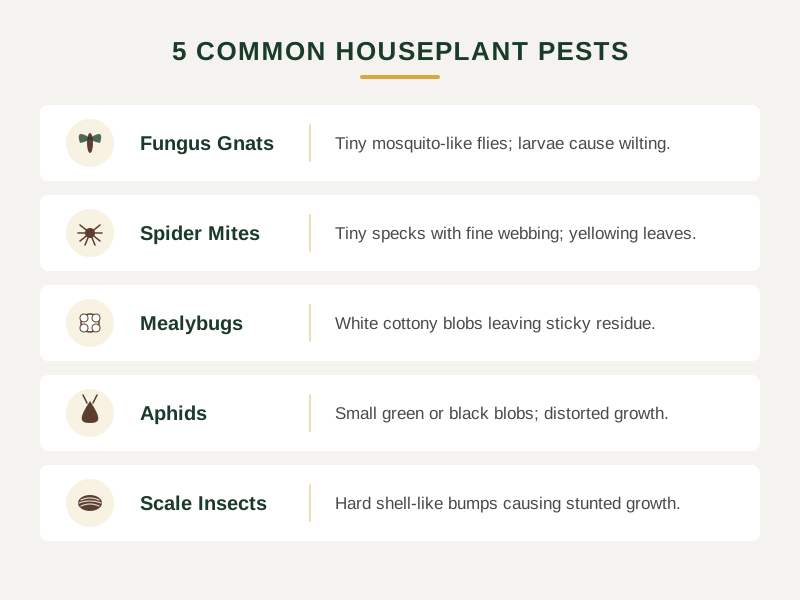
Leaf-dwelling pests are the ones that get most of the panic-button presses, simply because they’re easy to see. We’re big fans of catching things early. Here’s a quick visual guide to the most common offenders and what works best in a typical British flat.
- Aphids: Small green or black blobs clustered on new growth. They excrete sticky honeydew that can blacken leaves. A gentle blast of water followed by a spray of insecticidal soap (diluted with rainwater) usually knocks them back.
- Mealybugs: White, cottony blobs hiding in leaf joints and at the base of stems. Isolate the plant, then wipe each bug off with a cotton swab dipped in diluted neem oil.
- Spider Mites: Tiny specks that leave fine webbing on the undersides of leaves. They love the dry air that central heating creates. Raising humidity with a pebble tray and a weekly neem oil spray keeps them at bay.
- Scale: Hard, shell-like bumps that look like tiny pebbles glued to stems. A soft toothbrush scrub under running water works wonders, followed by a light coat of SB Plant Invigorator (paid link) for routine control.
- Fungus Gnats: Tiny, mosquito-like flies hovering over the soil surface. They thrive in overly wet compost. Let the top centimetre of soil dry out between waterings, set up yellow sticky traps, and consider a nematode drench if they persist.
Buy SB Plant Invigorator on Amazon → (paid link)
A common hiccup: a cheap spray of Doff Universal Bug Control (paid link) on a delicate peace lily can look fine at first, then a few days later the leaves turn crispy — hard water turning the soap into a leaf-burn. Switching to rainwater for any foliar spray solves the issue instantly.
View Doff Universal Bug Control on Amazon → (paid link)
Quick-fix routine:
- Inspect the undersides of leaves – that’s where most pests hide.
- Isolate the affected plant to prevent spread.
- Apply the appropriate spray (soap, neem oil, or SB Plant Invigorator (eBay paid link) using rainwater.
- Set up a sticky trap (Blooven yellow gnat traps (paid link) work well) to monitor adult numbers.
Check Blooven yellow gnat traps price → (paid link)
These steps are straightforward enough that even a panicking flat-dweller can follow them without a faff.
The best defence is a good offence: quarantine new plants for two weeks before introducing them to your collection.
Safe Sprays for UK Hard Water
Standard insecticidal soaps are a staple, but there’s a hidden danger in most British homes: the hard tap water that leaves mineral deposits on leaves. Mixing soap with hard water creates a solution that can scorch sensitive foliage, especially on calatheas and ferns.
The fix: Always dilute sprays with either rainwater collected in a clean container or softened water from a domestic filter. A quick test – spray a few drops on a single leaf and wait 24 hours – will tell you if burn is an issue.
Product spotlight – SB Plant Invigorator:
Keep a bottle on the kitchen shelf for routine pest control. It’s non-toxic, eco-friendly, and leaves leaves looking cleaner than a fresh wipe. The downside? It can be a bit sticky, and on heavy infestations you’ll need to reapply weekly. For a light-to-moderate bug problem, it’s spot on.
Budget alternative – Doff Universal Bug Control (paid link):
If you’re watching the pennies, this 1 L pesticide-free spray does the job on early-stage aphid or mite outbreaks. Just be cautious: it can be harsh on delicate species, and the nozzle sometimes clogs, turning a quick knock-down into a bit of a faff. Use it sparingly and always with rainwater.
Worth knowing: Nematodes are safe around pets and children but must be stored cool and applied with rainwater.
Chemical-Free Soil Treatments
For a gentler approach, OURONS Water Soluble Neem Oil (paid link) mixed into a spray bottle works well on soft-bodied pests. It’s not as fast as a chemical spray, but it’s safe around pets and kids and leaves no residue on edible herbs.
Check OURONS Water Soluble Neem Oil price → (paid link)
Soil-dwelling pests like fungus gnats and vine weevil larvae need a different approach – you can’t simply spray the leaves and hope for the best.
Sciarid Fly Nematodes (paid link): These microscopic hunters are the honest Amazon option for fungus gnat larvae in the pot. Keep them cool and apply them promptly after opening, otherwise they lose potency. For vine weevil, you still need a labelled vine weevil nematode pack — this sciarid listing will not do that job.
View Sciarid Fly Nematodes on Amazon → (paid link)
DIY sticky traps: Yellow traps such as Blooven fungus gnat sticky traps (paid link) are a cheap, non-toxic way to catch adult fungus gnats and whiteflies. Place one or two at soil level; the glue is a little messy but the visual cue of trapped insects tells you when the infestation is under control.
Putting it together:
- Step 1: Let the top layer of soil dry out for a few days – this alone can slash fungus gnat numbers.
- Step 2: Lay out a sticky trap to monitor adult flight.
- Step 3: If you still see larvae, apply a nematode drench (rainwater + nematodes) and keep the soil moist for a week to let them hunt.
Many owners learn the hard way that a single drench of nematodes won’t instantly eradicate a heavy gnat problem; you need patience and a dry-top-soil routine to starve the larvae.
Prevention: Keeping Bugs Out of Your Flat
The best defence is a good offence. Here are the habits that keep a collection largely pest-free.
- Quarantine new plants: Keep any new acquisition in a spare bathroom or on a windowsill away from your existing collection for at least two weeks. This gives you time to spot hidden pests before they spread.
- Mind the winter light: Low light weakens plants, making them more attractive to pests. Rotate plants to the brightest spot you have, and consider a low-cost LED grow light for the darkest corners.
- Control humidity: Central heating dries the air to around 20% RH in January. A pebble tray with water, or a simple room humidifier, can raise humidity enough to deter spider mites.
- Regular inspection: Every week, give the undersides of leaves a quick glance. It takes less than a minute and catches infestations before they explode.
Skip quarantine on a new pothos and it doesn’t take long to regret it — place it straight on the kitchen windowsill and within a week spider mites can colonise every plant in the flat. A quick quarantine routine saves a weekend of frantic spraying.
Common Houseplant Pests: Identification Guide
| Pest | Appearance | Key Damage | Treatment |
|---|---|---|---|
| Vine Weevil | C-shaped white grubs; adult beetles with snout | Root destruction; sudden wilting | Nematode soil drench |
| Aphids | Small green or black blobs | Sticky honeydew; distorted growth | Insecticidal soap spray |
| Mealybugs | White cottony blobs | Stunted growth; sticky residue | Neem oil wipe |
| Spider Mites | Tiny specks; fine webbing | Yellowing leaves; stippling | Neem oil spray; humidity increase |
| Scale | Hard shell-like bumps | Stunted growth; sticky residue | Toothbrush scrub |
| Fungus Gnats | Tiny mosquito-like flies | Wilting; larvae in soil | Sticky traps; dry soil routine |
Your Next Step
You now have the UK-specific survival kit: neem oil or SB Plant Invigorator for leaf pests, sciarid nematodes for fungus gnat larvae, a specialist vine weevil nematode pack if you find C-shaped grubs, and sticky traps to keep an eye on flying bugs. Remember, pests are often a symptom of dry air, hard water, or a plant that’s been stressed – fixing the environment is half the battle.
If you’re still struggling to work out what’s wrong with your collection, feel free to get in touch and we’ll try to point you in the right direction.
If you want a quick reference to keep on your windowsill, Download the Free Houseplant Troubleshooting Checklist. It walks you through the inspection routine, watering checks, and the exact steps for each pest type, so you can stay ahead of the next infestation.
Keep your flat’s humidity up, your water soft, and your plants happy – you’ve got this. The best pest defence is a weekly five-minute leaf check with a magnifying glass; catch them early and you’ll never need the heavy artillery.
Explore More Topics
Go deeper on specific topics:
- How to Get Rid of Fungus Gnats in Houseplant Soil
- Spider Mites on Indoor Plants: UK Eradication Guide
- Signs of Thrips on Houseplants (And How to Stop Them)
- How to Save a Dying Houseplant After Using Bad Soil
- Royal Horticultural Society (RHS) - Vine Weevil
- Royal Horticultural Society (RHS) - Houseplant Pests
- Royal Horticultural Society (RHS) - Pest and Disease Advice
Products linked above are ones we recommend based on owner feedback and UK-condition testing.
Note: This guide provides general information for UK conditions. Always verify specific treatments and consult a qualified professional or official source for severe infestations or specific plant species.
Related Guides
This article is part of our Houseplant Pests UK: How to Identify and Eradicate Bugs series. You may also find these guides useful: