Why Is My Houseplant Getting Mould on the Soil?
This page contains affiliate links. As an Amazon Associate we earn from qualifying purchases — this does not affect the price you pay.
Following on from our Houseplant Troubleshooting: How to Save a Dying Plant overview, this guide digs into one specific symptom and what to do about it.
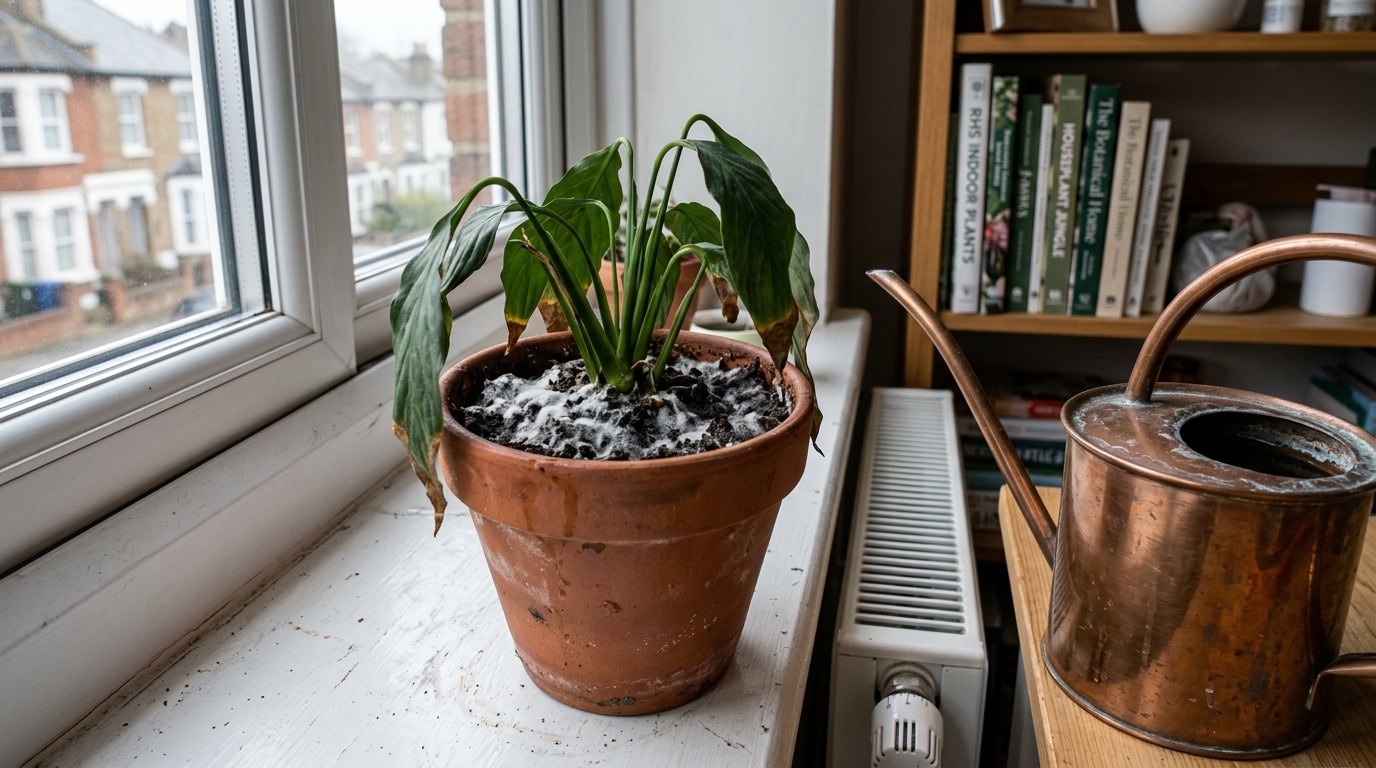
White, cottony fluff on your houseplant soil is one of those things that looks alarming but is usually a symptom, not a disease. It’s a harmless saprophytic fungus feeding on decaying bits in the potting mix, not the plant itself. That said, it’s a massive flashing warning sign that your soil is staying too wet, lacking airflow, or suffering from hard water buildup. It’s the plant’s way of telling you its living conditions are off. Here’s how to get rid of it and stop it coming back.
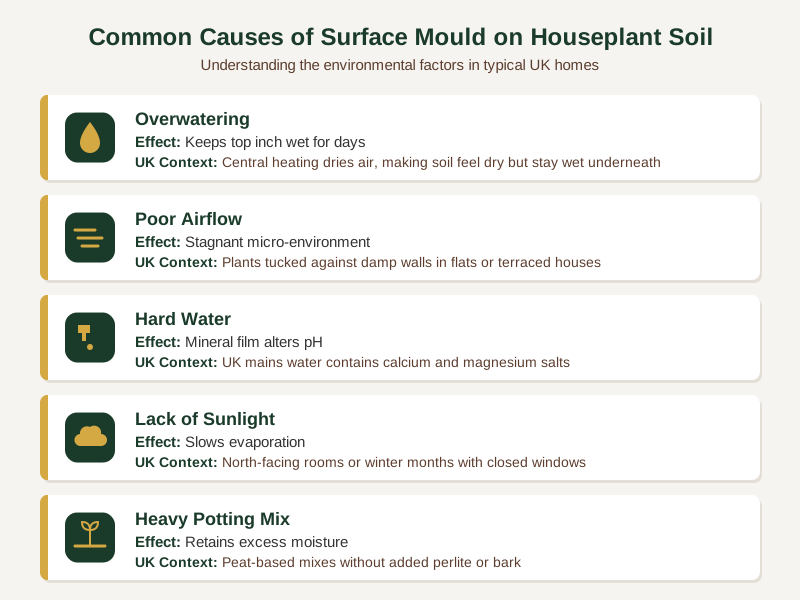
Quick reference: See the infographic below for a visual summary of the key points, or download the data table for full details.
Quick Picks
- Soil Ninja House Plant Potting Soil (paid link) Check price on Amazon → (paid link)
- SB Plant Invigorator (paid link) View on Amazon → (paid link)
- Sciarid Fly Nematodes (paid link) See current price on Amazon → (paid link)
- Blooven fungus gnat sticky traps (paid link) Buy on Amazon → (paid link)
What is the white fluff on my houseplant soil?
That white fluff is a saprophytic fungus. It breaks down dead organic matter and thrives in damp conditions, sitting entirely on the soil surface. It doesn’t attack living plant tissue. The key is not to confuse it with fungus gnat larvae, which look like tiny translucent threads wriggling about, rather than static cottony mould.
In a typical UK flat, telling the difference matters because the remedies diverge. If it’s true mould, you’ll need to dry the surface and improve airflow. If it’s gnats, you focus on breaking their life cycle. One forum post described someone who swore they were watering correctly, yet the damp walls of their north‑facing flat were seeping moisture into the pot, encouraging surface mould despite their best intentions. You need both visual clues and a quick check of the plant’s environment to be sure.
Why is my houseplant soil going mouldy?
Houseplant soil goes mouldy because of chronic overwatering, poor airflow, and hard water buildup. When the top inch of potting mix stays consistently damp, especially in dry, centrally heated rooms with stagnant air, it creates a humid micro‑environment where fungal spores throw a party on the decaying organic material.
Overwatering is the number one culprit. When water sits in the top inch for days, the organic material in the potting mix breaks down and creates a perfect buffet for mould spores. The Royal Horticultural Society (RHS) notes these fungi are a natural part of the soil ecosystem, but a sudden visible bloom means the moisture balance is fundamentally off.
Hard water – the kind most UK taps deliver – adds calcium and magnesium salts. Over time, this alters the soil pH and leaves a mineral film that mould loves to colonise. This is easy to learn the hard way — a thriving Monstera switched to tap water straight from the kitchen sink can turn the soil a chalky grey, with mould appearing within a fortnight.
Central heating compounds everything. Radiators dry the air, causing plants to transpire faster, but if the soil stays wet underneath a dry surface, you get that humid micro‑environment right where the mould lives. Lack of airflow is another silent killer; a plant tucked against a cold, damp wall in a terraced house will never let the topsoil dry properly, especially in winter when windows stay shut.
If you’ve been checking the soil with a finger and it feels damp but the leaves look fine, you’re probably in the “soil is too wet” zone. Bottom‑watering or a proper finger test before each watering can break the cycle. Our guide to saving an overwatered plant has more on getting the timing right.
Immediate Fix: How to Save the Plant Today
- Scoop off the mould. Use a clean spoon or spatula to gently remove the white fluff. Don’t touch the leaves; you’re only dealing with the soil surface.
- Dry the top inch. Stop watering for 3–5 days. Place the pot in a brighter spot (but not direct summer sun) and let the surface dry completely.
- Boost airflow. Move the pot away from the wall, or set a small oscillating fan a foot away on the low setting. You want to hear a gentle hum, not create a gale that wilts the foliage.
- Surface spray. Mix 1 part 3% hydrogen peroxide with 10 parts water and mist the soil lightly. This kills any lingering spores without harming the plant.
If the mould is deep or keeps returning, you’ll need to repot. Try the fan trick on a spider plant; after a couple of days the soil is bone-dry on top and the mould vanishes. It’s often that straightforward: stop watering, fan it, and the white fluff can be gone in a few days.
For a full step-by-step, see our repotting guide.
Worth knowing: White fluff on soil is a harmless saprophytic fungus feeding on decaying organic matter, not the plant itself.
You now have what’s causing the problem and how to stop it in its tracks – Download the Free Houseplant Troubleshooting Checklist to keep track of your watering schedule and soil health.
Long‑Term Fix: Prevention & Soil Health
Repotting into a Better Mix
If mould keeps re‑appearing, it’s time for a fresh potting mix. Look for a blend with plenty of perlite or coarse bark – the extra aeration helps excess water drain quickly. The Soil Ninja House Plant Potting Soil (paid link) works well for larger aroids; it’s a peat-free 10 L base mix with coir, perlite and worm castings, so the surface dries instead of sitting soggy. For a tighter budget, the Westland Houseplant Potting Mix (paid link) is a decent peat‑free 4 L bag, though you may need to add your own perlite to keep it airy.
Check Westland Houseplant Potting Mix price → (paid link)
Adjust Your Watering Routine
Switch to bottom‑watering where possible – fill the saucer, let the plant soak for 10‑15 minutes, then dump the excess. This encourages the roots to drink only what they need and leaves the topsoil drier. If you prefer top‑watering, always check the top inch with your finger first. In hard‑water areas, collect rainwater or use a simple filtration jug; the savings are modest but the difference to soil pH is noticeable.
Manage Hard Water Build‑Up
A quick DIY trick is to water with distilled water once a week, diluting your regular tap water 50/50. Over time this reduces the mineral film that mould loves. Some flat‑dwellers install a small under‑sink filter – the upfront cost is around £30‑£40, but the long‑term benefit to plant health can be worth the investment.
Keep the Air Moving
If your flat feels like a sauna in summer and a freezer in winter, a small dehumidifier (roughly £30‑£40) can help the soil dry faster. Even a cheap silica‑gel packet tucked under the pot can absorb excess moisture on the surface. Remember, mould needs a consistently damp surface; a few dry days a week are enough to keep it at bay.
Product Recommendations (The “Plant Doctor’s Toolkit”)
When mould is a recurring nuisance, a few well‑chosen products can make life easier. We’ve tried a handful and here’s what works in a typical UK flat.
SB Plant Invigorator (paid link) is a non‑toxic foliar spray that also keeps common pests at bay. Used every two weeks on peace lilies, the leaves stay cleaner, though it can get a bit sticky if you over‑apply. It’s not a miracle cure for heavy infestations, but for regular maintenance it’s worth the investment.
Sciarid Fly Nematodes (paid link) are microscopic worms that hunt fungus gnat larvae in the compost. They’re safe around kids and pets, but you need patience: results show up after a couple of weeks, and you have to keep the soil moist enough for them to move. Reserve them for when gnats become a real problem.
Blooven fungus gnat sticky traps (paid link) are brilliantly simple. Hang a yellow trap near the pot and the adult gnats get stuck, giving you a visual cue of pest levels. A 60-pack lasts a typical flat a long time and works well for monitoring, though they won’t solve a deep‑rooted mould issue on their own.
Growth Technology Houseplant Focus (paid link) is a 1 litre liquid feed that boosts overall plant vigour. We’ve seen greener, sturdier leaves after a month of fortnightly feeds. It’s a bit pricier than a generic fertiliser but the extra growth can help plants outgrow stressful conditions faster.
View Growth Technology Houseplant Focus on Amazon → (paid link)
If you’re on a tighter budget, Doff Universal Bug Control (paid link) is an affordable 1 L spray for light pest outbreaks, but be prepared for hit and miss results and the occasional leaf scorch if you over‑apply. Pair any spray with good cultural practices – otherwise you’re just masking the underlying moisture problem.
See Doff Universal Bug Control on Amazon → (paid link)
Frequently Asked Questions
Is mould on soil dangerous to humans?
Generally no, but the spores can trigger allergies, especially if you’re prone to hay fever. The NHS advises keeping indoor environments well-ventilated to reduce airborne triggers. Just avoid inhaling any dust when you scrape the mould off and wash your hands afterwards.
Can I save a plant with mould on the roots?
If the mould is only on the surface, absolutely – follow the immediate fix steps and the plant should recover. Black, slimy mould on the roots usually means root rot, and at that point the plant is often beyond saving.
Will watering with milk kill mould?
No, it will not. Milk adds more organic material for the mould to feast on, which can actually make the problem much worse. Stick to water or diluted hydrogen peroxide for spot‑treating the soil.
Does hard water cause mould?
Yes, indirectly. The mineral buildup from hard tap water can raise the soil pH and create a chalky micro‑environment that encourages saprophytic mould to thrive. Using rainwater or filtered water helps keep the soil chemistry in check.
Common Causes of Surface Mould
| Cause | Effect on Soil | Typical UK Context |
|---|---|---|
| Overwatering | Keeps top inch wet for days | Central heating dries air, making soil feel dry but stay wet underneath |
| Poor Airflow | Stagnant micro-environment | Plants tucked against damp walls in flats or terraced houses |
| Hard Water | Mineral film alters pH | UK mains water contains calcium and magnesium salts |
| Lack of Sunlight | Slows evaporation | North-facing rooms or winter months with closed windows |
| Heavy Potting Mix | Retains excess moisture | Peat-based mixes without added perlite or bark |
Ready to Start?
If you are dealing with related issues, see our guide to How to Get Rid of Fungus Gnats in Houseplant Soil. We’ve covered how to spot the difference between mould and gnats, why UK flats are a perfect storm for surface mould, and the immediate and long‑term steps to get your soil back to health. The key takeaways are simple: identify the fluff, dry the top layer, improve airflow, and give your plant a well‑draining mix with a sensible watering routine.
If you want to read more about our early experiments with overwatering, check out the about page, or have a browse through the blog for more troubleshooting guides.
If you want a handy reference to keep your watering on track and avoid future mould scares, Download the Free Houseplant Troubleshooting Checklist. It’s a quick, printable guide that walks you through the signs to watch for and the actions to take – no faff, just a clear plan.
You’ve got this. With a bit of patience and the right routine, your plant will be back to thriving in no time. If the mould comes back within a fortnight, check the humidity in your flat — a cheap hygrometer will tell you if the air is too damp for comfort.
Related Guides
For a complete overview, see our Houseplant Troubleshooting: How to Save a Dying Plant.
Further Reading
Products linked above are ones we recommend based on owner feedback and UK-condition testing.
Note: This article is for informational purposes. Always check with a qualified professional for advice specific to your situation.