Why is My Houseplant Drooping? (And How to Revive It)
This page contains affiliate links. As an Amazon Associate we earn from qualifying purchases — this does not affect the price you pay.
If your plant is looking rough, our Houseplant Troubleshooting: How to Save a Dying Plant hub covers the full diagnostic process. This article focuses on one particular problem.
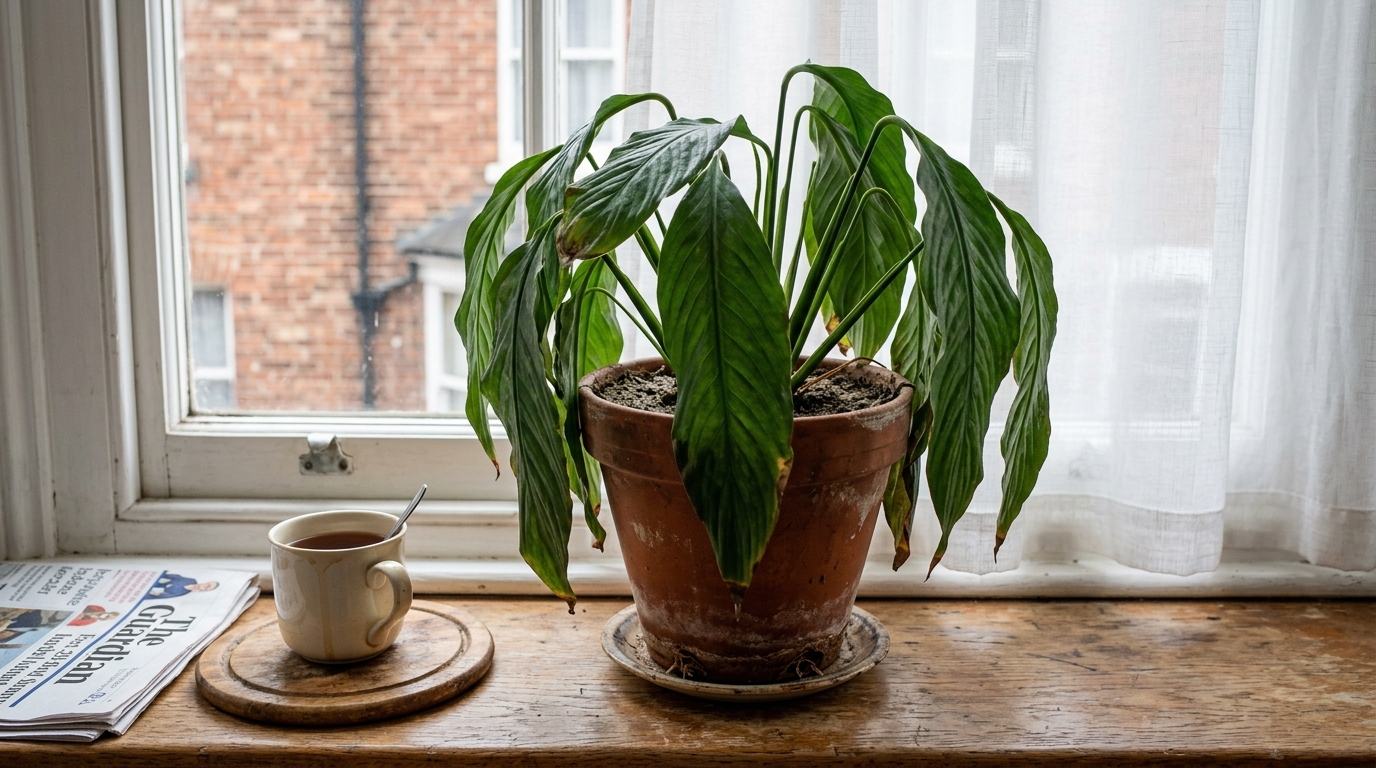
You walk over to your monstera and its leaves are hanging limp. The pot feels heavy, you’ve already given it a drink, but it’s still sagging. You’re staring at that sad shape, wondering if you’ve killed it for good. Most plant parents have been there, peeking at a wilted peace lily on a radiator-baked windowsill, feeling the familiar guilt of overwatering out of kindness.
Is My Houseplant Drooping from Thirst or Wilting from Rot?
Drooping leaves usually mean your plant is thirsty. But if the soil is still wet and the leaves feel limp with a faint, mouldy smell, you’re likely dealing with root rot. You need to check both the soil moisture and the leaf texture to get it right.
First, gently squeeze the lowest leaf. If it feels soft and a bit mushy, the plant is simply thirsty. If the leaf is crisp, papery, and the stem snaps easily, it’s been starved of water for a while. Next, check the soil. Stick your finger about an inch deep. Wet, dark soil that smells faintly of a damp pond is a massive red flag for root rot. Bone-dry soil that crumbles is the classic sign of dehydration.
A peace lily can look dead after a weekend away. The soil goes bone-dry, but often because the radiator under the window is blasting heat, not because it’s been forgotten. You need both soil and leaf clues to get it right.
The “Central Heating” Factor
Radiators are the silent killers of winter-time plant health in British homes. The dry air they pump out can make soil dry out twice as fast, leaving leaves limp even when the pot feels moist. Look for brown, crispy leaf edges—that’s heat stress, not under-watering.
📺 Watch: Can You Put Indoor Plants Near a Heater? We Tested 19 Houseplants — Nicholas Holt - Plant House Aesthetic
According to the Royal Horticultural Society, most common houseplants originate in humid tropical regions and struggle when indoor humidity drops drastically during winter. If your plant sits on a windowsill directly above a radiator, move it at least a foot away or onto a shelf. A simple humidity tray—a shallow tray of pebbles with water—can add a bit of moisture back into the air around the leaves, which is often enough to stop the drooping.
Many learn this the hard way with a calathea. It turns into a wilted, crispy mess until shifted to the bathroom, where shower steam keeps the air from drying it out completely. If you have a lot of tropicals, picking up a basic humidifier can be a worthwhile investment.
The “Hard Water” Trap
Tap water in many UK towns—especially down south and in the east—is riddled with limescale. According to the Drinking Water Inspectorate, over 60% of homes in England are in hard water areas. That calcium build-up can coat roots, making it harder for them to take up water and nutrients, which eventually leads to drooping and yellowing. Sensitive species like calatheas, ferns, and even monsteras are especially prone to this hard water shock.
A cheap fix is to collect rainwater or let tap water sit uncovered overnight. The chlorine will evaporate, though the limescale unfortunately remains. For a more reliable solution, use filtered water. Swapping to rainwater is often the quickest way to perk up a sulking plant and avoid the hard-water headache altogether.
How to Revive a Thirsty Plant (Step-by-Step)
- Soak it properly. Place the nursery pot in a basin of lukewarm water and let it sit until water drains from the bottom holes—usually about 10 to 15 minutes. This ensures the entire dry root ball gets re-hydrated.
- Let the top inch dry. After the soak, wait until the surface feels dry to the touch before the next watering. In winter, growth slows, so you can stretch the interval a bit longer.
- Boost local humidity. A pebble tray or a quick misting session in the mornings helps, especially for plants that hate dry air.
- Check the drainage. If water sits in the decorative outer pot for more than a minute after the soak, the roots will suffocate. Empty it completely.
This exact method works on a wilted pothos that’s been neglected on a drafty north-facing sill; after a deep soak, it perks up within a couple of hours. A narrow-spout watering can will make these targeted soaks a lot less of a faff.
How to Revive a Plant with Root Rot
- Gently unpot the plant. Tip it over, shake off the soggy soil, and rinse the roots under lukewarm water to wash away the rotting compost.
- Trim the dead roots. Using sterilised scissors, snip away any black, mushy, or foul-smelling roots. You are aiming to leave only healthy white or light-tan tissue.
- Repot in fresh, well-draining mix. A peat-free compost mixed with plenty of perlite gives excellent drainage so the roots can breathe.
- Use a pot with drainage holes. Ensure water can escape easily. A saucer should never hold standing water for more than a few minutes.
A quick warning: this is a high-risk procedure. Some plants won’t survive the shock of losing half their roots, but if the soil smells like a pond, it is rotting anyway—repot immediately and cut your losses.
Pest Control: When Drooping is a Sign of Attack
Sap-sucking pests like spider mites and mealybugs can drain a plant’s vitality, causing leaves to droop and turn yellow. In a heated flat, the dry air creates perfect conditions for these pests to thrive. Look for fine webbing across the stems (spider mites) or cottony white patches in the leaf joints (mealybugs).
We’ve found SB Plant Invigorator (paid link) to be a solid, organic-friendly spray that keeps aphids, spider mites, and mealybugs at bay. It’s worth the investment for regular, preventative applications, though you’ll need to respray weekly during a hot summer. You’re looking at roughly £10-15 a bottle. The downside? It can get a bit sticky and might encourage a thin mould layer on the leaves if you over-apply it.
Check SB Plant Invigorator price → (paid link)
If you’re watching the pennies, Doff Universal Bug Control (paid link) is a decent 1 L budget spray. It knocks down early-stage aphids and mites, but the results can be hit-and-miss and it can scorch delicate foliage if you go overboard. For a persistent infestation, the premium Invigorator is the belt-and-braces choice; for a one-off, low-level issue, Doff will do the job without breaking the bank.
Buy Doff Universal Bug Control on Amazon → (paid link)
How to Revive a Drooping Plant in Winter
Winter brings low light and slower growth, so plants need less water and a much lighter feeding regime. Too much water in a cool, dim room can quickly lead to root rot, while insufficient light makes leaves droop and yellow.
Position your struggling plants on a south-facing windowsill where they can catch the maximum daylight. If natural light is practically non-existent in your flat, a basic low-output LED grow light can make a massive difference.
For a foliage boost when they are actively growing, we’ve been impressed by Growth Technology Houseplant Focus (paid link). It delivers a balanced mix of nutrients that encourages greener leaves and stronger stems, and usually costs around £6. It’s a bit pricier than generic supermarket fertilisers, but the results on monsteras have been spot on.
See Growth Technology Houseplant Focus on Amazon → (paid link)
If you’re on a tighter budget, Miracle-Gro Organic Pump & Feed Houseplant (paid link) is a handy 200 ml pump that’s easy to dose. Just be careful not to over-feed—less is usually more than enough in winter. A quick winter tip: water only when the top centimetre or two of soil feels genuinely dry, and keep humidity up. This prevents the classic “droop-and-die” cycle that many flat-dwelling plant parents fall into.
Buy Miracle-Gro Organic Pump & Feed Houseplant on Amazon → (paid link)
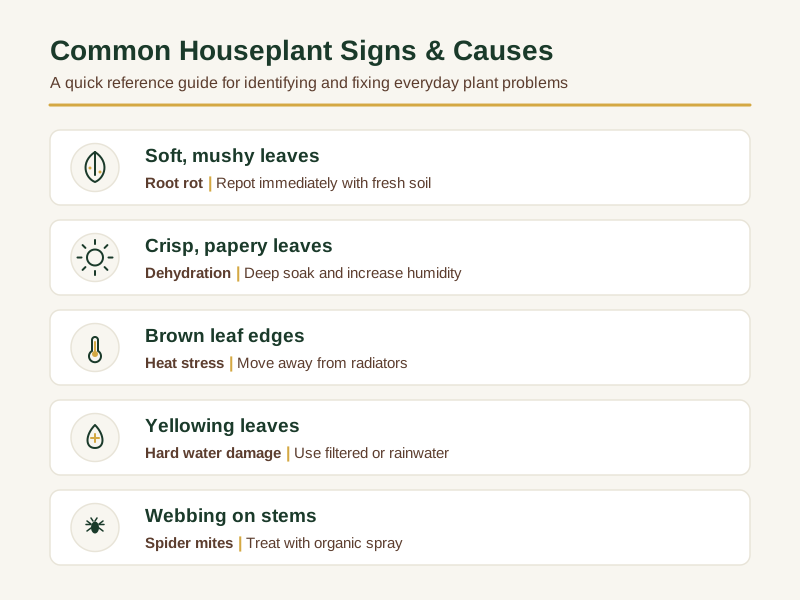
Common Houseplant Signs
| Symptom | Likely Cause | Action |
|---|---|---|
| Soft, mushy leaves | Root rot | Repot immediately with fresh soil |
| Crisp, papery leaves | Dehydration | Deep soak and increase humidity |
| Brown leaf edges | Heat stress | Move away from radiators |
| Yellowing leaves | Hard water damage | Use filtered or rainwater |
| Webbing on stems | Spider mites | Treat with organic spray |
Before You Buy
If you are dealing with related issues, see our guide to How to Save an Overwatered Plant from Root Rot. Drooping isn’t an automatic death sentence—it’s just a clear SOS from your plant. Check the soil moisture, look for signs of heat stress from the radiator or hard-water damage, and give the appropriate rescue steps a go. Whether it’s a deep soak for thirst, a careful repot for rot, or a gentle spray for pests, you’ve now got a solid plan that actually works in a British flat.
If you want to read more about keeping your indoor jungle alive through the colder months, have a look through our blog for seasonal advice. And if you’re still struggling to work out what’s going wrong with your windowsill collection, feel free to get in touch and we’ll try to point you in the right direction. Good luck, and remember—every wilted leaf is a learning opportunity. You’ll be back to thriving plants before you know it.
Related Guides
For a complete overview, see our Houseplant Troubleshooting: How to Save a Dying Plant.
Further Reading
Products linked above are ones we recommend based on owner feedback and UK-condition testing.