Growing Herbs Indoors UK: Complete Windowsill Care Guide
This page contains affiliate links. As an Amazon Associate we earn from qualifying purchases — this does not affect the price you pay.
Growing herbs indoors in the UK means managing every variable—light, soil, water, pot size, and the shifting British seasons—that determines whether your windowsill plants flourish or fail. This guide is structured to first explain why UK conditions are unique, then help you choose suitable herbs and a starting method, before detailing the setup and troubleshooting needed for long-term success.
The Challenge of British Indoor Conditions
Indoor herb cultivation in the UK presents a specific set of hurdles. Herbs evolved outdoors in full sun and well-drained soil, but a British flat in winter offers weak light through double glazing and air dried by central heating. This environment is particularly harsh for Mediterranean herbs like rosemary and thyme, which crave sunlight and moderate humidity.
Central heating consistently removes moisture from the air, creating a dry atmosphere that contradicts the needs of many culinary herbs. The key is to identify and utilise micro-climates within your home. A south-facing windowsill above a radiator, for instance, can trap heat and light, creating a pocket that better approximates a plant’s natural requirements.
Conventional gardening advice often fails because it’s written for different climates. “Plant in full sun” has little meaning when a Glasgow winter provides only a few hours of diffuse light. Solutions must be tailored to UK realities.
Herb Selection for UK Light Levels
Matching herb tolerance to your available light is the foundation of success. Some species are far more adaptable to the lower light levels of a British winter.
Rosemary stands out as a reliable choice for most UK homes. It’s hardy, tolerates cooler temperatures, and can even manage on a north-facing sill, though it prefers a south or west aspect. A well-established plant will provide fresh sprigs throughout the year.
Thyme is exceptionally drought-tolerant. It demands as much sun as possible but forgives poor soil and irregular watering. Plant it in a clay pot with a gritty compost mix for best results.
Mint grows vigorously and isn’t fussy about light, making it suitable for darker spots. The trade-off is its high water requirement and tendency to spread rapidly, so it’s best confined to its own pot.
Chives are a perennial, low-maintenance option. They tolerate cool temperatures and will regrow after repeated harvesting, providing a steady supply.
Basil is the most demanding common herb. It requires consistent warmth, humidity, and good light, making it a challenge in a UK winter. It’s best started from seed in late spring when light levels improve.
Bay Laurel is a slow-growing, long-term investment. It survives in partial shade and, once established in a large pot, can supply bay leaves for years.
How to Begin: Plants, Seeds, or Cuttings
Your starting point depends on your budget, timeline, and access to materials. Each method has distinct advantages.
Buying young plants from a garden centre is the most straightforward method for beginners. You get an established plant with a functioning root system, bypassing the fragile germination stage. Perennial herbs like rosemary and thyme adapt well to windowsill life when purchased this way.
Starting from seed is cost-effective but requires patience and good timing. Sow seeds in spring when daylight hours increase for the best chance of success. Basil germinates well in March or April, but mint seed is notoriously slow; buying a plant is often easier.
Taking cuttings is a practical method for propagating mint and basil. A sprig placed in water on a bright windowsill will usually develop roots within a fortnight, allowing you to create new plants from an existing one. This works best from spring to autumn.
Your choice hinges on how quickly you want results and what resources you have to hand. For immediate results, buy plants. For a slower, cheaper project, start with seeds in spring. If you already have a healthy mint or basil plant, cuttings are an efficient way to expand your collection.
Creating the Right Environment
A plant’s survival depends heavily on its immediate environment. The right pot, compost, and position make a significant difference.
Pot size is critical. Supermarket herbs come in pots that are too small for their roots. Repot new plants into containers of at least 1–2 litres to allow for proper root growth and moisture retention. Terracotta is ideal for herbs that need excellent drainage — the LE TAUCI ceramic set (paid link) (11 + 13 + 17 cm, with drainage) covers that jump without buying three random pots.
View LE TAUCI ceramic set on Amazon → (paid link)
Compost should provide good drainage. Mixing a peat-free houseplant mix with grit or perlite (a 3:1 ratio) creates a better structure for herbs that dislike wet roots. Westland Houseplant Potting Mix (paid link) (4 L, peat-free) is the base.
View Westland Houseplant Potting Mix on Amazon → (paid link)
For rosemary and thyme, add Vitax Horticultural Potting Grit (paid link).
See Vitax Horticultural Potting Grit on Amazon → (paid link)
For basil and mint, add Grow Chem Perlite 10 L (paid link) instead.
Buy Grow Chem Perlite 10 L on Amazon → (paid link)
Positioning is dictated by light. South or west-facing windowsills are optimal. East-facing is acceptable for hardy herbs like rosemary. North-facing windows are challenging; if this is your only option, focus on bay, mint, or chives.
Watering needs careful management, especially in winter. Reduced light and lower evaporation rates mean plants need far less water. The rule is to water only when the top few centimetres of compost feel dry. A rosemary plant might need water every fortnight in winter compared to every few days in summer.
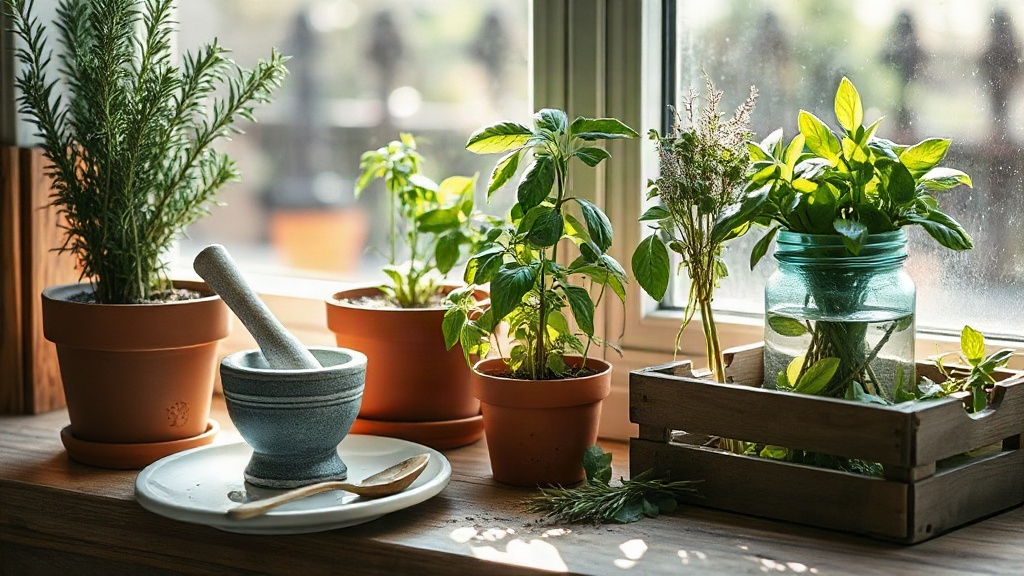
Terra cotta pots help prevent overwatering by allowing moisture to evaporate through their walls.
Solving Common Problems
Even with good care, issues can arise. Here’s how to address them.
Yellow leaves on rosemary or thyme typically indicate overwatering. This is the most frequent error in UK indoor herb care. Reduce watering immediately and ensure the pot drains freely.
Leggy, stretched growth is a sign the plant isn’t getting enough light. Move it closer to the window or clip on a Garpsen clip-on grow light (paid link) to supplement during the darker months.
Buy Garpsen clip-on grow light on Amazon → (paid link)
Spider mites thrive in dry, heated air. Look for fine webbing on leaves. Increase humidity by placing the pot on a tray of wet pebbles and regularly misting the leaves. Wipe leaves with a damp cloth or use a horticultural soap spray for infestations.
Mould on the compost surface suggests overwatering or poor air circulation. Scrape off the mouldy compost, water less frequently, and improve ventilation around the plant.
Most problems stem from incorrect watering. In a British winter, the combination of central heating and low light creates a deceptive environment where plants need less water than you might think.
Quick Herb Reference
| Herb | Light Preference | Water Needs | Best For |
|---|---|---|---|
| Rosemary | South/West | Moderate | Reliable winter harvests |
| Thyme | South/West | Low | Drought-tolerant workhorse |
| Mint | Any | High | Vigorous, fast growth |
| Chives | East/West | Moderate | Perennial, low maintenance |
| Basil | South/West | High | High-maintenance, warm spots |
| Bay Laurel | Partial Shade | Moderate | Long-term, slow-growing |
Common Questions Answered
Can I grow herbs in a north-facing flat?
Most culinary herbs need direct sun and will struggle. Your best bets are bay laurel, mint, and chives, which tolerate lower light levels, though growth will be slower.
Why do my supermarket herbs die so quickly?
Supermarket herbs are grown for immediate sale, not longevity. They are often overcrowded in minimal compost. To improve their chances, carefully divide the clump and repot the sections individually into larger pots with fresh compost.
Do indoor herbs need special fertiliser?
Not really. Herbs generally prefer not to be over-fed, as too much fertiliser can produce weak growth with less flavour. A light monthly feed during the growing season (April to September) is sufficient. Do not fertilise in winter when growth is minimal.
Success with indoor herbs in the UK is about adapting to local conditions. Select the right plants for your light, give them adequate space, and master a careful watering routine.
For more targeted help, our free Houseplant Troubleshooting Checklist can diagnose issues with any struggling plants and provide a clear action plan.
Continue Your Plant Care Journey
Find specific advice for your situation:
Managing Water:
- How Often to Water Basil and Parsley
- How Often to Water Rosemary and Thyme
- How to Pot On Supermarket Herbs for Indoor Growing UK
Growing in Specific Conditions:
Plant-Specific Guides:
- Growing Thyme in Pots
- Mint Plant Care
- Basil Growing Conditions
- How to Prune Basil and Mint for Bushier Growth
Problem Solving:
References
This guide offers general advice. For specific concerns, consult a qualified horticulturalist or official source.