Does UK Hard Water Affect Houseplants? (And How to Fix It)
British flats are tough on tropical plants. Our UK Indoor Plant Care: Surviving Central Heating & Low Light hub covers the big environmental fixes; this guide zooms in on one of them.
This page contains affiliate links. As an Amazon Associate we earn from qualifying purchases — this does not affect the price you pay.
You’ve been watering your monstera on schedule for weeks, but the tips are still turning crispy brown and the soil looks crusty. The real culprit usually isn’t your watering routine—it’s the tap. Most homes in the UK have hard tap water packed with calcium and magnesium. Over time, these minerals build up in your pots, suffocating the roots and scorching the leaves. Here is how to spot the damage and fix it without buying expensive filters.
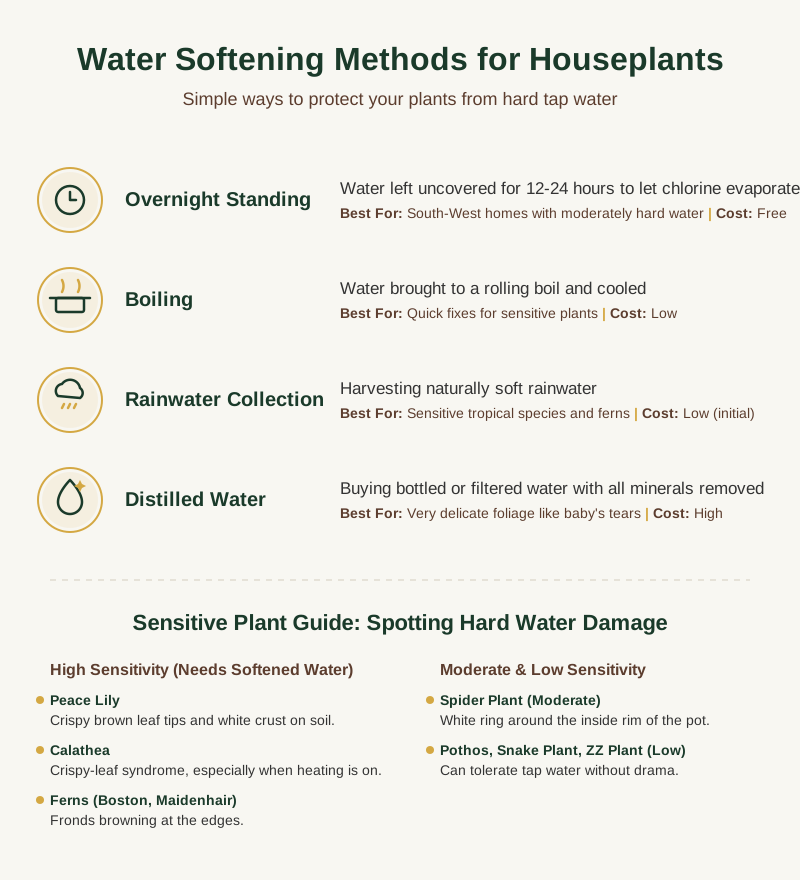
Quick reference: See the infographic below for a visual summary of the key points, or download the data table for full details.
How Can You Tell If Hard Tap Water Is Damaging Your Houseplants?
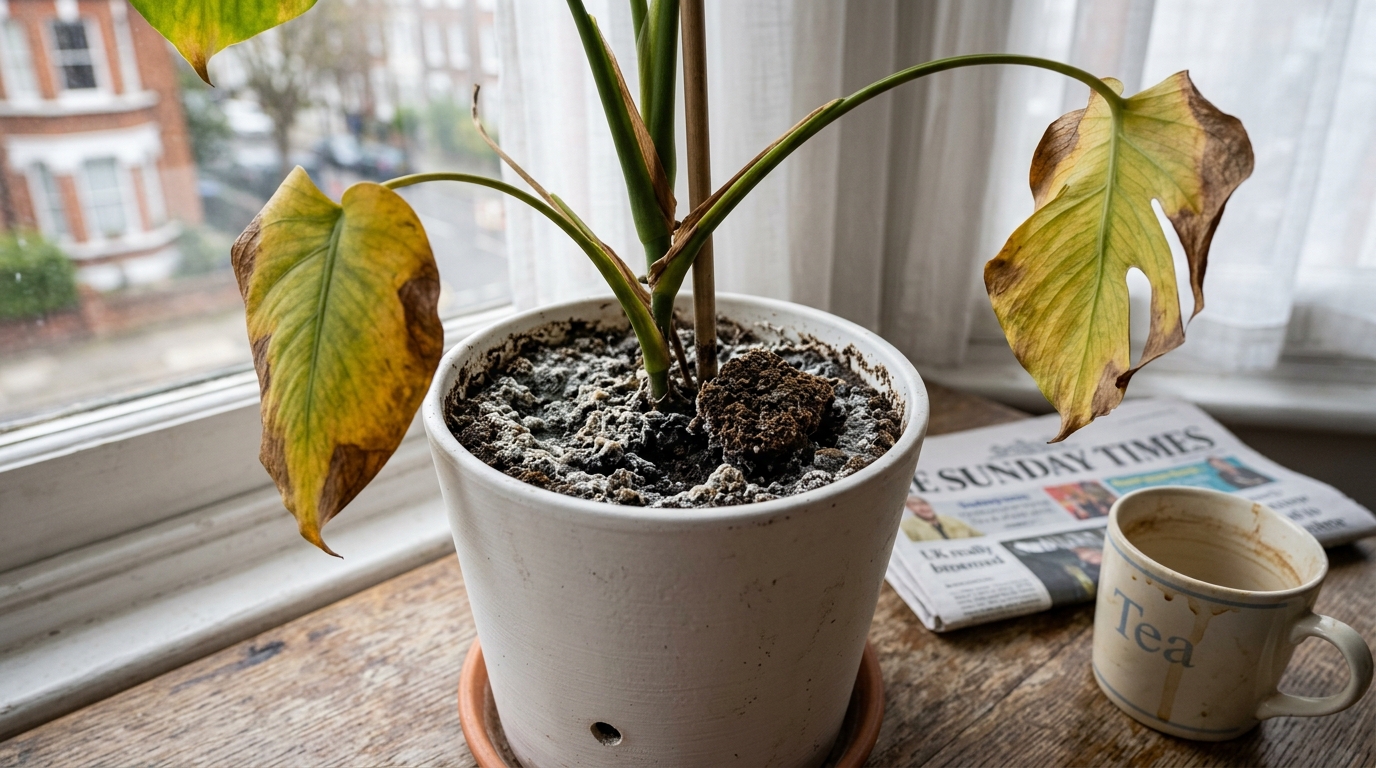
You can tell hard water is damaging your houseplants by looking for three distinct signs: crispy brown leaf tips, a chalky white crust on the soil surface, and a hard white ring around the inside rim of the pot. Hard tap water doesn’t scorch your plants immediately; instead, it leaves behind calcium and magnesium salts every time you water. Over weeks and months, these mineral salts build up in the potting mix, making it difficult for the roots to absorb moisture. If your plant’s soil feels dry and crumbly but you are watering it regularly, and you spot that white crust, you are looking at hard-water damage.
If the soil feels soggy and smells earthy, you’re probably over-watering. If it feels dry, light-brown and you see the crust, it’s the tap water.
You’ll often see this on a spider plant pot: the rim gets encrusted with a chalky white ring. That white ring is the smoking gun—the plant isn’t thirsty, the water is just too hard.
According to the Drinking Water Inspectorate, roughly 60% of homes in England are in hard water areas (over 120 mg/L calcium carbonate). That means the majority of us are watering with water that can leave a mineral film in every pot. You can’t see the salts with the naked eye, but you can definitely see the crispy leaves they leave behind.
The “How-To” Toolkit: Softening Water for Plants
For a long-term fix, The Phox V2 Glass Water Filter Jug (paid link). It removes the minerals that cause white crust without the faff of boiling water every time.
Buy Phox V2 Glass Water Filter Jug on Amazon → (paid link)
Below are the four methods that actually work in a typical British flat. Pick the one that suits your routine and budget.
| Method | How it works | Pros | Cons |
|---|---|---|---|
| Overnight (standing) method | Fill a clean jug with tap water and leave it uncovered for 12-24 h. Chlorine evaporates and the heaviest particles settle at the bottom. | Zero cost, simple, no appliances needed. | Only reduces chlorine; calcium/magnesium remain largely unchanged. |
| Boiling method | Bring tap water to a rolling boil, let it cool, then use. Boiling drives off chlorine and a small amount of dissolved minerals. | Quick, uses kitchen basics, marginally reduces hardness. | Doesn’t strip out all calcium/magnesium – still not ideal for very hard water areas (e.g., South-East). |
| Rainwater collection | Collect rain in a clean bucket or water butt, filter if needed. Rain is naturally soft. | Best for sensitive plants, essentially free after the initial container. | Requires a roof and a bit of space; winter rain can be scarce, and you need to keep the container covered to avoid algae. |
| Distilled / bottled water | Buy distilled water or use a home distiller. Removes virtually all minerals. | Guarantees soft water for the most delicate species. | Roughly £1-£2 per litre – can add up quickly if you have a large collection. |
How to use each method
- Overnight method: Fill a 1-litre jug, leave it on the kitchen worktop. After a night, gently pour off the clear water, leaving the sediment at the bottom. Use the clear water for your peace lily or calathea. It’s a bit of a faff, but it’s free and works for most South-West homes where the water is only moderately hard.
- Boiling method: Bring a kettle of water to the boil, let it sit for a minute, then transfer to a bowl to cool completely (at least 30 minutes). This works well for calatheas when you are in a hurry—the extra minute of boiling feels like a belt-and-braces step.
- Rainwater: A 50-litre water butt on the balcony can supply a whole flat for months. Keep a small bucket in the kitchen for daily top-ups; the only downside is remembering to empty the first flush (the initial 5 litres after a dry spell can contain roof dust).
- Distilled water: If you’ve got a tiny collection of very sensitive foliage—think peace lilies, ferns, and baby’s tears—buying a 5-litre bottle every few weeks is cheaper than constantly replacing a plant that’s gone to pot.
If you’re still on the fence, try the overnight method first—it’s the easiest entry point. Once you see the crust disappear, you’ll know you’re on the right track. And if you want to see what else we’ve mucked up and learned from over the years, you can read more on the blog.
Now that you’ve got a handle on softening water, download the Free Houseplant Troubleshooting Checklist to pinpoint any other hidden issues in your plant routine.
Which UK Plants Hate Hard Water?
The houseplants most sensitive to hard water are tropical rainforest species like peace lilies, calatheas, and ferns, which naturally rely on soft, mineral-free rain in the wild.
- Peace Lily (Spathiphyllum) – loves humid, low-mineral water; brown tips are a classic sign of calcium buildup.
- Calathea – thrives in soft, warm water; hard water leads to crispy-leaf syndrome the moment the heating goes on.
- Spider Plant (Chlorophytum) – can tolerate a bit of hardness, but the white rim on the pot is a warning sign.
- Ferns (Boston, Maidenhair) – love moisture and soft water; hard water causes the fronds to brown at the edges.
Hardier species such as Pothos, Snake Plant, and ZZ Plant can survive a splash of tap water without drama.
If you have a mixed collection, treat the sensitive ones with rainwater or boiled water and stick to tap for the tough-guys. For a full rundown of beginner-friendly plants, see our Best Unkillable Houseplants for UK Beginners guide.
Prevention: Flushing the Soil
Once salts have built up, the only way to rescue the plant is to leach them out. Here is how to flush your pots properly without waterlogging the roots.
1. Remove the pot from its saucer Take the plastic nursery pot out of its decorative cover or saucer and place it in the sink or bath. You don’t want the excess mineral-heavy water to sit at the bottom and become stagnant.
2. Flush with soft water Slowly pour distilled or rainwater over the soil until you see clear water draining from the bottom holes. Aim to pour through at least twice the volume of the pot itself to ensure the salts are genuinely washing away.
3. Let it drain completely Leave the pot in the sink for at least an hour to drain completely before returning it to its saucer.
Do this flush every three-to-four months, or whenever you notice a crust forming. The RHS notes that regular flushing prevents “damp-off” and keeps the soil structure fluffy rather than compacted. Flushing with rainwater can turn the soil from a chalky grey back to a dark, crumbly texture—the plant perked up within a week.
Water Softening Methods for Houseplants
| Method | Description | Best For | Cost |
|---|---|---|---|
| Overnight Standing | Water left uncovered for 12-24 hours to let chlorine evaporate. | South-West homes with moderately hard water. | Free |
| Boiling | Water brought to a rolling boil and cooled. | Quick fixes for sensitive plants. | Low |
| Rainwater Collection | Harvesting naturally soft rainwater. | Sensitive tropical species and ferns. | Low (initial) |
| Distilled Water | Buying bottled or filtered water with all minerals removed. | Very delicate foliage like baby’s tears. | High |
Sensitive Plant Guide
| Plant | Sensitivity | Signs of Hard Water Damage |
|---|---|---|
| Peace Lily | High | Crispy brown leaf tips and white crust on soil. |
| Calathea | High | Crispy-leaf syndrome, especially when heating is on. |
| Spider Plant | Moderate | White ring around the inside rim of the pot. |
| Ferns (Boston, Maidenhair) | High | Fronds browning at the edges. |
| Pothos | Low | Can tolerate tap water without drama. |
| Snake Plant | Low | Can tolerate tap water without drama. |
| ZZ Plant | Low | Can tolerate tap water without drama. |
Your Next Step
Hard water is a silent, slow-acting plant killer, but it’s also one of the easiest things to fix. Swap your tap for boiled or collected rainwater, give each pot a good flush every few months, and keep an eye on those white crusts. Once you’ve sorted the water, most of the brown-tip drama disappears—and your peace lily will thank you with glossy, healthy leaves.
If you’re ready to audit the rest of your plant care routine, Download the Free Houseplant Troubleshooting Checklist. It walks you through the most common pitfalls, from over-watering to low humidity, and gives you a quick-reference sheet to keep on your windowsill.
Got more questions or struggling with a particularly crispy fern? Drop us a line on the contact page – we’re always happy to chat over a cuppa and help with a leafy rescue mission. The first flush with rainwater is the hardest step; after that, it becomes routine, and your plants will show the difference within a fortnight.
Related Guides
For a complete overview, see our UK Indoor Plant Care: Surviving Central Heating & Low Light.
Further Reading
Note: For specific advice, always consult a qualified professional — content here is for general guidance only.