Why Misting is Ruining Your Plants (And What to Do Instead)
Following on from our Houseplant Troubleshooting: How to Save a Dying Plant overview, this guide digs into one specific symptom and what to do about it.
This page contains affiliate links. As an Amazon Associate we earn from qualifying purchases — this does not affect the price you pay.
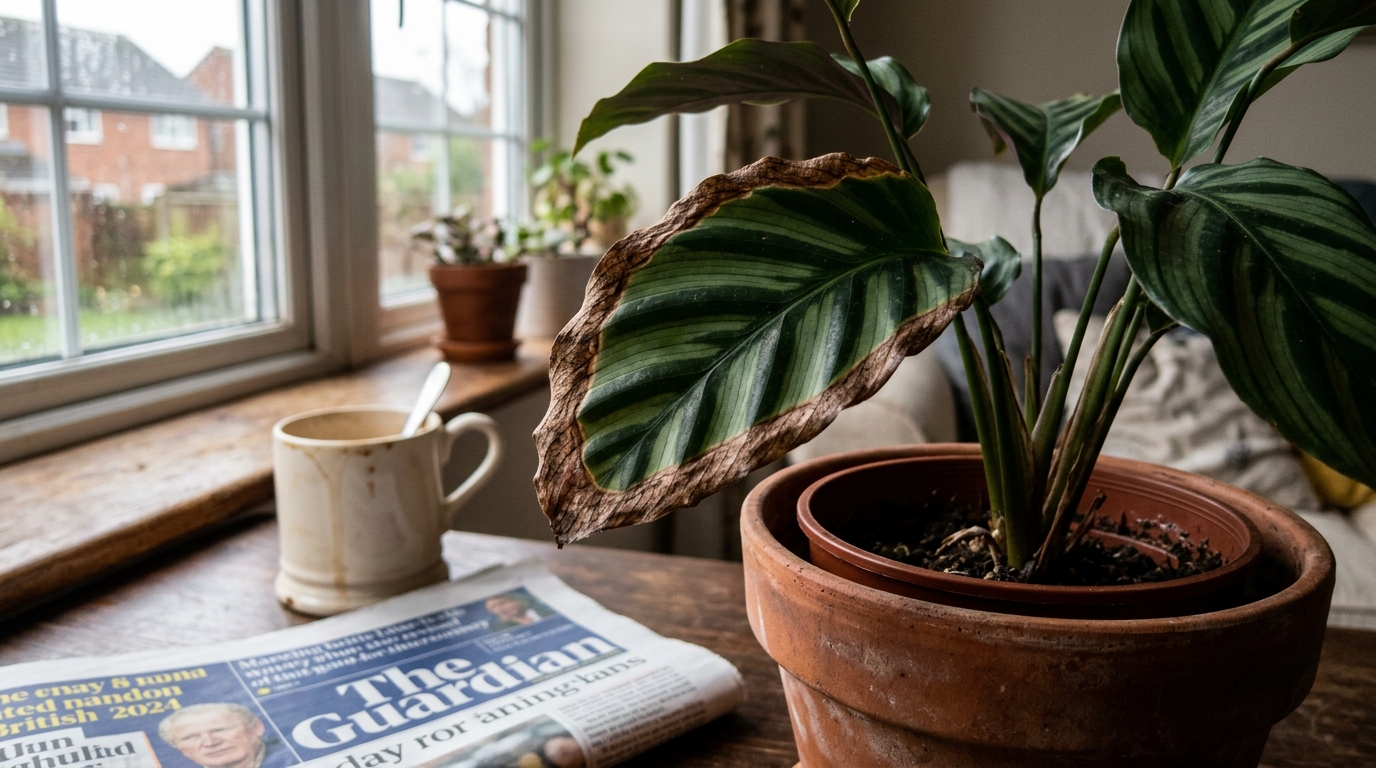
Crispy brown tips are the number one sign that something’s gone wrong in a UK flat. Most of us immediately blame our watering schedule, only to discover the real culprit is the dry, heated air we live in. Misting feels like the obvious fix, but in a typical British home, it’s about as useful as a chocolate teapot. Hard tap water leaves a crust, and the radiator just sucks the moisture straight back out.
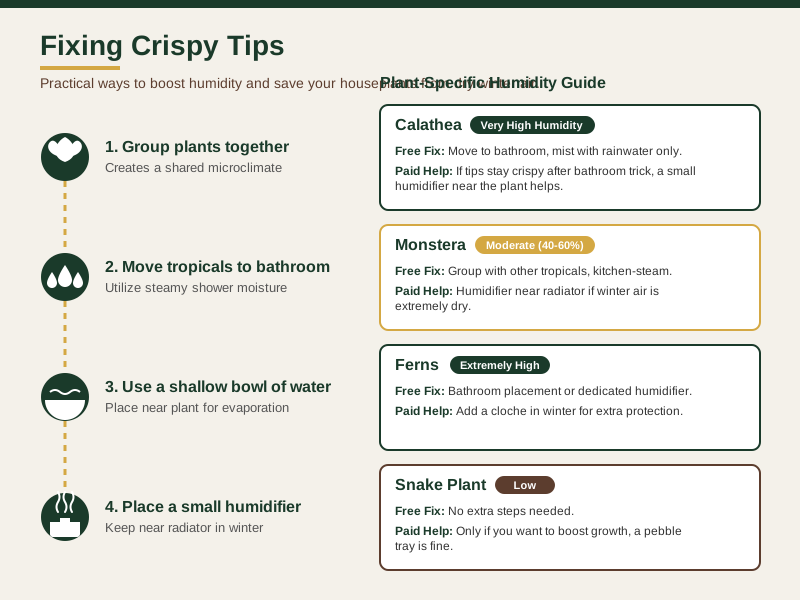
Quick reference: See the infographic below for a visual summary of the key points, or download the data table for full details.
Is it Underwatering or Low Humidity?
To tell if your plant is underwatered or suffering from low humidity, check both the soil and the leaf texture. If the soil is bone-dry and the whole leaf feels papery, it simply needs a drink. If the soil is moist but the leaf edges are curling and crispy, the air in your room is too dry.
The soil test – stick your finger a couple of centimetres into the mix. If it feels damp, the roots are getting water; if it’s bone‑dry, the plant truly needs a drink.
The leaf test – gently pinch a healthy leaf. A plump, turgid leaf will spring back; a papery one stays limp. Crispy tips that start at the very edge and feel brittle usually mean the soil is dry.
When low humidity is the issue, the tips start to curl and dry out along the margins, often while the rest of the leaf looks otherwise fine. In winter, central heating can dry the air three times faster than the soil dries out, so you end up with a well‑watered plant that still looks like it’s being scorched.
A quick checklist to decide which problem you’re dealing with:
- Soil feels wet or only slightly moist → likely humidity.
- Soil is dry to the touch, especially in the centre of the pot → underwatering.
- Leaves feel soft but edges are crisp and papery → low humidity.
If you’re still unsure, have a look at our other watering guides over on the blog.
If the soil feels damp but the edges are still crisping, the air is the problem. If the soil is dry and the whole leaf is papery, start with water — but check the humidity next, because dry air will undo your good watering habits within days.
Why Doesn’t Misting Work for Houseplants in the UK?
Misting doesn’t work for houseplants in the UK because central heating evaporates the tiny water droplets almost instantly, and our hard tap water leaves a mineral crust that stops the leaves from breathing.
In a heated living room, that tiny cloud vanishes straight into the radiator’s warm draft, leaving the plant just as dry as before. Because UK tap water is generally hard – high in calcium and magnesium – the water you spray leaves a faint white crust once it dries. The Royal Horticultural Society notes that heavy mineral deposits can block stomata, the tiny pores plants use to breathe. Effectively, you’re sprinkling them with salty water.
So the result of a well‑meaning misting session is often a plant that looks “cleaner” but now has a layer of calcification that can further choke moisture loss. Many learn this the hard way with a Calathea: after a week of daily misting with tap water, the leaves are speckled with whitish dust and the tips go from glossy to crispy. Switching to rainwater solved it instantly.
Low Effort Fixes (Free Methods)
If you’re skint on gadgets, start with the simplest tricks that need no extra spend.
📺 Watch: Why we stopped misting plants — Kill This Plant
1. Grouping plants – the “microclimate” hack
Plants release moisture through transpiration. By clustering a few humidity‑loving specimens together, you create a pocket of humid air that can be 10‑15 % higher than the surrounding room. A living‑room corner with pothos, spider plant and a small fern sitting shoulder‑to‑shoulder creates a “jungle nook” where leaves stay perky, while a solitary ZZ plant in the hallway still looks wilted.
2. The bathroom trick
If you have a bathroom with a decent-sized shower, move a tropical plant there for a few hours while you’re steaming up. The warm, moist air does the heavy lifting for you. Just make sure the plant isn’t in direct line of hot water – a little condensation is fine, a flood is not.
3. The shallow bowl method
Pebble trays are popular, but they often sit empty because the water never reaches the leaves. Instead, place a shallow bowl of water on the windowsill or a low shelf near the plant. As it evaporates, it raises the local humidity without the risk of the roots sitting in soggy soil. The only caveat: keep the bowl away from direct sunlight to avoid algae growth.
These three tricks are genuinely free, require a bit of rearranging, and work well enough that many flat‑dwellers never need a humidifier.
Crispy brown tips aren’t a death sentence; they’re a sign that the leaf’s surface is losing moisture faster than the roots can replace it.
Medium Effort Fixes (Small Space Solutions)
A small Orfonbi Portable Cordless Humidifier (paid link) placed near your plant cluster is the most reliable fix we’ve found. It’s quiet enough for a bedroom and raises local humidity without soaking the walls.
View Orfonbi Portable Cordless Humidifier on Amazon → (paid link)
When the free methods give you a marginal improvement but you still see the occasional brown tip, it’s time to spend a few quid on smarter set‑ups.
The kitchen‑steam method
Cooking a pot of pasta or boiling water releases a steady stream of moisture. Positioning a humidity‑loving plant a metre or so from the stove (away from direct heat) lets it benefit from the rising steam. A Monstera on the kitchen counter gets the benefit from that occasional burst of steam, which keeps the leaf edges supple.
Corrected pebble tray
If you prefer the classic pebble tray, make sure the water level stays below the pot rim. The pot should sit on a raised platform (the pebble layer) so the roots never sit in standing water – that prevents rot. A quick do’s and don’ts list:
- Do: Use a tray at least 2 cm deep.
- Don’t: Fill the tray so high the water touches the pot base.
- Do: Refresh the water every few days to avoid stagnation.
Humidifier hack – a small travel humidifier (roughly £15‑£25) placed near the radiator works better than a room‑centre unit because the warm air circulates the moisture more efficiently. Managing local microclimates closely around your plants is far more effective than trying to humidify a whole draughty room.
These medium‑effort fixes are hit‑and‑miss depending on your flat’s layout, but they’re cheap enough to test without committing to a full‑blown greenhouse.
High Effort Fixes (For the Dedicated Plant Parent)
If you’ve tried the low and medium options and your ferns are still looking like they’ve been through a desert, consider a more committed approach.
Automatic misters – Battery‑operated misting units can give a regular mist, but remember the hard‑water issue. Using filtered or rainwater in the reservoir avoids the mineral crust that spoils a manual spray.
Greenhouse enclosures – A clear plastic bag or cloche over a plant creates a mini‑greenhouse. The trick is to poke a few ventilation holes; otherwise you’ll end up with a damp, rot‑prone environment. Stagnant humidity can encourage fungal growth, so open the vents each morning.
Soil moisture retention mixes – Adding extra perlite, orchid bark or a few handfuls of peat to your potting mix helps the soil hold water longer, reducing the plant’s reliance on external humidity. For Calatheas, a mix that stays slightly moist on the surface is worth the investment.
These solutions aren’t cheap – a decent humidifier or a set of cloches can run you in the region of £30‑£50 – but they’re the kind of belt‑and‑braces fixes that keep a plant thriving year‑round.
Plant‑Specific Quick Fixes
| Plant | Humidity needs | Best free fix | When to consider paid help |
|---|---|---|---|
| Calathea | Very high – likes bathroom steam | Move to bathroom, mist with rainwater only | If tips stay crispy after bathroom trick, a small humidifier near the plant helps |
| Monstera | Moderate – prefers 40‑60 % | Group with other tropicals, kitchen‑steam | Humidifier near radiator if winter air is extremely dry |
| Ferns | Extremely high – love mist | Bathroom or dedicated humidifier | Add a cloche in winter for extra protection |
| Snake Plant | Low – tolerates dry air | No extra steps needed | Only if you want to boost growth, a pebble tray is fine |
It’s easy to panic when a Calathea “Freddie” started curling after a week of bathroom duty. A tiny 10 W humidifier placed on the windowsill usually solves it in three days, and the plant’s new growth comes back glossy.
What to Do Next
If you are dealing with related issues, see our guide to How to Increase Humidity for Houseplants in a Dry UK Home. The key takeaway is simple: misting in a UK flat is often a bit of a faff that causes more trouble than it’s worth, especially with hard water. Instead, start with the free “microclimate” trick – group your humidity‑loving plants together or give them a bathroom steam session. If that doesn’t fully cure the brown tips, a modest pebble tray or a budget humidifier placed near the radiator will usually finish the job.
Remember, crispy brown tips aren’t a death sentence; they’re a sign that the leaf’s surface is losing moisture faster than the roots can replace it. With the right humidity strategy, new growth will be smooth and healthy again.
Ready to audit the rest of your flat for hidden plant‑stressors? Check out the rest of the guides on our blog to find our Free Houseplant Troubleshooting Checklist and get a quick, comprehensive look at everything from light levels to watering habits. If you’re completely stuck, feel free to get in touch or read more about us to know you’re not alone.
You’ve got this – a bit of patience, the right humidity tricks, and your plants will be back to their glossy best in no time.
Related Guides
For a complete overview, see our Houseplant Troubleshooting: How to Save a Dying Plant.
Further Reading
Note: Content here is general in nature. Prices, products, and guidance change — verify the details before acting.