How to Grow Herbs Indoors (Without Killing Them)
This page contains affiliate links. As an Amazon Associate we earn from qualifying purchases — this does not affect the price you pay.
That yellow leaf on your basil isn’t the problem—pouring more water on it is. Indoor herbs rarely die from the first mistake; they die from the wrong response to it. A yellow leaf met with excess watering becomes root rot; a leggy plant moved to a darker corner stretches further. This article breaks the cascade at each link, showing you exactly where to intervene.
Supermarket herbs face a stacked deck from the start—they’re sold to be eaten, not grown. Crammed into tiny pots with minimal soil, they’re expected to thrive in a centrally heated flat that bears no resemblance to a greenhouse. Of course they struggle. But the failure isn’t yours—it’s the conditions.
Three specific traps catch most people in UK homes: the wrong soil, misguided watering, and buying plants destined for short-term use. Understanding these lets you actually fix what’s going wrong.
Why your indoor herbs look different
Herbs are outdoor plants by nature. Basil, rosemary, thyme, mint—they evolved for open ground with rain, wind, and full sun. Bringing them inside means recreating those conditions as best you can, which is harder than it seems in typical UK flats.
Central heating creates dry air in winter. North-facing windows might offer just four hours of decent light on a good day. This combination means herbs naturally grow more slowly indoors compared to outside. The mistake is interpreting this slower growth as failure rather than adaptation.
It’s common for basil to appear leggy and pale during UK winter months despite careful attention. The real issue is often insufficient daylight in a city flat. Moving it to a south-facing windowsill usually shows visible improvement within a couple of weeks.
The soil mistake that creates wet bricks
This error causes the most damage without people realising why.
Digging soil from the garden for a pot seems logical—soil is what plants grow in, after all. But garden soil is heavy and dense, formulated for open ground rather than containers. In a pot, it compacts quickly, squeezing out air pockets that roots need. Water sits in it instead of draining through. Within weeks you essentially have a wet brick with a plant stuck in it.
Root rot follows, though not immediately. At first the plant looks fine, maybe a bit dull. Then lower leaves yellow. Then stems go soft at the base. By the time you notice something’s wrong, the roots are often already gone.
UK conditions exacerbate this. We’re a damp country. Even with heating on, indoor humidity stays relatively high through winter. This means compost in a pot dries out much more slowly than the surface suggests. You check the top inch, it feels dry, you water—but the bottom half remains saturated.
The solution: use a free-draining compost mix. Multi-purpose compost works fine, but add perlite (roughly one part perlite to three parts compost) to open it up. Grow Chem Perlite 10 L (paid link) (medium 2–5 mm, two 5 L bags) is inexpensive and does that job without affecting nutrients.
View Grow Chem Perlite 10 L on Amazon → (paid link)
If you’ve already used garden soil and the plant is struggling, check the base of the stem. If it’s dark or mushy, that’s rot. If still firm, tip the plant out, gently shake off old soil, and repot into the free-draining mix. Wait a few days before watering to let roots recover.
Watering: why schedules drown plants
Overwatering kills more indoor herbs than underwatering. This isn’t about enthusiasm—it’s about watering on a schedule rather than responding to the plant’s actual needs. Every Sunday feels sensible, but in a humid UK winter, that soil might still be damp from the previous watering. What feels like responsible care actually drowns the roots.
Forget schedules. Use the finger test: push your index finger about two centimetres into the compost. If dry, water. If damp, leave it. That’s the entire rule.
The UK’s hard water matters here too. If you’re in a hard water area—which covers much of England—your tap water contains dissolved calcium and magnesium. While not harmful in small amounts, over time this can build up in the soil and affect pH, particularly for acid-loving herbs like rosemary. Collected rainwater is ideal if you can manage it. Otherwise, leaving tap water to stand for 24 hours before using allows some chlorine to dissipate, though it doesn’t remove the hardness.
A simple tip many miss: terracotta pots help. They’re porous, letting compost breathe and dry out faster than plastic. If you tend to overwater, a Green Thumbz 10 cm terracotta pack (paid link) is the friendlier default than a sealed plastic pot.
Buy Green Thumbz 10 cm terracotta pack on Amazon → (paid link)
Starting point: seeds or supermarket plants?
This decision faces everyone getting into indoor herbs. Should you buy plants from the supermarket or grow from seed?
The answer depends on what you actually want.
Supermarket herbs offer instant results. You can walk out with a pot of basil and use it in pasta sauce tonight. If you just want fresh herb for a specific recipe, that’s fine. The problem comes when trying to keep them alive long-term.
Supermarket herbs are frequently root-bound. Grown at high density in nurseries, they arrive at stores with roots circling the base of the pot. Once they hit this pot-bound stage, they can’t expand to absorb water properly. The plant wilts even though soil is damp. People see wilting, assume it needs water, and water more. The roots drown.
To keep supermarket herbs going, repot them immediately after buying. Tip the root ball out, gently tease outer roots apart, and put it in a pot with fresh free-draining compost. Water well once, then leave it.
This works, but you’re rescuing a plant never intended for long-term growth.
Growing from seed takes longer—basil typically germinates in 7-14 days, with first harvest around 6-8 weeks—but offers better value. A packet of basil seeds costs similar to one supermarket pot, yet can provide enough basil for a whole season. If you want herbs that produce over months, grow from seed. If you want immediate use and are willing to repot, supermarket plants can work—but act fast.
Now you know what to look for—Download the Free Houseplant Troubleshooting Checklist to check your current plants for these exact issues.
Understanding the root-bound trap
This issue trips people up most with supermarket herbs.
A root-bound plant looks fine from outside. Leaves are green, stems upright. The problem is hidden below. Roots have filled the pot and started circling back, forming a dense mat. When you water, liquid runs down the sides and out drainage holes, barely touching the root mass in the centre. The plant sits in dry compost while the outer edge is waterlogged.
This explains why a root-bound herb can look both wilted and waterlogged simultaneously—and why watering more worsens the situation.
To check, gently tip the plant out. If roots form a solid mass wrapping around the compost, it’s root-bound. Roots poking through drainage holes are a giveaway.
The solution is repotting as described. If the root mass is very tight, score the outer layer lightly with a sharp knife—a few shallow cuts encourage new growth into fresh compost. Don’t overdo it; cuts about 5mm deep are sufficient.
Not every supermarket herb is root-bound. Larger pots with healthy plants might be fine as-is. But many herbs sold in standard UK supermarket packaging are grown as single-harvest products. Knowing this expectation saves frustration.
Comparing your options
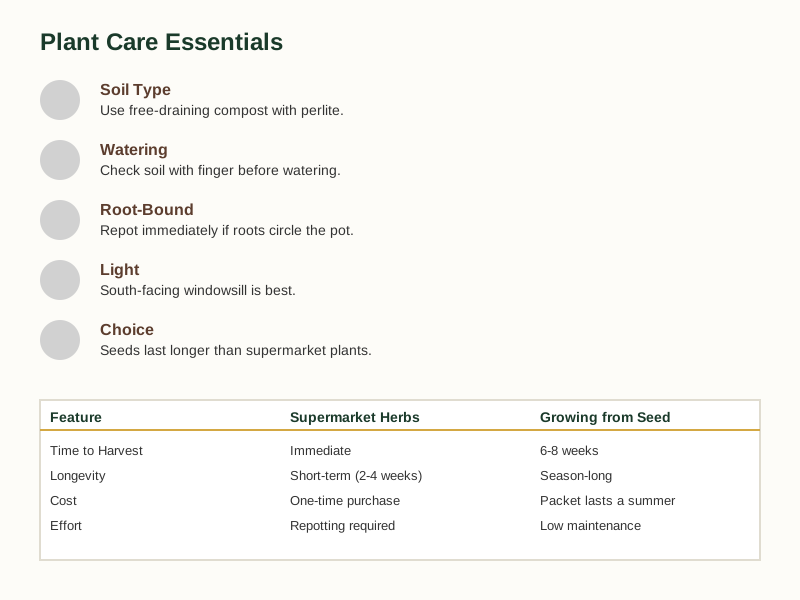
| Feature | Supermarket Herbs | Growing from Seed |
|---|---|---|
| Time to Harvest | Immediate | 6-8 weeks |
| Longevity | Short-term (often 2-4 weeks) | Season-long |
| Cost | One-time purchase | One packet lasts a season |
| Effort | Requires immediate repotting | Low maintenance once established |
| Best For | Immediate use in recipes | Continuous harvest over months |
Building your plant-first approach
The three traps—soil, water, and root-bound plants—account for most indoor herb failures in UK homes. All are fixable once recognised.
- Soil: use free-draining compost with perlite, not garden soil.
- Water: check compost with your finger, not the calendar.
- Supermarket plants: repot immediately if you want longevity.
With seeds, you start from a stronger position—the plant grows in right conditions from day one. With supermarket plants, treat repotting as essential.
Indoor herbs need attention. A heated flat with low winter light won’t match a sunny garden. But they’re not difficult either. Once you understand what’s actually going wrong, the fix is usually straightforward.
Each past dead plant revealed one mistake. You now have the full map of what to watch for. When your next plant shows symptoms, return to this reference to diagnose the issue precisely. If your plants are struggling and you’re unsure whether it’s soil, water, or roots, work through the checklist systematically. Download the Free Houseplant Troubleshooting Checklist to pinpoint the issue in minutes and know exactly what to do.
Related Guides
For a complete overview, see our Growing Herbs Indoors UK: Complete Windowsill Care Guide.
Reference materials
Note: General guidance only, verify details with a qualified professional or official source.