Calathea Leaves Turning Crispy: How to Stop the Browning
eBay Partner Network: we earn a commission when you buy through eBay links on this page.
This page contains affiliate links. As an Amazon Associate we earn from qualifying purchases — this does not affect the price you pay.
This guide is part of our Popular Houseplant Care: Troubleshooting the UK’s Favorite Plants series — practical advice for keeping houseplants alive in British homes.
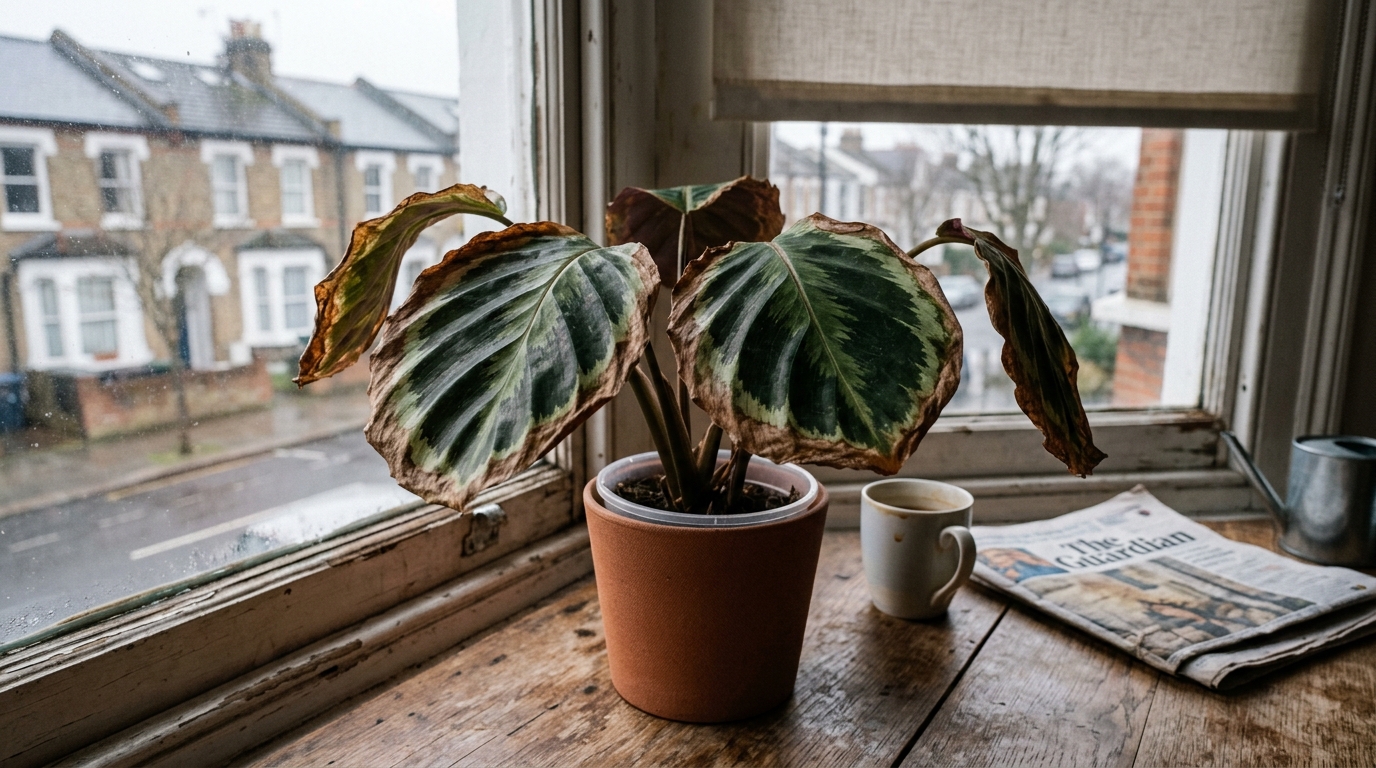
Calatheas are notorious for throwing a tantrum the minute something in your flat isn’t to their liking, usually by turning their edges into crispy, brown paper. If you’ve just brought home a gorgeous Orbifolia and are already seeing those tell-tale burnt tips, the standard advice to “mist more often” isn’t going to save it. That works in a tropical rainforest, not in a British home battling central heating and hard tap water. Here is exactly what is causing the browning and how to stop it.
Why Are My Calathea Leaves Turning Crispy?
Calathea leaves turn crispy when the plant is exposed to low humidity, hard tap water, or fluctuating temperatures—the classic winter combination in a UK flat. To stop the browning, you need to switch from tap water to soft water (like rain or distilled), raise the ambient humidity above 50% using a small humidifier or by grouping plants, and move the pot at least a metre away from active radiators. Hard water is often the primary offender; the calcium and magnesium build up in the soil, effectively burning the delicate roots and crisping the leaf margins. Once you tackle these three factors, the existing brown tips won’t turn green again, but the browning will halt, and all new growth will emerge smooth and healthy.
You really have to look at all three elements to get it sorted:
- Humidity: A typical UK living room drops to 30-40% relative humidity when the radiators are on. That dry blast makes a Calathea feel like it’s in a desert. Placing a Calathea on a windowsill next to a heater will do it — within days the edges turn dry as toast. Run your finger over the leaf—if it feels papery, the air is too dry.
- Water quality: Hard tap water leaves a white crust on the soil surface. According to the Drinking Water Inspectorate, over 60% of homes in England are in hard water areas, meaning you’re pouring calcium straight onto those sensitive roots. Many owners learn the hard way when watering twice a week from the kitchen tap and watching the browning accelerate.
- Temperature: Sudden swings, especially sitting near a draughty window or a hot radiator, cause immediate stress. Consistent room temperatures around 18–22°C are ideal.
The UK Water Fix: Why Rainwater is King
Tap water in most British cities is packed with minerals that settle as a chalky layer in your pot. This raises the soil pH and scorches the roots, leading straight to those crispy edges. Rainwater, by contrast, is naturally soft, slightly acidic, and free of limescale—exactly what a tropical plant craves.
Here is how to sort your water supply:
- Catch the rain: Collect rainwater in a clean container. A simple bucket on the balcony or a watering can left in the garden works perfectly.
- Buy distilled: If rain isn’t an option, distilled water from the supermarket is completely safe, though buying it long-term can add up.
- Filter it: A standard Brita-style filter will strip out a good chunk of the hardness and is a decent middle ground if you’re on a budget.
A quick test is to look for that white crust on the soil surface a few days after watering. If you see it, your water is too hard and you should switch to rain or filtered water straight away.
If you’re sorting out your water but suspect something else is wrong with your collection, you can always check out our other guides on the blog to see if any other factors are at play in your flat.
Fixing the Air: Humidity Hacks for UK Flats
Misting might feel like you’re doing something proactive, but in a dry flat, it’s a hit-and-miss tactic that mostly just invites fungus gnats. Here are three UK-friendly ways to raise humidity without a massive faff:
📺 Watch: Why we stopped misting plants — Kill This Plant
- Humidifier: A compact, quiet unit running on a timer can keep the room at 55-60% humidity, which is spot on for Calatheas.
- Plant grouping: Placing two or three tropicals together creates a micro-climate. The transpiration from each plant lifts the local humidity. Keeping a Calathea, a pothos, and a small fern on the same bathroom windowsill works well. The steam from morning showers is the only extra humidity they need.
- The pebble tray myth: In a small flat, a tray’s surface area is too tiny to make a dent in the air moisture, and the water often sits stagnant, encouraging mould. Trying one on a balcony shelf does nothing for the leaf edges.
Avoid constant winter misting. If you notice tiny black flies hovering around the damp leaves, you’ve got gnats. The RHS advises letting the compost surface dry out to deter them, which is a tricky balance with a moisture-loving Calathea, so it’s far better to avoid getting the leaves soaking wet in the first place.
Troubleshooting the Crispy Edge (Step-by-Step)
Follow these steps to halt the browning and get your plant back on track:
Step 1: Check the soil moisture
Stick your finger about 2 cm into the top of the soil. It should feel damp to the touch, but never soggy or waterlogged. If it’s bone dry, it needs a drink.
Step 2: Switch to rainwater
Water the plant with rain or filtered water starting today. Keep an eye on the soil surface to ensure any existing white chalky crust stops building up.
Step 3: Move the pot away from heat
Relocate the plant so it sits at least a metre away from active radiators. A north-facing or east-facing windowsill works brilliantly, provided it gets bright, indirect light without the midday sun scorching it.
Step 4: Boost the ambient humidity
Set up a small humidifier on a low setting, or group the Calathea tightly with a couple of other tropical plants to create a shared pocket of moisture.
If you see new brown tips forming after a week, double-check the temperature. The plant might still be catching a draught or sitting too close to a heat source.
Product Recommendations
For the humidity side of things, We’ve been testing a *Sansi 15W humidifier (eBay paid link) in a UK flat. It’s discreet, runs quietly, and the price point of roughly £35 makes it worth the investment for a single Calathea. The only downside is that you need to keep the water tank topped up daily in winter, but that’s a small price to pay for stable humidity.
When it comes to keeping the soil clean and free from pests, SB Plant Invigorator (paid link) has been a solid choice. Spray it once a week and notice fewer spider mites and a generally greener look. It’s non-toxic, which is a relief when you have a cat prowling the windowsill. The trade-off? You’ll need to re-apply regularly as it’s not a one-off cure.
View SB Plant Invigorator on Amazon → (paid link)
If you’re repotting, the Soil Ninja House Plant Potting Soil (paid link) is a peat-free coir and perlite mix that drains well and gives Calatheas the aeration they love. We’ve found it worth the extra versus a basic peat-free compost, especially because it helps prevent the water-logging that can amplify hard-water damage. For a tighter budget, the Westland Houseplant Potting Mix (paid link) does the job, but you might need to add perlite yourself to get the same drainage.
Buy Westland Houseplant Potting Mix on Amazon → (paid link)
Buy Soil Ninja House Plant Potting Soil on Amazon → (paid link)
Common Causes of Crispy Calathea Leaves
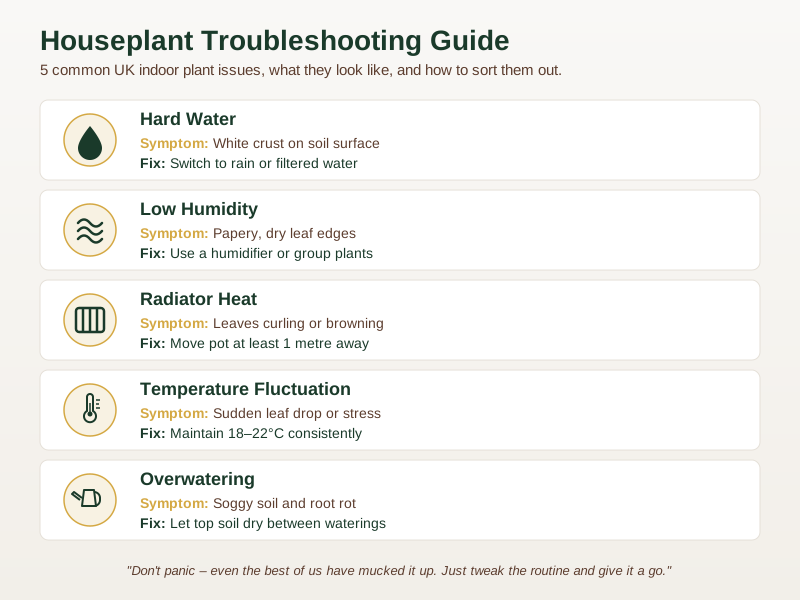
| Cause | Typical UK Symptom | Recommended Fix |
|---|---|---|
| Hard Water | White crust on soil surface | Switch to rain or filtered water |
| Low Humidity | Papery, dry leaf edges | Use a humidifier or group plants |
| Radiator Heat | Leaves curling or browning | Move pot at least 1 metre away |
| Temperature Fluctuation | Sudden leaf drop or stress | Maintain 18–22°C consistently |
| Overwatering | Soggy soil and root rot | Let top soil dry between waterings |
Keep Learning
You’ve now spotted the three British culprits—hard water, dry air, and radiator heat—and you’ve got a clear action plan. Switch to soft water, raise the humidity with a modest humidifier or a plant cluster, and keep the pot well away from direct heat. The good news is that once you make those changes, new Calathea growth should be glossy and smooth, and the brown tips will stay exactly where you cut them.
If you want a quick way to audit any other plant issues you’re facing, you can read more about our approach on the about page, or feel free to get in touch if your windowsill is still looking a bit sad.
Keep an eye on the soil surface for that dreaded white crust, and don’t be shy about swapping in rainwater. Your Calathea will thank you with healthier leaves and a much happier vibe on your windowsill. If the brown tips are still spreading after two weeks of filtered water and better humidity, check the temperature — a draught or a radiator within arm’s reach is usually the hidden culprit.
Related Guides
For a complete overview, see our Popular Houseplant Care: Troubleshooting the UK’s Favorite Plants.
Further Reading
- RHS – Royal Horticultural Society
- The Joy of Plants
- NHS – Air Quality
- Citizens Advice – Consumer Rights
Products linked above are ones we recommend based on owner feedback and UK-condition testing.
Note: This information is for general guidance only. Always verify specific plant care requirements with a qualified professional or the official source.