How to Position Herbs for the Best Light (Without Killing Them)
This page contains affiliate links. As an Amazon Associate we earn from qualifying purchases — this does not affect the price you pay.
A south-facing windowsill in the UK receives up to 8 hours of direct sunlight on a summer day, dropping to 2-3 hours in winter. An east-facing window gets strong morning light, a west-facing one afternoon light. A north-facing window receives no direct sun year-round. This inventory dictates which herbs can survive where in your home.
UK Light Levels by Orientation
The UK sits between 50 and 55 degrees north latitude. At this angle, the sun’s path across the southern sky creates a steep hierarchy of window suitability. South-facing glass captures the most direct, intense light, while north-facing panes receive only diffuse, ambient light. In winter, this gap widens dramatically.
This geographic reality is why advice from sunnier climates often fails. Central heating adds another layer, drying the air and soil faster, which can push you into overwatering. Most herb failures in UK kitchens stem from this combination of insufficient light and mismatched watering, not neglect.
The South-Facing Sill: Maximum Light and Warmth
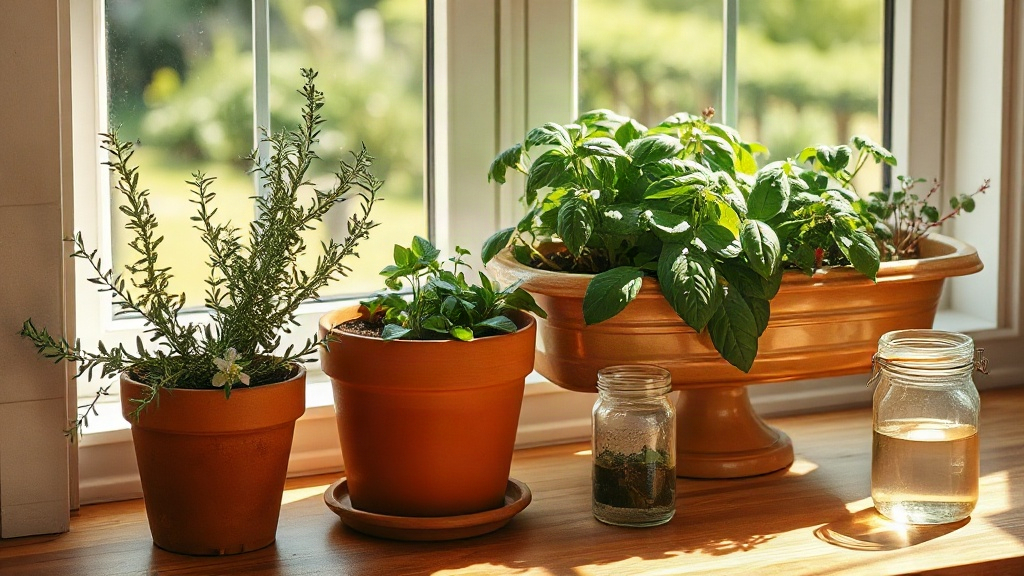
If you have a south-facing window, you hold the prime position for growing herbs indoors. These sills get the strongest, most sustained direct sunlight and benefit from passive solar warmth. This environment suits herbs that originate in sun-drenched regions.
South-facing windows are ideal for:
- Basil — A tender annual that needs strong light and warmth to grow lush and flavourful.
- Rosemary — A Mediterranean woody herb that thrives in full sun and can tolerate the heat buildup.
- Chives — They grow well here, though they are more adaptable than the others.
This orientation is also the RHS-recommended spot for overwintering tender herbs brought in from the garden. The light and residual warmth offer the best imitation of a summer climate during the dark months.
Rotate pots on a south-facing sill every few days. Plants will grow strongly towards the light, and regular turning prevents them from becoming lopsided and unstable.
Matching Herbs to Your Available Light
The core of indoor herb success is aligning a plant’s needs with the light your windows actually provide. This simple alignment prevents the common cycle of buying, watching decline, and giving up.
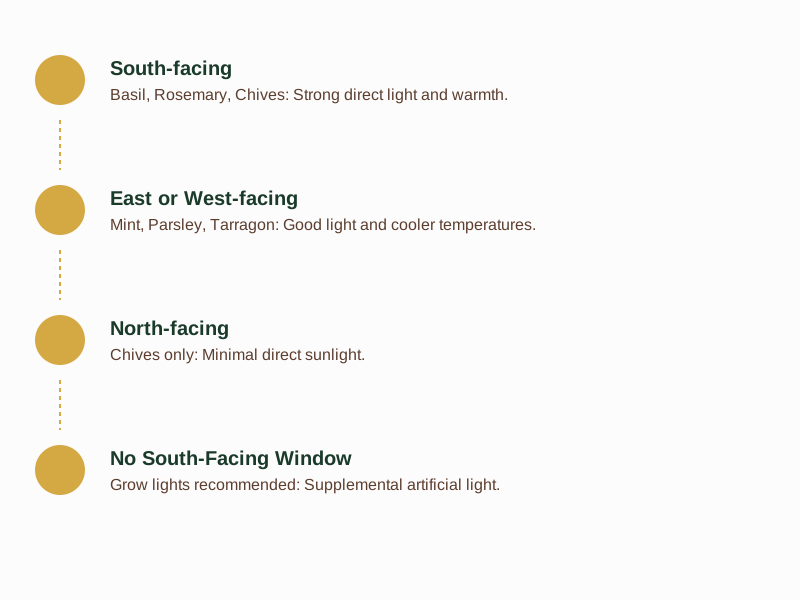
South-facing: As above, this is the zone for high-light, heat-appreciating herbs like basil and rosemary.
East or West-facing: These orientations receive good, direct light for part of the day (morning or afternoon respectively) but are generally cooler. This suits herbs that need decent light but less intense heat. Mint, parsley, and tarragon often do well here.
North-facing: These windows receive minimal direct sunlight. While some leafy plants tolerate this, most culinary herbs need more light. Chives are among the most tolerant and may persist, but growth will be slow. Basil, mint, and parsley are very unlikely to thrive. If your only windows face north and you wish to grow a range of herbs, supplementing with a grow light becomes a practical necessity, not a gadget.
Critical Support: Drainage and Water Timing
Even perfect light won’t save a herb from poor pot conditions. Two supportive practices are non-negotiable.
First, ensure pots have drainage holes. Waterlogged compost is a fast route to root rot. The symptoms—wilting, yellowing—mimic underwatering, often leading to more watering and a quicker death. If a pot lacks holes, repot.
Second, water in the morning. This allows excess moisture to drain or evaporate during the warmer, brighter day. Watering in the evening leaves roots sitting in cool, wet compost overnight, significantly raising the risk of rot.
Supplementing with Grow Lights
For rooms with poor natural light, a grow light is an effective tool. A Garpsen clip-on grow light (paid link) (52 LEDs, full spectrum) clips onto a shelf and sits 15–30 cm above the leaves — close enough to work, not so close it scorches.
Check Garpsen clip-on grow light price → (paid link)
The Royal Horticultural Society acknowledges that artificial lighting can help extend the growing season indoors. As plants grow, adjust the height.
For a flat with no suitable sunny window, that modest clip-on is the straightforward solution for growing herbs like basil through a UK winter.
A morning watering routine helps soil drain before cooler night temperatures set in, reducing the risk of root rot.
Common Questions on Light and Herbs
What will grow on a north-facing sill?
Very few culinary herbs. Chives are the most likely candidate due to their tolerance for lower light levels. Herbs like basil, mint, and parsley have significantly higher light requirements and will struggle without supplementation.
How does central heating affect things?
Heated air has lower humidity, causing potting compost to dry out more quickly. This can disrupt your watering rhythm. The plant’s light need remains unchanged, but you may need to water a little more frequently. Be extra vigilant about drainage to compensate.
Can a grow light replace a sunny window?
It can effectively replace the light component, allowing herbs to photosynthesise. However, it doesn’t replicate the gentle warmth of a sunlit windowsill. Some warmth-loving herbs like basil might grow slightly slower under lights alone, but they will remain healthy and productive. Lights are a powerful supplement for dark winters or poor natural light.
South-facing windows provide the most direct sunlight and associated warmth, making them the top choice for indoor herbs in the UK.
From Light to the Next Variable
Positioning your herbs for the right light is the first, decisive step. With that solved, the next hurdles are usually about moisture—getting watering frequency and soil drainage right. Your south-facing basil might now have enough light, but is the pot drying out too fast? Your east-facing mint could be getting waterlogged.
These are the natural follow-on questions, and we cover them in detail in our guides on watering indoor herbs and selecting the right soil and pots. For a complete index that connects all aspects of windowsill herb care, from light to harvest, our Growing Herbs Indoors UK hub page maps everything out.
To keep track of your plants’ needs and spot problems early, download our free Houseplant Troubleshooting Checklist. It’s a straightforward tool that turns observation into action.
Fresh herbs from your windowsill are achievable. It starts with putting the right pot in the right place.
Related Guides
For a complete overview, see our Growing Herbs Indoors UK: Complete Windowsill Care Guide.
Sources & Further Reading
Note: This guidance is for general information only. Always verify specific plant care requirements with a qualified professional or official source.