Indoor Plants That Survive UK Winter Light (North-Facing Flat Tested)
This article sits within our Best Houseplants UK: Choosing the Right Plant for Your Space hub — a collection of guides to help you pick plants that actually survive in a typical British flat.
This page contains affiliate links. As an Amazon Associate we earn from qualifying purchases — this does not affect the price you pay.
Winter in a UK flat usually means two things for your houseplants: dismal light from overcast skies and bone-dry air from the radiators. If you’ve ever watched a peace lily curl up and crisp on a windowsill while trying to follow American blogs about “bright indirect light,” you already know the struggle. Here are the plants that actually survive north-facing windows, hard tap water, and central heating without needing a grow light.
What Does Low Light Actually Mean in a British Home?
Low light in a UK home means a north-facing window, a shaded corner, or anywhere that only catches faint, overcast winter daylight. It’s not pitch black, but it can be as low as 30 to 40 lux on a cloudy January morning—barely enough for most tropical plants to photosynthesise.
A south-facing flat will still get a few bright patches, but the heat from the radiator often outweighs the light you can harvest. The trade-off is simple: you can move a plant closer to the radiator for warmth, but you must accept that the light it receives will still be limited.
A common early mistake is putting a calathea on a dim windowsill because a blog suggested it liked “indirect” light — it goes crispy within weeks. You need plants that tolerate shade and the dry, heated air our radiators pump out.
The “Workhorse” List: Hardy & Resilient
The best indoor plants for low-light UK winters are those that tolerate shade, dry air, and hard tap water. Snake plants and ZZ plants are virtually indestructible—they survive on a windowsill that only gets a faint winter glow, drink only when the top inch of soil dries out, and shrug off mineral deposits from hard water. Cast iron plants thrive in cool, dim rooms and need virtually no extra humidity. Peace lilies can live in low light if you give them a humidity boost and use filtered water to avoid brown leaf tips.
These four workhorses cover the main challenges of a British winter: limited daylight, central-heating dryness, and hard water, making them ideal for north-facing flats. They’ve survived cold snaps, hard water, and occasional overwatering mishaps, and usually cost roughly £15 to £30 at the garden centre.
Snake Plant (Sansevieria trifasciata)
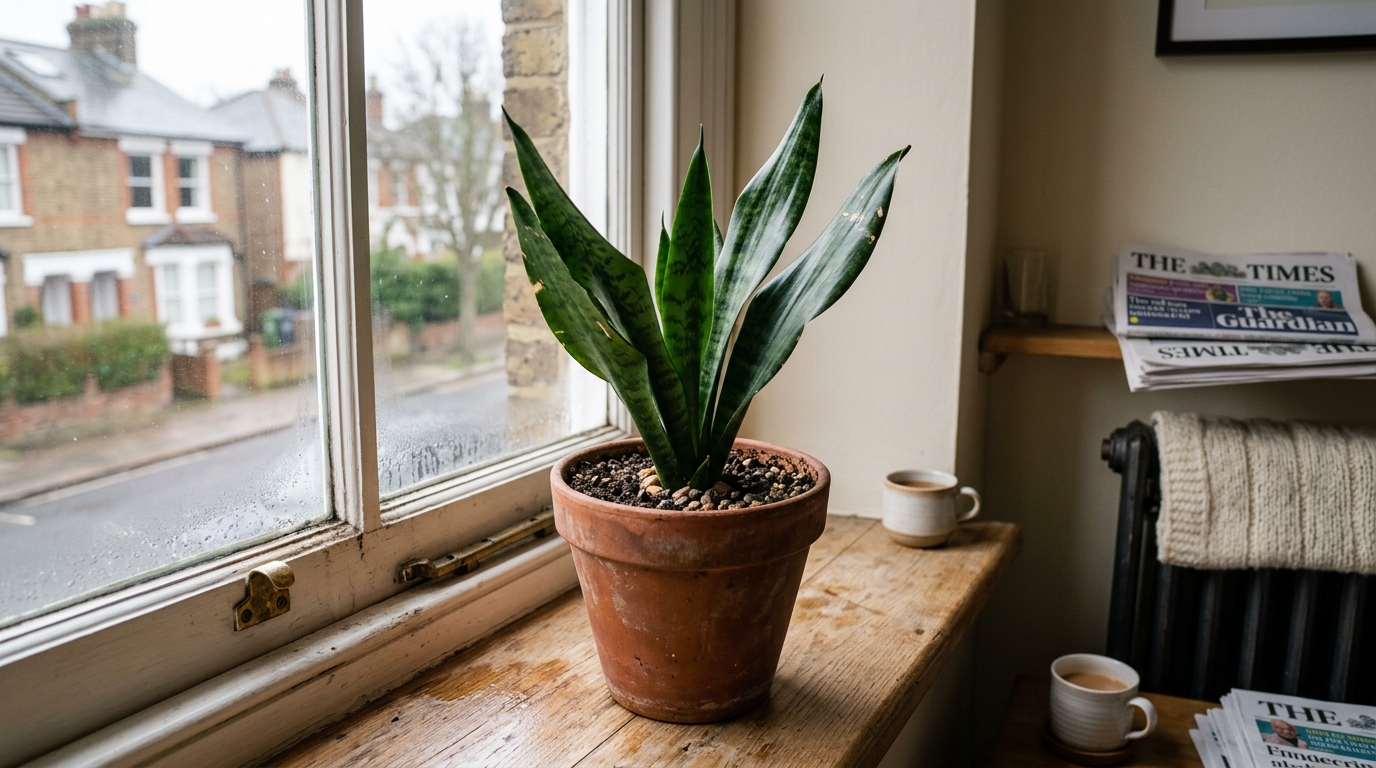
The snake plant is the ultimate survivor. It tolerates low light, can drink straight from hard tap water, and loves the dry air that radiators create. Water only when the top inch of soil feels dry—in winter that could be once a month. As the Royal Horticultural Society advises for indoor succulents, it is best to let the compost dry out entirely between waterings during the colder months. Its stiff, upright leaves also act as a natural air-purifier, which is a nice bonus in a sealed flat.
ZZ Plant (Zamioculcas zamiifolia)
Almost indestructible, the ZZ plant stores water in its rhizomes, so it can go weeks without a drink. It thrives in low-light corners and isn’t fussy about water quality; we’ve never seen mineral buildup on its glossy leaves. Just give it a good soak when the soil is bone-dry, then let it dry out completely before the next round.
Cast Iron Plant (Aspidistra elatior)
A classic British houseplant for a reason—it’s literally made of cast iron. It tolerates low light, cool rooms, and the occasional splash of hard water. Keep it on the radiator shelf, and it’s never once asked for a mist. Trim any dead leaves at the base and it will keep pushing out new shoots, albeit slowly.
Peace Lily (Spathiphyllum)
The peace lily can handle lower light than most tropicals, but it does crave a bit of humidity. Place it on a pebble tray with water, which raises the local humidity without making the soil soggy. Because it’s more sensitive to hard water, use filtered water or rainwater once a week; otherwise the leaf edges start to turn brown. If you are dealing with foliage issues, have a look through the blog for more troubleshooting tips.
UK Winter Care: Watering & Humidity
📺 Watch: Winter care for houseplants — RHS - Royal Horticultural Society
Hard Water Tolerance
Most UK tap water is moderately hard, meaning it contains calcium and magnesium that can build up in the soil. Snake plants and ZZ plants are happy with this—they store water in their leaves and roots, so mineral buildup never becomes a problem. Peace lilies, however, show brown leaf tips when the water is too hard. If you check your local water hardness (often detailed by suppliers like Thames Water) and find you are in a very hard area, collecting rainwater from your balcony or using a simple home filter makes a massive difference.
Central Heating Dryness
Radiators dry out the air fast, especially when the thermostat is set to 20°C. In low light, plants grow slowly, so they use less water, but the dry air makes them lose moisture through their leaves faster than they can replace it. The rule of thumb for winter watering is: wait until the top inch of soil is dry, then give a thorough soak. Stick your finger in the soil or use a wooden skewer—if it comes out clean, it’s time to water.
Humidity Hacks
- Pebble tray: Place a shallow tray of pebbles under the pot and fill it with water. The pot sits on the pebbles, not in the water, raising local humidity without soggy roots.
- Plant grouping: Cluster a few workhorses together; they create a micro-climate that lifts humidity naturally.
- Bathroom boost: If you have a bathroom window, move a peace lily there; the steam from a warm shower is the only humidity it gets in winter, and it loves it.
Troubleshooting: What If They Still Look Sad?
Even the hardiest plants can show signs of stress. Here’s a quick checklist you can run through before you panic:
- Yellow leaves: Usually overwatering or, paradoxically, too much direct sun if you’ve pushed the plant right up to a radiator-heated window. Let the soil dry a bit longer.
- Brown tips: Often a symptom of the dry air from central heating or mineral buildup from hard water. Increase humidity and consider filtered water for sensitive species.
- Slow growth: In low light, this is normal—the plant is conserving energy. Don’t overfeed; a light dose of a balanced liquid feed once a month is enough.
- Pests (fungus gnats): They love damp, winter soil. Ensure good drainage, avoid leaving water standing in saucers, and consider Blooven yellow sticky traps (paid link).
View Blooven yellow sticky traps on Amazon → (paid link)
If you’ve ticked all the boxes and the plant still looks sad, it might be time to repot with fresh, well-draining compost. The Soil Ninja House Plant Potting Soil (paid link) works well for most foliage plants, though the cheaper Westland Houseplant Potting Mix (paid link) is a decent 4 L fallback if you’re watching the budget.
Buy Westland Houseplant Potting Mix on Amazon → (paid link)
View Soil Ninja House Plant Potting Soil on Amazon → (paid link)
How to Safely Water Low-Light Plants in Winter
If your flat is genuinely dark, a wolezek LED Grow Light (paid link) on a timer for six hours a day makes a noticeable difference. It’s not a replacement for a window, but it stops a north-facing room from being a plant graveyard.
View wolezek LED Grow Light on Amazon → (paid link)
Check the soil depth Don’t rely on a weekly watering schedule. Push your index finger or a wooden skewer about an inch into the compost. If it feels damp or soil clings to the skewer, leave it alone for another week.
Use tepid water Drawing water straight from the cold tap in January shocks tropical roots. Let your watering can sit at room temperature for a few hours before giving your plants a drink.
Water thoroughly but drain fully Take the plant to the sink, soak the soil until water runs out the bottom, and let it drain completely for ten minutes. Never leave a low-light plant sitting in a puddle of cold water on a windowsill.
Low-Light Plant Tolerance Reference
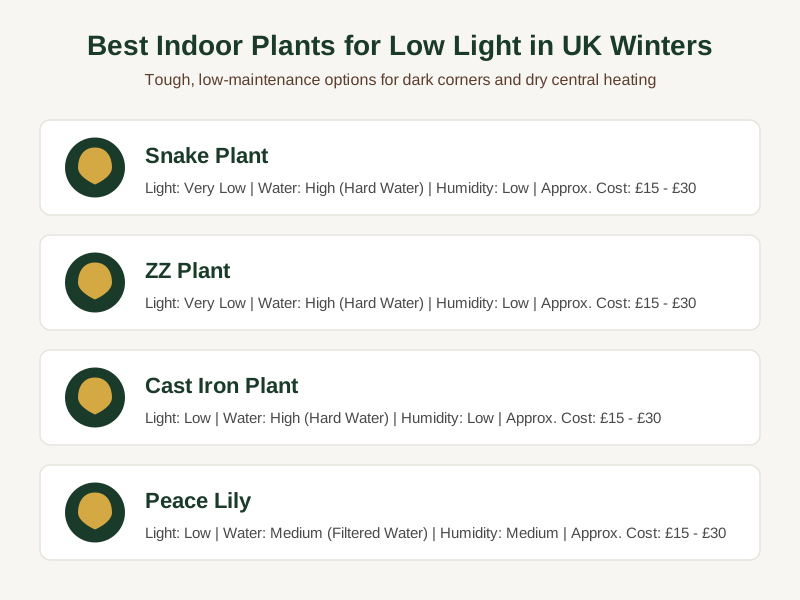
| Plant | Light Tolerance | Water Tolerance | Humidity Needs | Approx. Cost |
|---|---|---|---|---|
| Snake Plant | Very Low | High (Hard Water) | Low | £15 - £30 |
| ZZ Plant | Very Low | High (Hard Water) | Low | £15 - £30 |
| Cast Iron Plant | Low | High (Hard Water) | Low | £15 - £30 |
| Peace Lily | Low | Medium (Filtered Water) | Medium | £15 - £30 |
Before You Buy
If you are dealing with related issues, see our guide to Unkillable Houseplants for Beginners. You now have a shortlist of workhorse plants that can handle the gloom, the dry heat, and the hard water that define a British winter flat. Remember: low light isn’t a death sentence, it’s just a cue to pick the right, resilient species and adjust your watering and humidity routine.
Got more questions or need a hand with a specific plant? Drop us a line on the contact page – we’re always happy to help a fellow flat-dweller keep their greens alive.
Start with one plant from the workhorse list above. A Snake Plant or ZZ Plant will forgive every mistake you make while you learn. Once that one is thriving, add a second. That’s how every successful indoor jungle starts — one forgiving plant at a time.
Related Guides
For a complete overview, see our Best Houseplants UK: Choosing the Right Plant for Your Space.
Further Reading
Note: This information is for general guidance only. Always verify specific plant care requirements and local water hardness details with a qualified professional or official source.