Can Your Basil Survive a UK Windowsill?
This page contains affiliate links. As an Amazon Associate we earn from qualifying purchases — this does not affect the price you pay.
That lush pot of basil from the supermarket isn’t a houseplant; it’s a tropical summer annual. Every common windowsill failure—blackening stems, woody growth, tasteless leaves—stems from that mismatch. A UK winter provides neither the heat nor the sustained sun a basil plant evolved to expect. This guide explains the specific conditions that close that gap, moving it from a doomed seasonal purchase to a reliable kitchen crop.
The Tropical Reality vs. The UK Winter
Basil is a tender annual, bred for hot, frost-free climates. The Royal Horticultural Society is clear: it will not tolerate frost and suffers in the cold. While it can technically survive a chill, growth stalls and flavour fades. The plant isn’t dying of neglect; it’s simply in the wrong environment.
Imagine keeping a tropical fish in a British pond. It might linger, but it will never flourish. Basil on a cold windowsill faces the same fundamental mismatch—it’s alive, but not living as it should. The aromatic oils that make it worth growing need warmth and sun to develop. Without them, you’re tending a bland, struggling plant.
The first step isn’t adjusting your watering can; it’s accepting that basil has non-negotiable thermal needs. Everything else is secondary.
Your Three Realistic UK Routes
Growing basil in Britain means working with the climate, not against it. Your options depend entirely on the space you have.
Indoors on a windowsill is the default for flats, but it comes with strict conditions. It only works if your sill provides enough warmth and direct light, especially from October to March. The convenience is unmatched, but the maintenance is high because most UK windowsills fail the temperature test in winter.
Outside in summer is the simplest path if you have a patio or garden. From June to September, a sunny, sheltered spot will produce more vigorous, flavoursome growth than any indoor setup. The RHS recommends this seasonal approach. The critical rule is to bring pots inside before the first frost, as basil is not hardy.
As microgreens is a practical alternative often overlooked. You grow basil as seedlings on a sunny sill, harvesting them young. It’s a single cut, not a continuous crop, so it won’t supply pesto all winter. But for someone in a north-facing flat wanting a taste of homegrown basil without a major battle, it’s a valid choice. You trade quantity for certainty.
For most readers, the real decision is between engineering a suitable windowsill or opting for seasonal crops like microgreens or summer outdoor growing.
Does Your Windowsill Pass the Test?
Success hinges on two measurable factors. Ignore general advice about ‘bright light’ and ‘moist soil’; test for these specifics.
Consistent warmth. Basil grows well above 18°C. When temperatures dip, growth slows. If the plant is kept consistently below 10°C, it risks dying. The damage often shows as blackening leaves at the base, which many mistake for overwatering. Check the temperature at the pot’s surface first thing in the morning—that’s the coldest point.
Direct sunlight. Basil needs at least six hours of direct sun daily to photosynthesise effectively and develop flavour. Bright room light isn’t enough; the sun’s rays must hit the leaves. In a UK winter, even a south-facing window may only provide a few hours of low-angled light.
To test your setup, place a basic room thermometer on the sill and monitor it over a day. For light, observe the window and count the hours of direct sun actually falling on the spot where the pot sits.
The unvarnished truth is that many north-facing windowsills and unheated rooms in Britain cannot meet these needs from autumn through spring. The glass itself radiates cold, often creating a microclimate several degrees colder than the room. If your sill fails, you must either improve the conditions or choose a different growing method.
If you’re troubleshooting other plants, our Free Houseplant Troubleshooting Checklist covers the most common failure points.
A Four-Point Windowsill Health Check
Before making any changes, assess these points:
- Temperature: Is the sill surface reliably above 18°C, even on a cold morning?
- Light: Does the plant receive six or more hours of direct sun, measured at the pot?
- Drafts: Is the pot pressed against a cold pane? Even a small gap helps.
- Heat Source: Is there a consistent warmth nearby? Avoid placing it under a cold window where radiator heat creates turbulent drafts.
Ticking all four means your basil has a real chance. If not, the solutions below are for you.
Engineering a Suitable Indoor Environment
A failing test isn’t a full stop; it’s a diagnosis. You now need to create the conditions your space lacks.
Prioritise position. A south or west-facing window is ideal. If that’s not possible, a propagator — a small, clear plastic case with a lid — acts as a miniature greenhouse, trapping warmth and humidity. An EarlyGrow Mini High Top propagator (paid link) (unheated, shatterproof lid) is that case, not a heated seed-tray kit. It’s a modest investment that dramatically improves a plant’s chances on a marginal windowsill.
See EarlyGrow Mini High Top propagator on Amazon → (paid link)
Create a buffer from the glass. Don’t let the pot touch the cold pane. A small shelf, trivet, or even a folded cloth underneath creates an insulating air gap. The temperature difference between the glass surface and a few centimetres away is significant.
Seek steady warmth, not spikes. The temptation is to place basil right by a radiator. Avoid this. Basil prefers consistent warmth over a cycle of hot days and cold nights when the heating switches off. A spot that stays steadily above 18°C is better than one that swings between 22°C and 14°C.
Water with restraint. A common killer is soggy compost, which leads to root rot. This causes yellowing and wilting, prompting more water and worsening the problem. Let the top inch of soil dry out before watering again. In winter, this might mean watering only when the soil feels dry to the touch. Basil is susceptible to root rot in constantly wet soil, so it is important to water only when the top inch of compost has dried out. In winter, this may mean watering every few days; in summer, outdoor pots may need daily water, but always check the soil first.
Harvest to encourage growth. Don’t just pick leaves. Use clean snips to cut the stem just above a pair of leaves. This prompts the plant to branch from that point, creating two new growing tips instead of one. Regular pinching is what transforms a straggly single stem into a bushy, productive plant that lasts for months.
The Easier Summer Route
If you have any outdoor space, growing basil outside during the warmer months is far simpler than year-round indoor cultivation.
Once frost risk has passed—typically by June—move pots to a sunny, sheltered spot. The combination of stronger light, fresh air, and natural warmth produces robust, flavourful growth that a windowsill struggles to match.
The RHS advises keeping basil in a warm position outdoors through the summer, watering regularly and harvesting from the top. The single non-negotiable is to bring plants back inside before the first autumn frost, which can be lethal.
Treating basil as a summer crop is a liberating reset. Enjoy a productive season outdoors, and approach any winter growing as a deliberate experiment with known, manageable thresholds. For most UK homes in winter, this requires active intervention—like using a south-facing window with a propagator. Accept that it’s a summer crop at heart, and winter growing is a managed project.
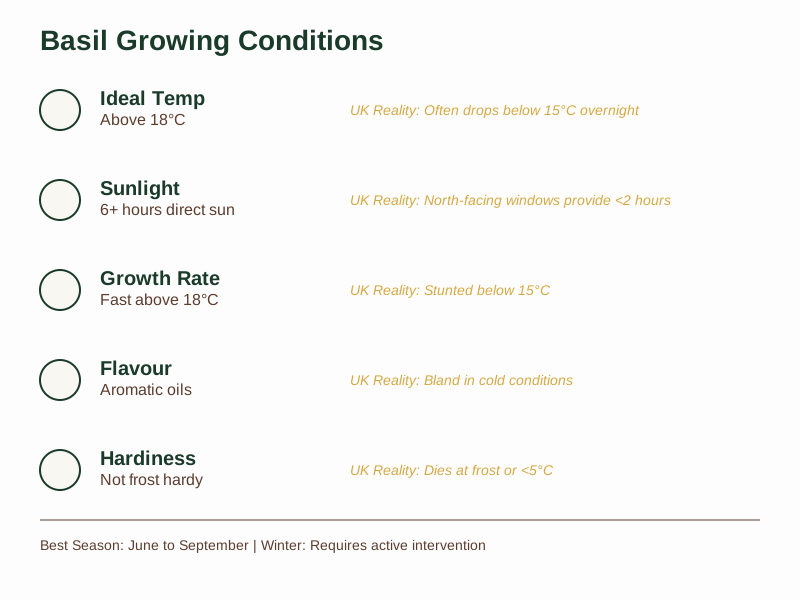
UK Basil Growing Conditions
| Condition | Ideal Threshold | UK Reality |
|---|---|---|
| Temperature | Above 18°C | Often drops below 15°C overnight in winter |
| Light | 6+ hours direct sun | North-facing windows provide very little direct light |
| Growth Rate | Fast | Slow or stunted in cool conditions |
| Taste | Aromatic | Lacks flavour when grown cold |
| Hardiness | Tender | Killed by frost |
| Best Season | Summer | June to September outdoors |
| Winter Option | Propagator | Requires active management |
Master Basil, Master the Rest
Basil is the most demanding common windowsill herb. Its need for consistent warmth and direct sun sets the benchmark. If you can create the conditions that keep basil happy—a reliably warm, bright spot—you’ve already mastered the primary hurdles for almost every other culinary herb. Mint, chives, and parsley are far more forgiving of lower light and cooler temperatures.
This makes basil the perfect skills test. Success here means you have the understanding to grow easier herbs with confidence. For a guide to those less-demanding plants, see our complete hub on Growing Herbs Indoors in the UK, which covers the full range from shade-tolerant mint to sun-loving rosemary.
If you’re troubleshooting other houseplants, our Free Houseplant Troubleshooting Checklist systematically walks through the most common failure points beyond herbs.
Note: This guide provides general advice for growing basil in the UK. Always verify specific conditions with a qualified professional or official source.